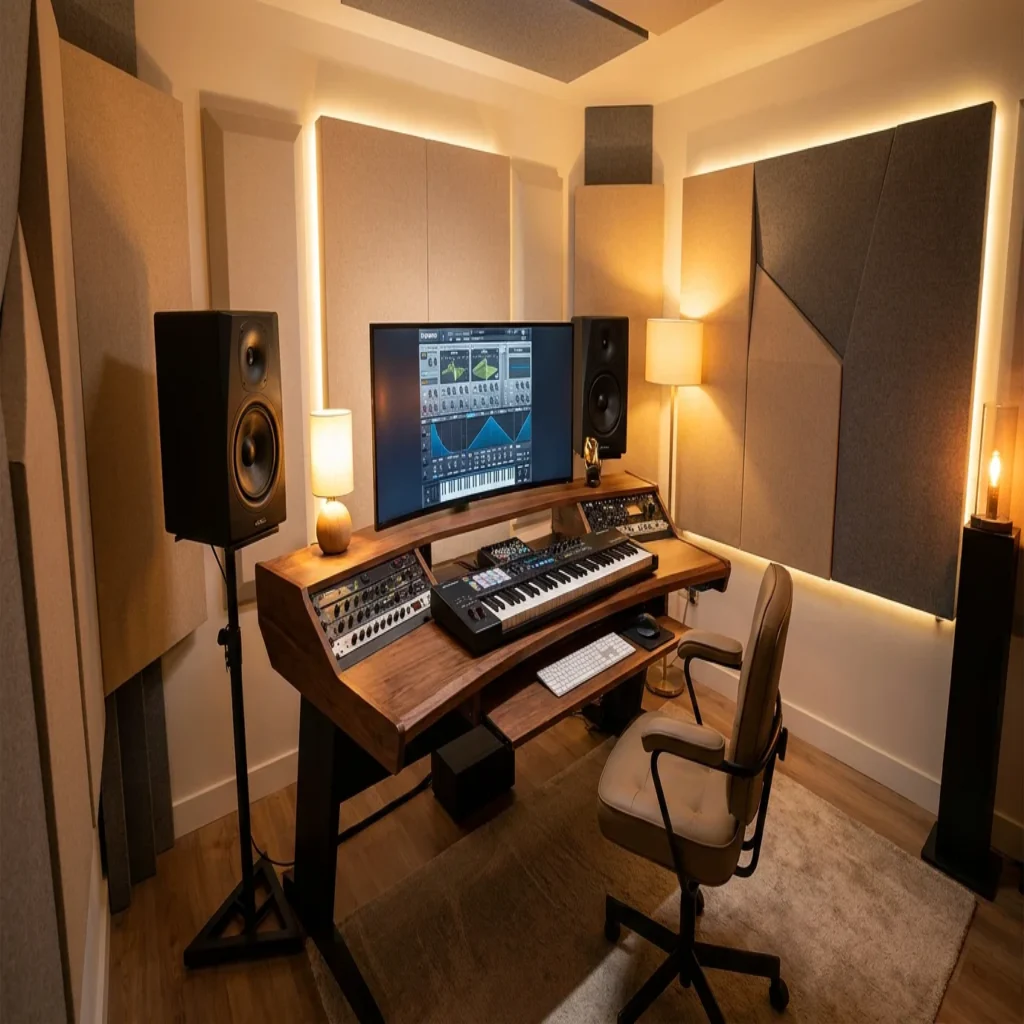
Summary: Analog Lab is a preset-driven VST instrument offering 2,000+ curated sounds from Arturia’s V Collection, priced from free to $199.
The global audio software plugin market was valued at an estimated USD 1,794.79 million in 2026 according to a 360 Research Reports forecast, reflecting a massive wave of producers moving to in-the-box workflows. Among the thousands of best VST plugins available, Arturia’s Analog Lab VST has carved a niche as a preset-focused instrument that packages dozens of classic synthesizer and keyboard emulations into one streamlined interface.
Whether you produce in FL Studio, Ableton, or Logic Pro, choosing the right virtual instrument shapes the character of every track you release. In this review, we will break down what Analog Lab offers, where it falls short, and which alternatives deserve your attention if you are looking for sounds that genuinely stand out in genres like trap, drill, phonk, and pluggnb.
What Is Analog Lab and How Does It Work?
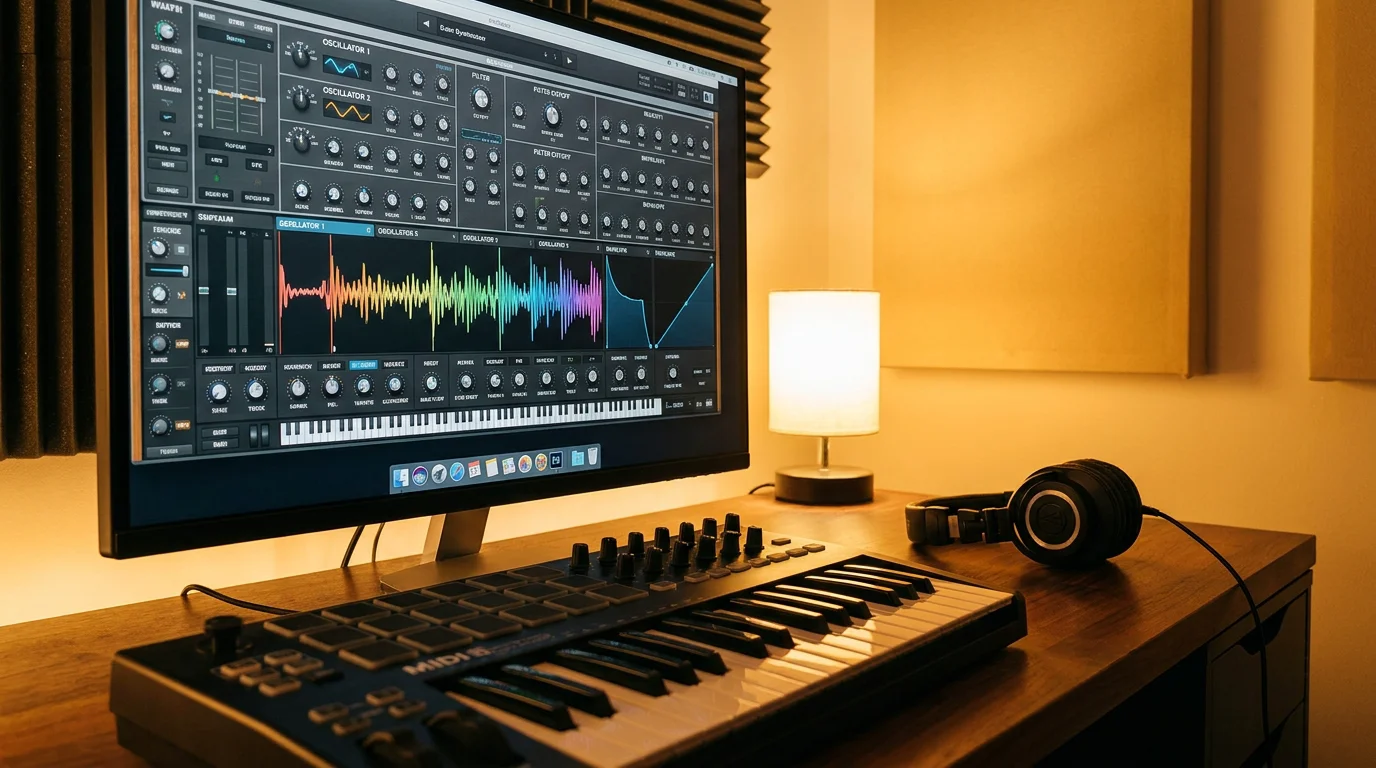
Analog Lab is a virtual instrument plugin developed by Arturia. It acts as a curated front end for sounds drawn from Arturia’s V Collection, which emulates legendary hardware synthesizers such as the ARP 2600, Prophet-5, Minimoog, Jupiter-8, and many others. The plugin provides a curated library of over 2,000 presets derived from Arturia’s V Collection, encompassing vintage and modern synthesizers, pianos, and organs.
The concept is straightforward: rather than loading each individual synth emulation and programming patches from scratch, Analog Lab gives you a single interface with four macro controls (brightness, timbre, time, movement) and a tagged browser. Designed for immediate playability, it provides intuitive macro controls for real-time tweaking and integrates seamlessly with DAWs and MIDI controllers in VST, AU, AAX, and standalone formats.
Analog Lab Tiers: Play, Intro, and Pro
Arturia currently offers three tiers of Analog Lab, each with a different preset count and feature set. Understanding which tier fits your workflow prevents overspending or under-equipping your sessions.
| Feature | Analog Lab Play (Free) | Analog Lab Intro | Analog Lab Pro ($199) | Pendora by Tiger-Sounds (from Lite to full) |
|---|---|---|---|---|
| Preset Count | 100 | 500 | 2,000+ | 275+ studio-ready presets |
| Deep Preset Editing | No | Yes (limited) | Yes (requires V Collection for full) | Ready to use, no deep editing needed |
| Stage / Live Mode | No | No | Yes | N/A (studio focused) |
| Genre Focus | General | General | General | Trap, drill, dark trap, phonk, pluggnb, boom bap |
| Licensing | Free | Paid | Paid | Pay once, royalty-free, lifetime updates |
| CPU Load | Moderate | Moderate | Moderate to heavy | Light on CPU |
For $199, Analog Lab Pro offers a curated collection of sounds with versatility and usability. The free Play tier, while limited to 100 presets, is a reasonable way to test the interface before committing. However, if your production centers on hip-hop subgenres, a dedicated sound bank like our Pendora collection may save you hours of browsing through presets that were designed for other styles.
Sound Quality and Preset Library
The core appeal of Analog Lab is its emulation engine. Arturia’s True Analog Emulation (TAE) technology captures the essence of classic hardware. The warm pads from the Juno-6 emulation, the biting leads from the Mini V, and the glassy digital textures from the DX7 all sound polished. For genres like synthwave, cinematic scoring, or funk, the palette is broad.
That said, breadth comes at a cost. More than 87% of professional studios utilize VST-based plugins, meaning producers across every genre rely on the same tools. When 2,000 producers load the same “Digibrass Pad” or “Dark Rider” preset, the result is sonic homogeneity. This is where genre-specific, curated sound banks provide a meaningful advantage.
If you are a beatmaker working in trap, drill, or phonk, you may find that only a fraction of Analog Lab’s 2,000 presets actually fit your sessions. The rest, while high quality, sit unused. Our virtual instruments plugins page explores several focused alternatives that prioritize usability over sheer volume.
Workflow: Strengths and Limitations for Beatmakers
Analog Lab’s workflow is built around speed. The tagged browser lets you filter by instrument type (bass, lead, pad, keys), by style (bright, dark, aggressive), and by genre (ambient, disco, techno). For producers who need to audition sounds quickly during a session, this is efficient.
While Analog Lab includes presets from the V Collection, it does not allow full parameter editing within individual instruments unless you own the corresponding V Collection plugins. This is one of the most common criticisms. You can tweak macros, but you cannot access oscillator routing, filter slopes, or modulation matrices without purchasing the full V Collection, which costs significantly more.
For beatmakers in FL Studio or Ableton, this limitation matters. When you need to shape a 808 bass or morph a pad to sit behind a vocal, four macro knobs may not be enough. Tools like Serum or Vital offer granular control by default. Analog Lab, by contrast, trades depth for convenience.
Where Analog Lab Falls Short for Hip-Hop Production
The VST plugin market continues to grow rapidly. The global audio software plugin market size is anticipated to reach USD 6,699.47 million by 2035 at a CAGR of 15.76%, driven by the democratization of music production. Yet much of this growth is fueled by independent creators in hip-hop, electronic, and adjacent genres who need sounds that differentiate their work.
Analog Lab was designed as a generalist instrument. It covers everything from 1970s prog rock organ tones to modern EDM leads. For a producer who needs a dark trap melody or a pluggnb texture, digging through thousands of generalist presets creates friction rather than flow. In a 2024 survey, 34% of plugin users stated they pay for plugins they rarely use, a pattern that reflects the mismatch between large general-purpose libraries and focused production needs.
This is why specialized sound banks exist. Rather than offering 2,000 presets across 28 instrument emulations, a purpose-built collection can deliver 275 presets where every single one was crafted for your genre, with zero waste.
Alternatives Worth Considering Alongside Analog Lab
No single plugin covers every production scenario. Here is how Analog Lab compares to other instruments producers commonly reach for.
| Plugin | Strength | Limitation | Price Range |
|---|---|---|---|
| Pendora by Tiger-Sounds | 275+ presets built for trap, drill, phonk, pluggnb, dark trap; royalty-free, light on CPU | Focused on hip-hop subgenres (not a generalist tool) | One-time purchase (Lite to full) |
| Analog Lab Pro | 2,000+ presets, wide genre coverage, live performance features | Limited editing without V Collection; generalist library | $199 |
| Serum | Deep wavetable sound design, visual feedback | Steeper learning curve; CPU-intensive with complex patches | $189 or rent-to-own |
| Omnisphere | Massive library, hardware integration | High price, large install size | $499 |
| Vital | Free tier available, wavetable synthesis | Smaller preset library out of the box | Free to $80 |
| Kontakt | Industry-standard sampler, vast third-party libraries | Complex interface; costly with add-ons | $399+ |
If your primary workflow revolves around melodic trap, drill, or boom bap, Pendora is purpose-built for those sessions. Every preset is studio-ready and royalty-free, and because the library is focused, you do not spend half your session scrolling past orchestral pads or vintage organ patches. For producers who also work in VST plugins across broader genres, pairing a generalist synth like Vital with a specialized bank like Pendora covers more ground than any single tool.
System Requirements and Compatibility
Before committing to Analog Lab, verify that your system meets Arturia’s requirements. The latest version as of May 2026 is 5.12.3, released on May 7, 2026. According to Arturia’s official resources page, the plugin requires Windows 10 or later (64-bit) or macOS 11 or later, a minimum of 4 GB of RAM, a quad-core CPU at 3.4 GHz, and 4 GB of free disk space.
Analog Lab runs as a VST, AU, AAX, or standalone application. It integrates with Arturia’s own KeyLab controllers for automatic parameter mapping, though any standard MIDI controller will work. One factor to keep in mind is that loading multiple instances of Analog Lab in a dense session can tax your CPU, especially if you are using a laptop or an older machine.
By comparison, lighter VST instruments and preset banks designed with CPU efficiency in mind let you run more instances without bouncing tracks. Our Pendora presets, for example, were engineered to stay light on your processor, even in sessions with 20 or more active tracks.
Is the Free Tier (Analog Lab Play) Enough?
Arturia’s free offering, Analog Lab Play, ships with 100 presets and a simplified interface. It supports the same DAW formats (VST, AU, AAX, standalone) and gives access to the Sound Store for paid expansions. For a producer who has never used Arturia software, it is a low-risk entry point.
However, 100 presets is a small selection. Once you subtract the sounds that do not match your genre, you may be left with a handful of usable options. Producers looking for best free VST plugins should also consider free tiers of synths like Vital, which offer deeper sound design capabilities at no cost. The key question is whether you want a preset player or a full instrument.
Industry data indicates that the number of independent music creators globally surpassed 60 million as of 2024, according to a Market Growth Reports analysis. With that many producers competing for listener attention, relying on widely distributed free presets can make your productions sound indistinguishable from thousands of others. Investing in a focused, distinctive sound bank is one of the clearest ways to differentiate your beats.
Making the Right Choice for Your Production Style
Analog Lab as a VST instrument fills a specific role: it is a convenient, preset-driven gateway to classic synthesizer sounds. For producers working across pop, film scoring, or live performance, the breadth of its library and the Stage mode offer genuine value. For hip-hop beatmakers, the calculus is different.
If your sessions revolve around trap, drill, dark trap, phonk, or pluggnb, a generalist library with 2,000 presets may create more noise than signal. You need sounds that are immediately usable, that sit correctly in your mix without extensive processing, and that do not sound like every other beat on the timeline. That is the philosophy behind Pendora: 275+ presets with zero filler, royalty-free licensing, lifetime updates, and a one-time purchase that respects your budget.
The right tool depends on where you are headed as a producer. If you value distinctive sound and efficient workflow, explore our Pendora sound bank and hear the difference a curated, genre-focused collection makes.
Frequently Asked Questions
Does Analog Lab work as a standalone application without a DAW?
Yes, Analog Lab can run in standalone mode on both Windows and macOS. This is useful for practice, sound audition, or live performance scenarios where you do not want to open a full DAW session.
Can you use Analog Lab presets in commercial releases?
Yes, sounds you create using Analog Lab presets can be used in commercial music. However, you should always review the license terms on Arturia’s website. If you need a fully royalty-free option with clear commercial-use rights, our Pendora presets include royalty-free licensing by default.
Is Analog Lab worth it if you already own Serum or Omnisphere?
Analog Lab serves a different purpose than Serum or Omnisphere. It is a preset browser for classic instrument emulations, not a deep sound design tool. If you already own a versatile synthesizer and produce primarily in hip-hop subgenres, a focused preset bank may provide more immediate value than another generalist plugin.