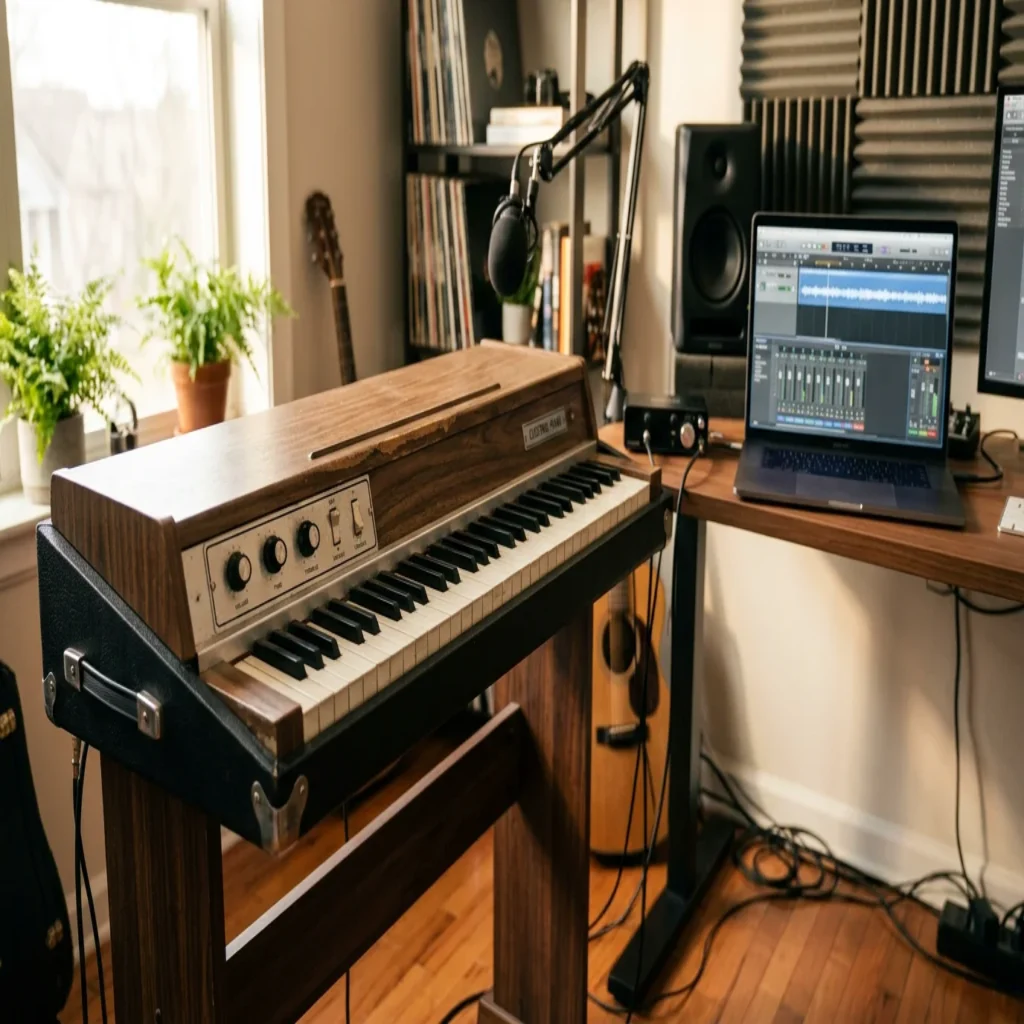
Summary: The strongest Rhodes plugins pair deep sampling with modelling. Modern flagship instruments capture over 30,000 samples, yet producers still need distinctive keys to avoid generic results.
Even if you have never touched a Fender Rhodes, you have heard it. That warm, bell-like tine sound sits under decades of jazz, soul, funk, and hip hop, and it keeps returning in trap, drill, and R&B beats. When producers hunt for the best Rhodes VST, they usually want two things: authentic character and sounds that do not appear on every other track. Our selection of VST instruments is built around exactly that balance.
The Rhodes sits so deep in modern music that it often hides in plain sight. According to Red Bull Music Academy, the instrument was played by Bill Evans, Herbie Hancock, Chick Corea, and Donald Fagen, then melted into the layers of countless recordings. That ubiquity is why choosing the right Rhodes plugin matters so much for producers who want to stand out rather than blend in.
Why the Rhodes sound is so hard to copy
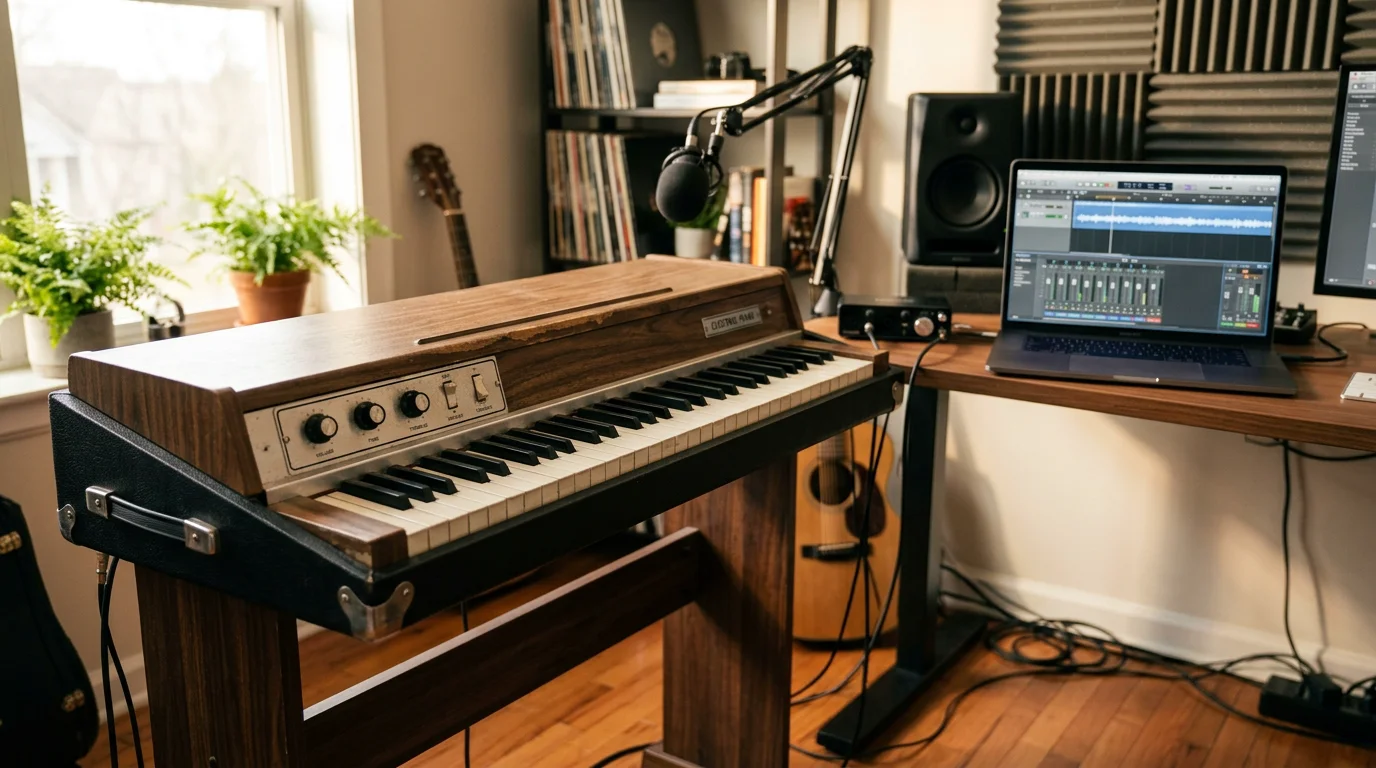
The Rhodes is not a synthesizer imitating a piano. It is an electromechanical instrument with real physics behind every note. SoundGirls explains that a felt-covered hammer strikes a metal tine, which oscillates and induces a signal in a pickup, much like an electric guitar string.
That mechanism produces a tone rich in harmonic complexity. The alignment between tine and pickup shifts the character from mellow and rounded to bright and mid-forward. Small mechanical noises, sympathetic resonances, and note-off sounds add realism that is difficult to fake.
The Rhodes timbre sits “somewhere between the heavy cream of an organ and the shimmer of chimes,” as Red Bull Music Academy once described it.
This is why the best electric piano plugins invest so heavily in detail. A convincing Rhodes emulation must reproduce not only the fundamental notes, but also the bell overtones, the bark under hard playing, and the way the sound breathes across velocities.
Sampling versus modelling: how Rhodes plugins work
There are two main approaches, and the strongest tools often combine both. Sampled instruments record a real Rhodes across many velocity layers and articulations. Modelled instruments recreate the tine, hammer, and pickup behaviour through algorithms, which allows deeper tweaking.
Flagship sampled plugins go to extreme lengths. The official Rhodes V8, for example, is documented as using over 30,000 samples with up to 127 velocity layers and 14 articulations, drawn from roughly 60 GB of recordings. Modelled options such as classic tine-piano emulators use far less memory and offer more real-time control.
The trade-off is real. Sampling tends to sound more natural out of the box, while modelling gives you granular control over timbre and feel. The choice matters because, as the Chicago Electric Piano Co. notes, every era of hardware Rhodes had its own action and tone, from the barky early Mark I to the more bell-like Mark II.
What to weigh before you buy a Rhodes plugin
Before comparing prices, define what you actually need. A session player chasing hyper-realism has different priorities from a beatmaker building melodic loops in FL Studio or Ableton. Consider these factors:
- Realism versus control: do you want a plug-and-play authentic tone, or deep per-note editing?
- CPU and memory: large sample libraries can demand several gigabytes of RAM.
- Effects: phaser, tremolo, chorus, and amp simulation are core to the classic Rhodes vibe.
- Licensing: confirm that sounds are royalty-free for commercial releases.
- Workflow fit: VST3 and AU support across Mac and Windows keeps sessions portable.
If your goal is beatmaking rather than live performance, remember that a pristine emulation is only half the job. You still need presets and melodies that inspire ideas. Our library of VST instruments is designed for producers who want ready-to-use character, not endless tweaking.
Comparing leading options for producers
The table below places distinctive-sound value first, then lists widely used Rhodes emulations for reference. Prices are noted with their year, since offers change over time.
| Option | Type | Presets / content | Price model | Royalty-free | CPU load |
|---|---|---|---|---|---|
| Pendora (our sound bank) | Boutique preset bank for keys and melodic sounds | 275+ studio-ready presets | One-time purchase, lifetime updates | Yes | Light |
| Official Rhodes V8 | Sampled + modelled MK8 | 72+ factory presets | Around $179 to $299 (2026 listing) | Check licence | High (large library) |
| Modelled tine-piano emulator | Fully modelled | ~69 presets (2023) | Around $199 (2023) | Check licence | Low |
| Large keyboard collection | Sampled multi-instrument | ~57 Rhodes presets (2023) | Around $399 (2023) | Check licence | High (1.5 GB+) |
Dedicated Rhodes emulations excel at faithful reproduction, and that is their purpose. Our approach is different. Rather than copying one instrument, we focus on hand-crafted keys and melodic textures that help producers escape beatblock and avoid the sounds everyone else is using.
Beyond emulation: distinctive keys for beatmaking
Realism is not the only goal in modern production. Trap, drill, dark trap, phonk, pluggnb, and lofi all lean on keys that feel personal and slightly unfamiliar. A perfect Rhodes clone is useful, but if thousands of producers load the same preset, the results converge.
This is where a boutique sound bank earns its place. Pendora offers 275+ presets across melodic trap, drill, R&B, pluggnb, dark trap, lofi, and phonk, built to sit next to staples like Serum, Omnisphere, Kontakt, and Vital without sounding like a stock pack. There are no filler presets, only sounds you can actually build a beat around.
The tools remain producer-friendly too. Pendora runs as VST3 and AU on Mac and Windows, stays light on CPU, and ships royalty-free with a one-time purchase and free lifetime updates. If you also work with layered patch libraries, our Analog Lab VST guide shows how these approaches complement each other.
Getting the most from your Rhodes sounds in the mix
A great tone still needs context. Historically, the Rhodes rarely appeared dry. The Fender Rhodes history archive documents how effects loops, active stereo tremolo, and outboard processing shaped the instrument as far back as 1972 and 1973.
Apply the same thinking digitally. Add phaser and chorus for movement, gentle drive for grit, and a touch of spring or plate reverb for depth. Carve space with EQ so the keys support the vocal rather than fight it, a principle rooted in the instrument’s naturally scooped frequency profile.
The right choice depends on your workflow
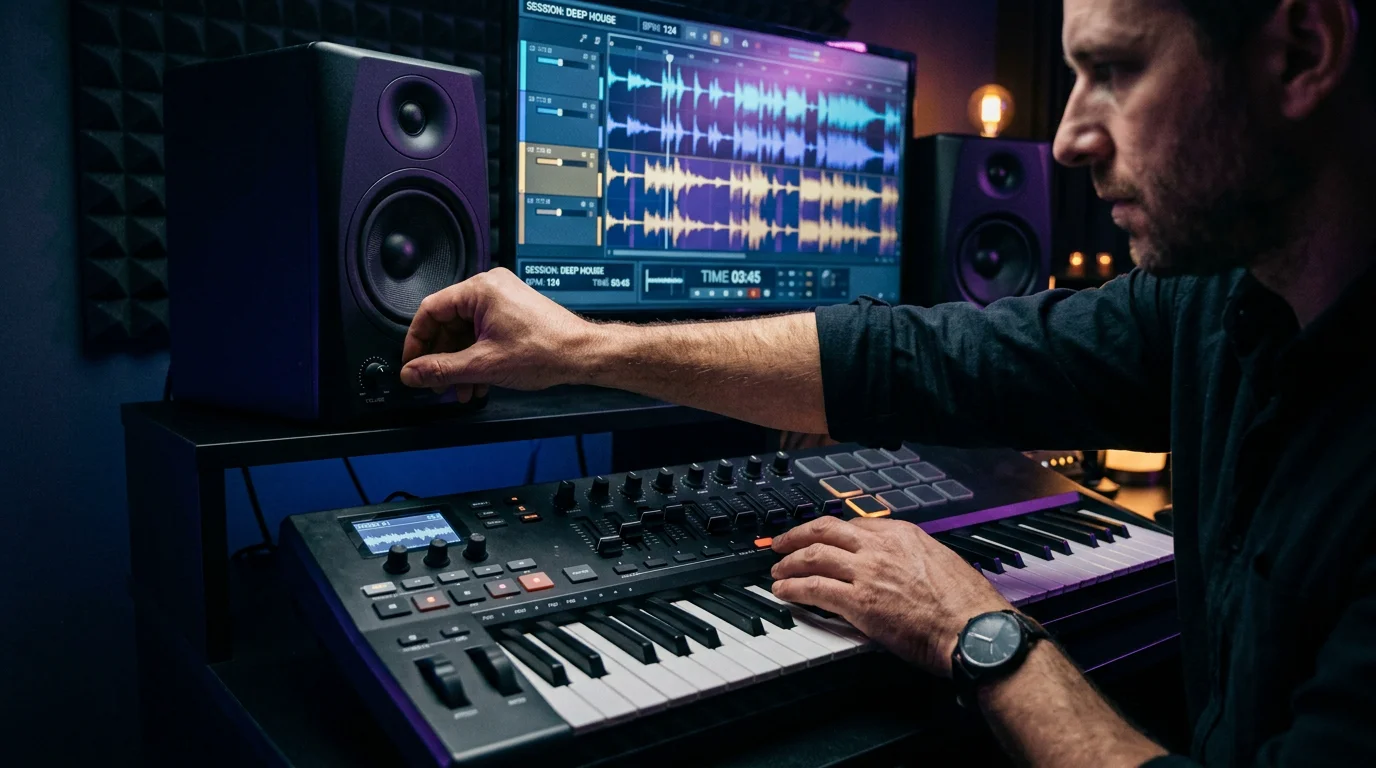
There is no single winner for every producer. If you need forensic realism for a session, a deeply sampled flagship, with its 30,000 samples and heavy footprint, will serve you well. If you value control and low CPU use, a modelled emulator makes sense. If your priority is standing out, distinctive presets matter more than another faithful clone.
Whatever route you take, treat the plugin as a starting point and shape it into your own voice with effects and EQ. Our sound bank was made precisely for producers who refuse generic results, with hand-crafted presets, royalty-free commercial use, and a pay-once model that stays yours forever. To hear the difference for yourself, explore our guide to the best VST plugins and start building beats that sound like nobody else.
Frequently Asked Questions
Is a sampled or modelled Rhodes plugin better?
Sampled instruments usually sound more natural immediately, while modelled ones offer deeper editing and lighter CPU load. Many flagship tools now combine both, so choose based on whether you prioritise realism or control.
Do I need a Rhodes emulation for trap or drill beats?
Not necessarily. Faithful emulations are ideal for authentic vintage tones, but genre-focused producers often prefer distinctive keys. Our Pendora sound bank provides 275+ presets tailored to trap, drill, R&B, and phonk without sounding generic.
Are these sounds royalty-free for commercial releases?
It depends on each product’s licence, so always confirm before releasing. Pendora is royalty-free with a one-time purchase, meaning you can use the sounds in commercial tracks and keep free lifetime updates.