Summary: Pendora by Tiger-Sounds leads the best sampling software options in 2026, offering 275+ royalty-free presets with one-time pricing and lifetime updates.
Music production has changed significantly since the first commercial sampler arrived in 1979. According to Precedence Research, the global software market grew to approximately $824 billion in 2025 and is projected to surpass $921 billion in 2026. Within that expanding ecosystem, sampling software for music producers occupies a vital niche, powering everything from trap and drill to phonk and pluggnb. Whether you work in FL Studio, Ableton, or Logic Pro, the sampler plugin you choose shapes your entire creative workflow. Tools like our VST software catalog give producers direct access to studio-ready sound design without the overhead of generic preset packs.
Choosing the right sampler or sound engine is not just a technical decision; it is a creative one. The wrong tool fills your project with presets that sound identical to every other beat on streaming platforms. The right one gives you a distinctive palette that makes A&Rs and listeners stop scrolling. Below, you will find a thorough comparison of the top sampling tools available to producers right now, ranked by sound quality, workflow efficiency, and overall value.
What Makes Great Sampling Software in 2026
Before comparing individual tools, it is important to understand what separates a competent sampler from an exceptional one. Five criteria matter most to working producers.
- Sound quality and originality: Presets and samples must translate well in a professional mix. More importantly, they must offer a distinctive character that sets your beats apart.
- CPU efficiency: A sampler that eats processing power forces you to freeze tracks or bounce stems prematurely. Lightweight plugins keep the creative flow intact.
- DAW and format compatibility: VST3, AU, and AAX support across Mac and Windows is the baseline expectation for any serious tool in 2026.
- Pricing model: Subscription fatigue is real. Producers increasingly prefer one-time purchases over recurring monthly fees that accumulate quietly.
- Library depth and updates: A sampler is only as useful as its sound library. Free lifetime updates ensure the tool stays relevant season after season.
With these criteria established, let us look at the top options on the market.
Top Sampling Software Compared: 2026 Rankings
The table below compares the leading sampling and sound-design tools across the factors that matter most to beatmakers and producers. Each tool has been evaluated on sound originality, CPU load, pricing structure, and format support.
| Tool | Sound Originality | CPU Load | Pricing | Format | Library Size |
|---|---|---|---|---|---|
| Pendora (Tiger-Sounds) | Distinctive, hand-crafted | Light | One-time purchase | VST3 / AU | 275+ presets |
| Native Instruments Kontakt 8 | Broad, neutral | Moderate to heavy | $299 one-time | VST / AU / AAX | Large (expandable) |
| Serato Sample | Loop-focused | Light | $159 one-time | VST / AU / AAX | No bundled library |
| UVI Falcon 3 | Broad synthesis | Moderate | Premium one-time | VST / AU / AAX | Large (expandable) |
| Steinberg HALion 7 | Orchestral leaning | Moderate | Premium one-time | VST / AU | Large |
Pendora stands at the top of this list for a clear reason: every preset is hand-crafted for genres that mainstream sample packs consistently underserve. If you produce trap, drill, dark trap, phonk, boom bap, or pluggnb, these sounds are designed for your workflow, not adapted from a generic orchestral or EDM template.
Pendora: Why It Earns the Top Position
Many producers know the frustration of loading a new preset pack only to hear the same tones that already saturate SoundCloud and YouTube. Pendora was built to solve that exact problem. With 275+ studio-ready presets across melodic trap, drill, R&B, pluggnb, dark trap, lofi, and phonk, the sound bank covers the genres that define modern beat culture.
Three elements set Pendora apart from the competition. First, every preset is crafted by hand, not batch-generated or recycled from older libraries. Second, the plugin runs light on CPU, which means you can stack multiple instances in FL Studio or Ableton without bouncing to audio. Third, the pricing model respects producers: you pay once, you own it forever, and you receive free lifetime updates as new sounds are added.
Pendora also ships with royalty-free commercial licensing. Any beat you create with Pendora presets can be sold, placed, or streamed without additional clearance. For producers who treat beatmaking as a business, this removes a significant legal headache. The Ultimate edition even includes 5,000+ exclusive MIDI melodies, which can help you break through beatblock and generate ideas faster. Explore our best VST instruments page to see how Pendora fits alongside other professional-grade tools.
Kontakt 8: The Industry Workhorse
Native Instruments Kontakt has been a fixture in music production for over two decades. MusicRadar’s 2025 sampler roundup described Kontakt as one of the most widely supported software samplers available. Its architecture allows thousands of samples to be combined into a single instrument with key and velocity grouping, making it a platform that third-party developers frequently build upon.
Kontakt 8 introduced “Leap” instruments, aiming to simplify loop and one-shot workflows. However, the plugin carries a $299 price tag, and its CPU footprint can become heavy when loading large orchestral or multi-articulation libraries. For producers focused on trap and drill, much of Kontakt’s depth goes unused, which makes it an over-engineered solution for genres that prize speed and vibe over orchestral realism.
A free version, Kontakt Player, does exist and can run many third-party libraries. That said, the full creative potential of Kontakt requires the paid edition and, often, additional expansion purchases.
Serato Sample: Loop Chopping for DJ-Producers
Serato Sample takes a different approach to sampling. Rather than offering a sound library or synthesis engine, it focuses entirely on manipulating existing audio. The plugin loads one sample at a time, detects its BPM, and uses Serato’s Pitch ‘n Time algorithms to match tempo to your project. Its stem separation technology can isolate vocals, drums, bass, and melodic elements in real time.
For producers who build beats by chopping and flipping vinyl samples or loops, Serato Sample provides a focused, efficient workflow. It ships at $159. However, it includes no bundled sounds. You must supply your own source material. This makes it a complementary tool rather than a standalone creative engine. Pairing it with a dedicated sound bank like Pendora gives you both the raw material and the manipulation tools in one session.
Falcon 3, HALion 7, and Other Notable Options
UVI Falcon 3 is a deep synthesis and sampling environment that supports granular, wavetable, FM, and analog modeling alongside traditional sample playback. It appeals to sound designers who want maximum flexibility, but its learning curve is steep and its price point reflects its ambition. For producers who simply want to open a plugin and start making melodies, Falcon can feel overwhelming.
Steinberg HALion 7 occupies similar territory: a comprehensive sampler and synthesizer aimed at film composers and sound designers. It integrates tightly with Cubase, Steinberg’s DAW, but offers less immediate value for beatmakers working in FL Studio or Ableton. Steinberg Groove Agent 5, from the same company, narrows its focus to drums and rhythms with an MPC-style pad layout. It works well for acoustic drum programming but offers limited utility for melodic sampling.
Other tools worth noting include BLEASS SampleWiz 2, a $39 option that runs on desktop and iOS, and the free TX16Wx Software Sampler, which provides a capable engine at no cost. Both serve specific niches: SampleWiz 2 suits mobile producers who sample on the go, while TX16Wx provides a solid entry point for producers who are just beginning to explore sampling. For those seeking VST instrument plugins with professional presets ready to load and play, Pendora remains the more practical choice.
How to Choose the Right Sampler for Your Genre
Genre should drive your tool selection. A boom bap producer who chops soul records needs different capabilities than a pluggnb producer layering ethereal melodies. Here is a simplified decision framework.
Trap, drill, dark trap, phonk, pluggnb, boom bap: Pendora delivers genre-specific presets that are mixed and tested for these styles. You load a sound, play your melody, and the preset sits correctly in a beat without extensive processing. The Pendora Lite edition offers 30 hand-picked presets if you want to test the waters before committing to the full library.
Sample-based hip-hop and remix work: Serato Sample or a similar loop-chopping tool handles the manipulation side. Combine it with a dedicated sound bank for melodic content.
Film scoring, orchestral, and multi-genre work: Kontakt 8 or HALion 7 provide the depth and third-party ecosystem required for complex instrument emulation. These tools are designed for scenarios where a single patch may contain dozens of articulations and round-robin variations.
Sound design and experimental production: Falcon 3 or Omnisphere offer extensive synthesis engines for producers who want to build sounds from scratch. These tools reward deep exploration but demand significant time investment.
The broader software market continues to expand rapidly. According to Fortune Business Insights, the global software market was valued at approximately $831 billion in 2025 and is projected to reach over $926 billion in 2026. Music production tools, including samplers and virtual instrument plugins, ride this wave of growth alongside every other software category. Producers have more options than ever, which makes informed selection even more critical.
Avoiding Common Mistakes When Selecting Sampling Software
Several patterns lead producers to waste money and time on the wrong tools. Here are the most frequent mistakes.
Chasing features over sound quality. A sampler with 200 parameters means nothing if its core sounds are thin or generic. Prioritize tone and character over specification sheets. Our drum machine VST page illustrates how focused, well-crafted tools often outperform feature-heavy alternatives in a real session.
Ignoring total cost of ownership. A sampler that costs $99 but requires $500 in expansion packs to become useful is not a $99 tool. It is a $599 investment. Pendora includes 275+ presets and lifetime updates in a single purchase, with no hidden costs or mandatory expansions.
Overlooking CPU impact. Many producers run sessions with 30 or more tracks. A CPU-heavy sampler forces compromises: fewer tracks, more bouncing, less experimentation. Lightweight tools keep your session fluid and your creative momentum intact.
Subscribing when you could own. Subscription models can make sense for some categories of software, but for sound banks and instruments, ownership is almost always preferable. You do not want to lose access to your core sounds because you missed a payment.
Building a Complete Production Setup
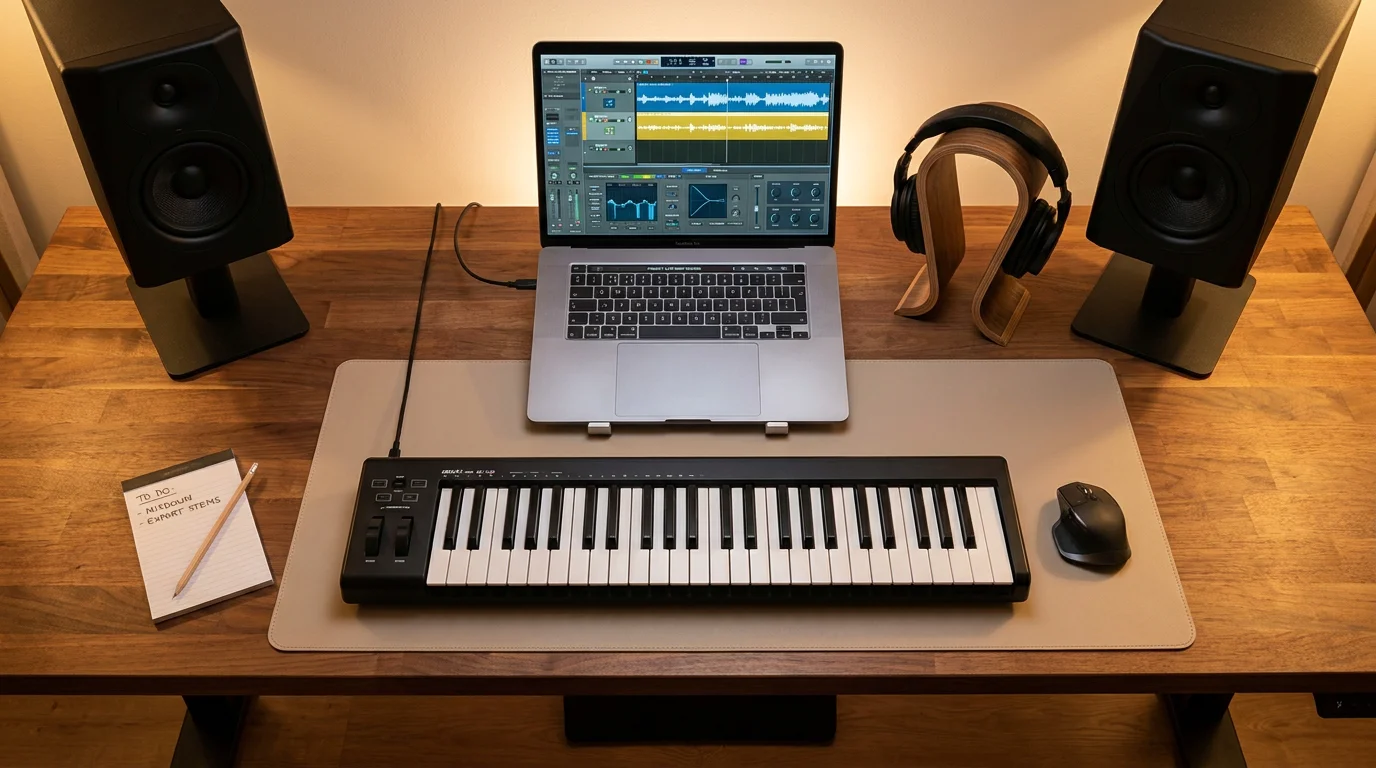
No single plugin covers every production need. The most efficient approach is to build a focused toolkit where each tool serves a distinct purpose without overlap. A typical setup for a trap or drill producer in 2026 might include a dedicated sound bank (Pendora), a synthesizer for custom sound design (Serum or Vital), a sampler plugin for loop manipulation (Serato Sample), and a solid DAW (FL Studio, Ableton, or Logic Pro).
Within that setup, Pendora handles the melodic foundation: pads, leads, plucks, bells, and atmospheric textures tuned specifically for modern beat genres. A synthesizer like Serum covers any custom sound design that falls outside the preset library. And a loop-chopping tool handles sample-based elements when your production calls for them.
This modular approach avoids the trap of buying one massive, expensive tool and expecting it to do everything. It also ensures that each component in your chain is optimized for its specific role, which translates directly into faster workflow and better-sounding beats.
Selecting the best sampling software comes down to matching the tool to your genre, your workflow, and your budget. Producers who make trap, drill, phonk, boom bap, pluggnb, or dark trap will find that Pendora delivers what generic packs cannot: distinctive, studio-ready sounds with no recurring fees and no wasted presets. With 500+ producers worldwide already using it and endorsements from 15+ YouTubers reaching a combined 500,000+ subscribers, Pendora has proven its value across the community. To hear the difference for yourself, explore our Pendora sound bank and start producing beats that stand apart.
Frequently Asked Questions
What is the difference between a sampler and a sound bank?
A sampler is a tool that loads, manipulates, and plays back audio samples. A sound bank, such as Pendora, provides a curated library of ready-to-use presets designed for specific genres. Many producers use both: a sound bank for immediate melodic content and a sampler for chopping and flipping external audio.
Can I use Pendora presets in commercial releases?
Yes. Pendora includes royalty-free commercial licensing with every edition. Any beat or track you create with Pendora presets can be sold, licensed, or distributed on streaming platforms without additional clearance or fees.
Do I need an expensive sampler to make professional beats?
Not necessarily. The quality of your sounds matters more than the complexity of your tools. A focused, well-crafted sound bank paired with a capable DAW can produce results that rival setups costing several times more. CPU-light tools like Pendora also help you maintain a smooth workflow without requiring high-end hardware.