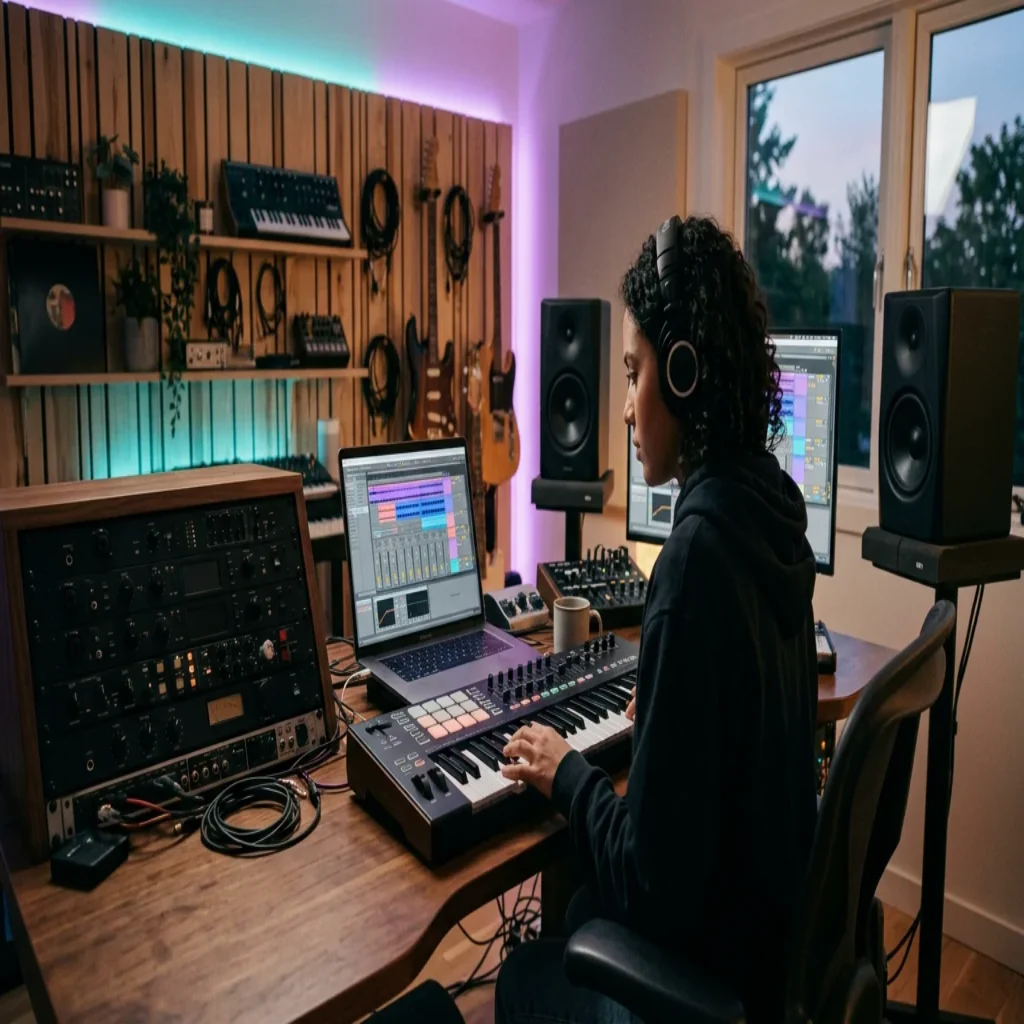
TL;DR: Free plugins give producers a genuine entry point into synthesis, mixing, and beatmaking without spending anything. They excel at fundamentals but circulate widely, which pushes many beats toward the same tones. A smart approach combines dependable free tools with a hand-crafted preset bank for a distinct identity.
The audio plugin market is expanding quickly, and much of that momentum comes from creators working outside traditional studios. Zero-cost tools now sit at the center of countless bedroom setups, letting anyone open a digital audio workstation and start producing. Yet abundance creates a paradox: when everyone reaches for the same no-cost audio tools, beats begin to blur together. Our roundup of free audio plugins is built with that tension in mind.
Understanding where these tools fit is a matter of strategy, not budget. According to The Business Research Company, the music production software market was valued at 1.53 billion dollars in 2025 and rose to 1.63 billion dollars in 2026. That growth reflects a wave of independent producers who need capable tools first and character second. This guide maps both.
Why free plugins matter in a producer’s workflow
For a producer opening a first session, cost is the immediate barrier. This is exactly where free plugins remove friction, letting you learn synthesis, EQ, and compression before committing money. The shift toward software-first production is well documented. Global Growth Insights reports that home studio adoption accounts for nearly 54% of total plugin usage, and that VST formats are preferred by roughly 49% of users for music production tasks.
The appeal is straightforward. Tools such as Vital deliver serious wavetable synthesis at no cost, and several free effects hold their own against paid units. If you are building a beat in FL Studio, Ableton, or Logic Pro, the stock instruments plus a few well-chosen freebies can carry you a long way. The value is real: fundamentals do not require a price tag.
Where free tools help and where they fall short
Consider a common scenario. You download a popular free synth, load a factory preset, and build a melodic idea. So do thousands of other producers that same week. The plugin performs well, yet the preset itself is everywhere. This is the quiet limitation of the free tier: broad, shallow libraries whose presets circulate so widely they pull your beat back toward the average.
Reliability is another consideration. Business Research Insights notes that 58% of users report compatibility challenges across DAWs and operating systems, which is a frequent frustration with informally maintained free releases. Subscription models solve part of the access problem but introduce recurring payments that never end. Between these poles sits a practical middle path: keep dependable free tools for processing, then invest selectively in the sounds that define your identity.
Categories of free tools worth your attention
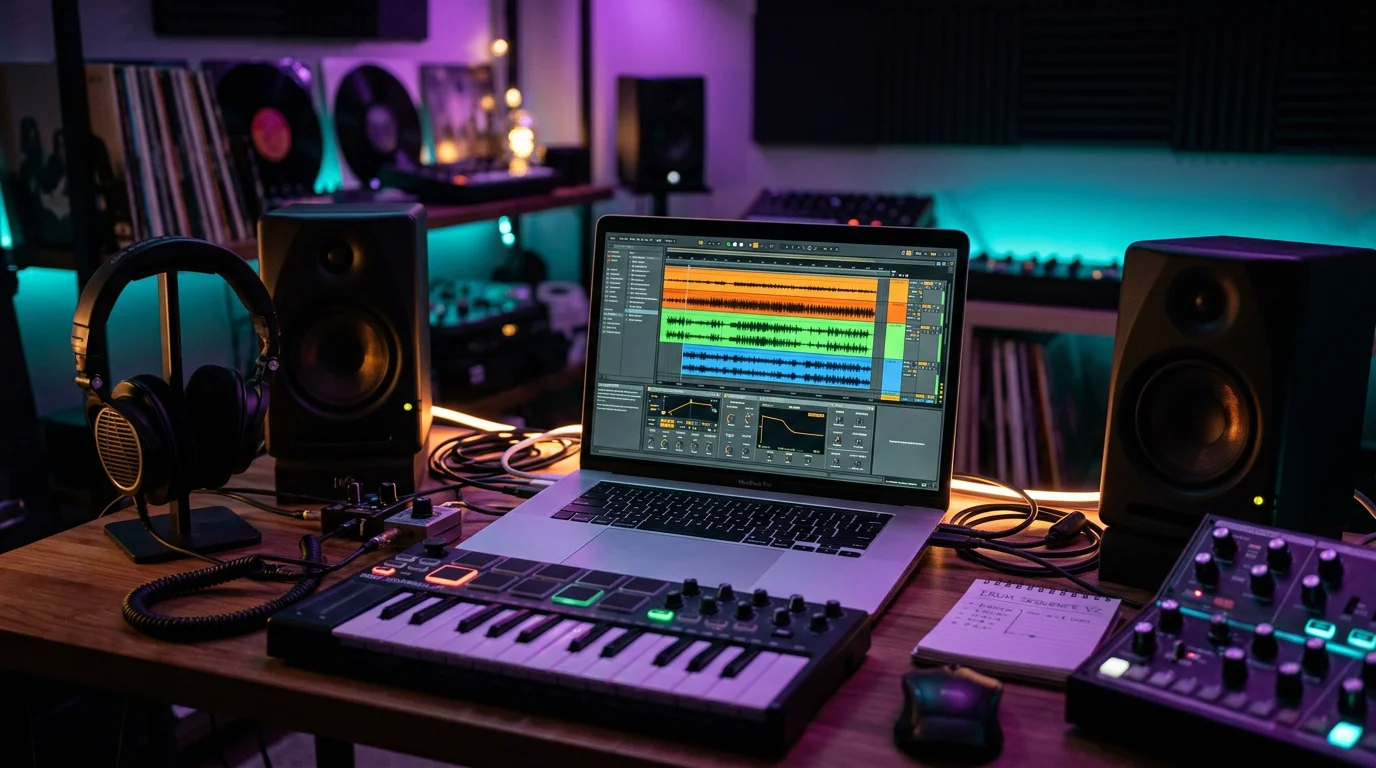
Not every free tool deserves a slot in your template. The strongest picks fall into a few clear categories: wavetable and hybrid synths, transient and dynamics processors, tape and character effects, and stock DAW instruments you already own. Each earns its place by handling a fundamental task cleanly rather than by chasing novelty.
The table below frames the trade-offs between free options, subscription bundles, and a boutique preset bank. It compares the criteria the brief lets us verify honestly, so you can decide where your time and money go.
| Option | Cost model | Sound identity | Best for |
|---|---|---|---|
| Our Pendora sound bank | Pay once, yours forever | Hand-crafted, 275+ studio-ready presets | A distinct sound across trap, drill, phonk, pluggnb |
| Free synths and effects | No cost | Broad, widely shared presets | Learning fundamentals on any budget |
| Subscription bundles | Recurring monthly or yearly | Large but shared libraries | Rotating access to many tools |
Our position is simple. Free plugins are the ideal proving ground for technique, and a focused preset collection is where a recognizable sound is actually made.
Building a distinctive sound beyond the free tier
Here is the differentiator that matters most in 2026. The synthesis engine is only as inspiring as the presets driving it, and shared presets are the fastest route to a beat that sounds like every other beat. Independent creators feel this pressure acutely, since more than 60% of the plugin user base now works outside traditional studios according to industry market segmentation. When everyone starts from the same defaults, differentiation becomes the real skill.
This is why we built our approach around hand-crafted presets rather than another generic pack. Our VST plugins for FL Studio and our wider Pendora bank were mapped deliberately to melodic trap, drill, R&B, pluggnb, dark trap, lofi, and phonk. Every preset is crafted, not licensed, generated, or recycled, so you spend less time redesigning and more time writing. That is also a practical answer to beat block: fresh starting points that are not already saturated across the internet.
Choosing tools for your genre and DAW
Genre should drive your selection more than brand names. Dark trap wants haunting bells and detuned pads. Drill leans on sliding 808s and cold, minor melodies. Phonk thrives on cowbells, tape grit, and vintage character, while pluggnb needs bright, dreamy plucks and airy keys. Match your tools to those demands rather than collecting installers you never open.
Compatibility is the second filter. Confirm that a tool runs as VST3 or AU on your system, whether you produce on Mac or Windows, and that it stays light on CPU during dense sessions. Vocal chains deserve the same care; if you record and process vocals, our free vocal VST plugins are worth a look. Growth here is driven partly by automation: Research and Markets reports the audio plugin software market climbing from 2.11 billion dollars in 2025 to 2.3 billion dollars in 2026, with AI-based processing among the leading forces.
Bringing it together
Used wisely, free plugins are a foundation rather than a finish line. They teach you synthesis and mixing, they cost nothing, and they carry a first project from idea to arrangement. The limitation is not quality but sameness, because shared presets pull your work toward the crowd. Keep your dependable free processors, learn your craft on them, and then invest your attention in the sounds that make a beat unmistakably yours. Character, not budget, is what listeners remember.
Take action with Tiger-Sounds
If you have hit the ceiling of shared, recycled sounds, the next step is a bank engineered to keep you out of the crowd. We built Pendora for producers who work in trap, drill, dark trap, phonk, boom bap, and pluggnb and who refuse to blend in with everyone else’s defaults.
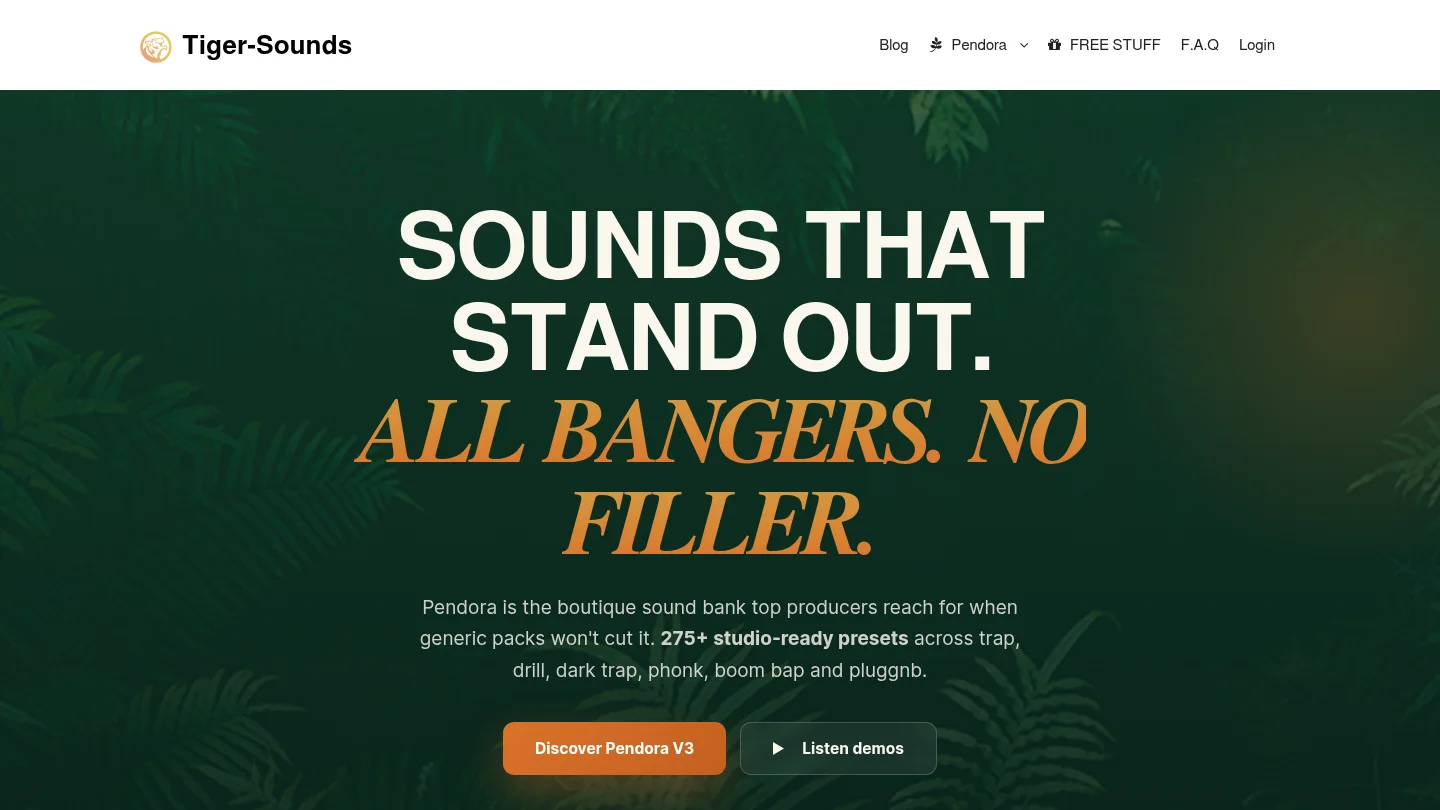
Explore our Pendora sound bank, featuring 275+ studio-ready presets that are hand-crafted, royalty-free with commercial use, and light on CPU across VST3 and AU on Mac and Windows. You pay once and keep them, with lifetime updates on eligible editions. Trusted by 500+ producers worldwide and featured by more than 15 YouTubers, it is designed so your beats stand apart from the very first idea.
Frequently Asked Questions
Are free plugins good enough for professional beats?
Yes, for fundamentals such as EQ, compression, and basic synthesis, free tools perform well. The limitation is sonic identity, because their presets circulate widely and can make your beat sound like many others. Pair them with hand-crafted presets when you need a distinct signature.
Do free plugins work in FL Studio, Ableton, and Logic Pro?
Most reputable free tools ship in VST3 and AU formats, which cover FL Studio, Ableton, and Logic Pro on Mac and Windows. Always confirm the format and system compatibility before installing. Compatibility issues remain a common complaint across informally maintained releases.
How do free tools compare to a paid preset bank?
Free tools give you engines and processors at no cost, while a paid bank gives you crafted sounds ready to use. Our Pendora collection provides 275+ studio-ready presets across several genres, hand-crafted rather than recycled. It is meant to complement, not replace, your free processing chain.
Will free plugins help me overcome beat block?
They can help you practice, though shared presets often lead you back to familiar ideas. Fresh, genre-specific starting points are more effective for breaking a creative rut. That is precisely why our presets are mapped to distinct lanes such as dark trap, drill, and pluggnb.
Are subscription bundles better than one-time purchases?
Subscriptions offer rotating access to many tools but charge recurring fees that never end. A one-time purchase gives you lasting ownership of the sounds you rely on. Your choice should reflect how often you use the tools and whether you value permanence over breadth.