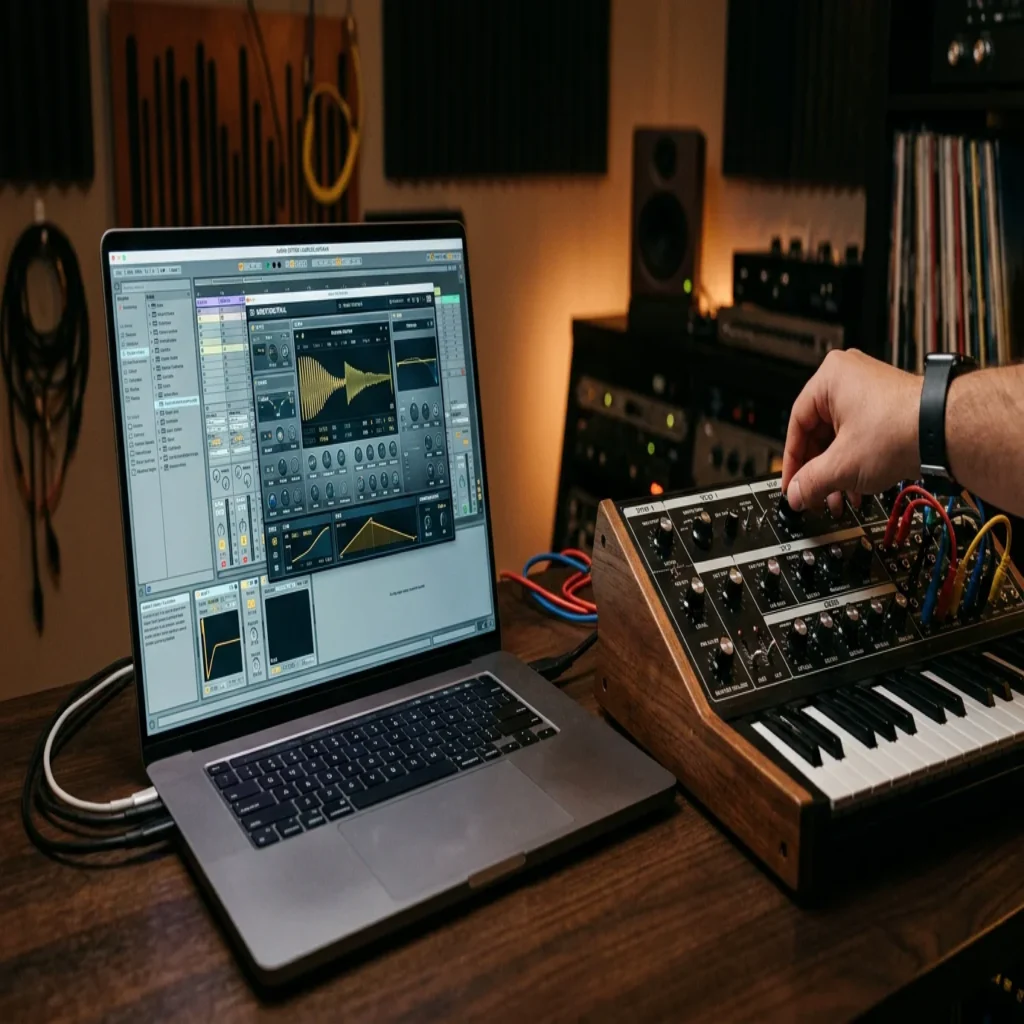
Summary: For most producers in 2026, VST instruments win on cost, recall, and workflow, while analog hardware still offers tactile character. Software synth sales are growing near 15% yearly.
Are analog synthesizers still worth the investment when a laptop can host hundreds of virtual instruments? This is one of the most persistent debates in modern beatmaking, and it rarely produces a clean answer. Both camps have loyalists, and both have real strengths. If you want production-ready sounds without the debate, our VST plugins deliver hand-crafted presets that drop straight into your session.
The reality is that the vst vs analog synth question depends on your budget, your genre, and how you like to work. According to market analysis, the industry has shifted decisively toward software-based synthesizers, yet analog hardware continues to hold a loyal, if smaller, following. Understanding what each format actually gives you matters more than picking a side.
Understanding the Two Formats
A virtual instrument runs inside your DAW, whether that is FL Studio, Ableton, or Logic Pro. It produces sound through code and digital signal processing. An analog synth generates sound through physical circuitry: real oscillators, filters, and voltage flowing through hardware. Industry reports note that software synthesizers offer cost-effectiveness and flexibility, and they integrate directly within digital audio workstations.
This distinction shapes everything downstream. Software tools like Serum, Vital, and Omnisphere give you unlimited recall, instant presets, and no physical footprint. Analog machines give you a hands-on interface and a sonic signature that many producers describe as warm and unpredictable. Neither is objectively superior. They serve different creative priorities.
Sound Quality: The Warmth Argument
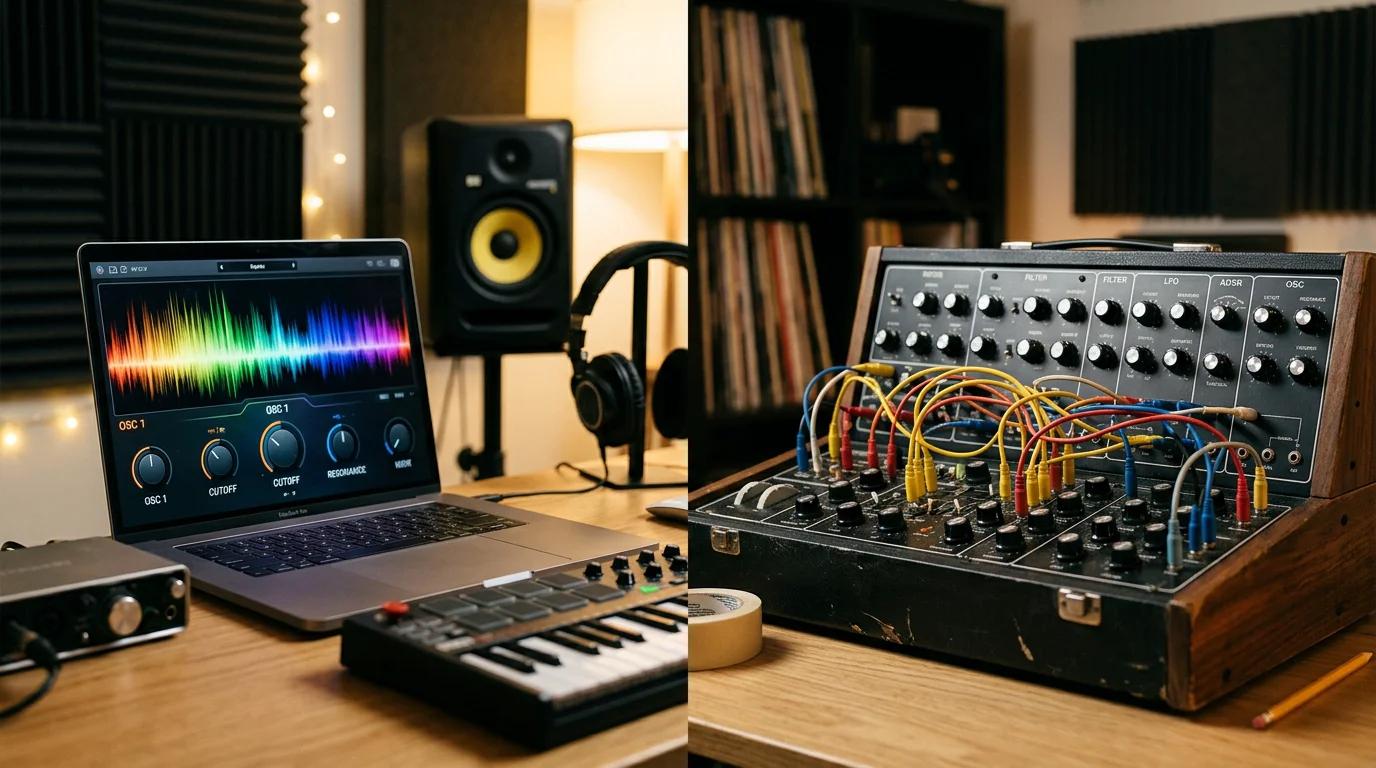
The classic case for analog is warmth and character. Circuit-level behavior, subtle tuning drift, and filter distortion create a texture that many producers value. Modern modeling has closed much of that gap, though not entirely. As producers on gear forums often note, chaotic behavior, such as an analog filter pushed into distortion with multiple modulation sources, remains one of the harder things to emulate perfectly.
Still, in a finished mix, the difference is frequently inaudible. For trap, drill, phonk, or pluggnb, what matters is whether the sound cuts through and fits the beat. That is where curated presets earn their place. Rather than chasing hardware, many producers reach for our analog synth plugins presets to get that character instantly, with no calibration and no noise floor.
Cost and Accessibility
Price is where the two paths diverge sharply. Research on hardware synthesizers notes that a standard analog synthesizer can cost between 500 and 3,000 US dollars or more, depending on features and brand. That is a significant barrier for beginners and budget-conscious beatmakers.
Software flips this equation. The same research points out that many virtual instruments are available at a fraction of the cost, or even free, while offering extensive sound libraries, automation, and portability without physical space. This accessibility explains why the software synthesizer market, estimated at 500 million dollars in 2025, is projected to grow at roughly 15% annually through 2033. For producers weighing value, a preset bank costs less than a single hardware unit yet covers many genres.
Workflow: Speed Versus Hands-On Control
Consider a producer finishing a beat at 2 a.m. With a virtual instrument, every setting is saved with the project. Reopen the session tomorrow and the patch is exactly as you left it. This total recall is impossible with hardware, where you must reset every knob by hand.
Analog offers something software struggles to match: immediacy. Turning a physical filter knob while a loop plays invites happy accidents. Many producers report that hardware constraints, such as fewer modulation options, push them toward better creative decisions. The trade-off is convenience versus tactile inspiration.
For fast, genre-specific production, presets remove the friction entirely. If you produce dark trap or boom bap and need a usable sound in seconds, our VST instruments presets are built to be studio-ready on load, which keeps your momentum intact and helps you push past beatblock.
Comparison at a Glance
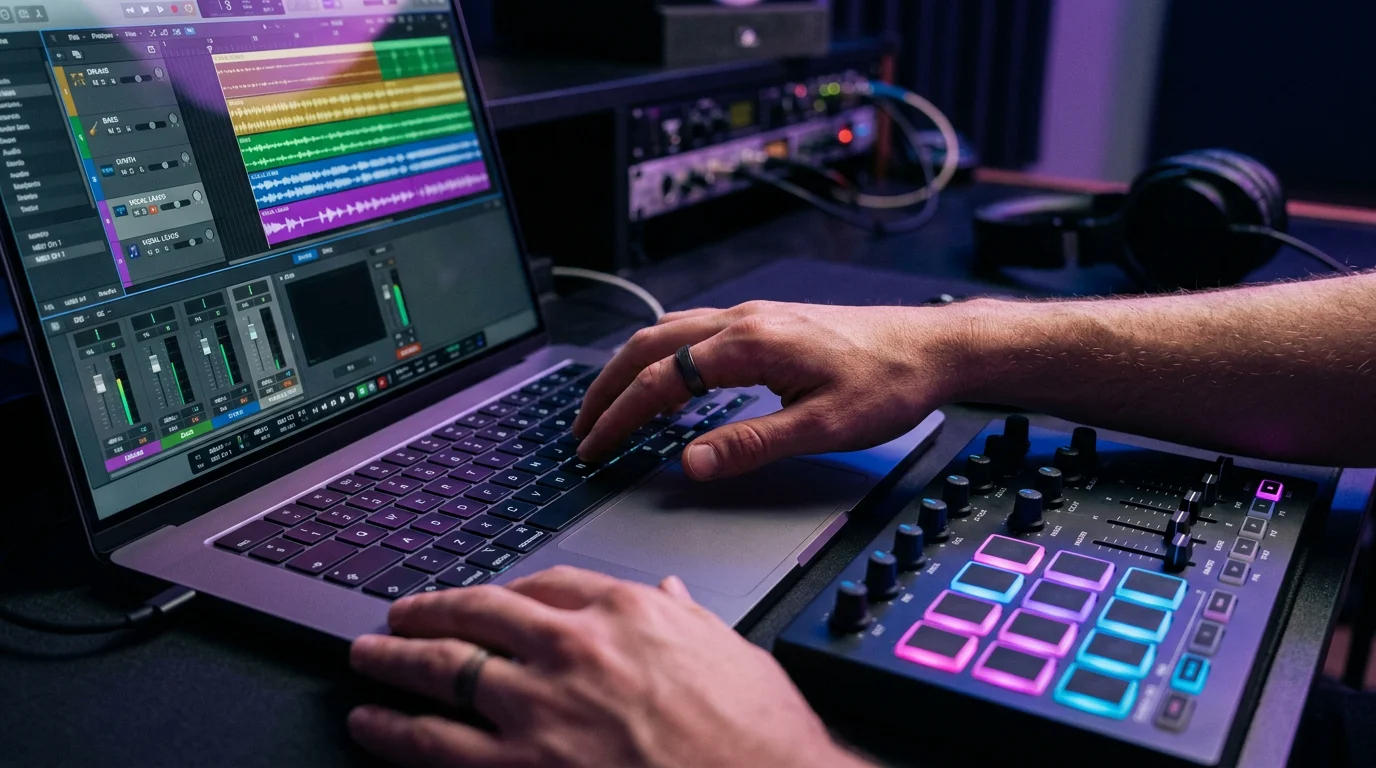
The table below weighs the practical factors that matter to working producers. Our Pendora preset bank is included as the reference point for software users who want distinctive sounds without building patches from scratch.
| Factor | Pendora presets (VST/AU) | Generic VST synths | Analog hardware |
|---|---|---|---|
| Upfront cost | One-time, from 97€ | Free to mid-range | 500 to 3,000 US dollars+ |
| Total recall | Yes | Yes | No |
| CPU footprint | Light on CPU | Varies | None (external) |
| Sound distinctiveness | Hand-crafted, not recycled | Widely reused | High character |
| Portability | Full (Mac and Windows) | Full | Limited |
| Genre coverage | Trap, drill, phonk, pluggnb and more | Varies | Depends on unit |
The pattern is clear. Hardware wins on tactile feel and raw character, while software wins on cost, recall, and portability. Curated presets add a third advantage: sounds that do not appear in every other beat.
The Bigger Market Picture
Neither format is disappearing. The music synthesizers market was valued at 2.5 billion dollars in 2024, driven by home production setups, a resurgence of analog and modular gear, and rising demand for software synths. Analog is experiencing what many call a renaissance, while digital tools dominate on value and accessibility.
For most beatmakers, the practical route is software-first, with hardware added only when it fills a specific gap. The analog synthesizer market itself, worth roughly 500 million dollars in 2025 per industry estimates, includes both hardware and software virtual analog instruments, which shows how blurred the line has become. What separates strong beats today is rarely the format. It is the quality and originality of the sound.
Conclusion
The choice between software synthesizers and analog hardware comes down to your goals. If you value tactile control and raw character, and your budget allows for units running 500 dollars and up, analog has real merit. If you prioritize cost, recall, and speed, software is the pragmatic winner, which is why the segment is growing near 15% each year. The deciding factor is not the tool but the sound you put in your beats. Hand-crafted presets that avoid the recycled libraries everyone else uses keep your work distinct and help you beat production fatigue. To move faster with sounds built for your genre, explore our Pendora preset bank and start producing today.
Frequently Asked Questions
Are VST synths good enough for professional beats?
Yes. Professional producers regularly release chart work made entirely with virtual instruments. When paired with quality presets, such as our hand-crafted Pendora bank, software delivers studio-ready results without hardware costs.
Do analog synths sound noticeably better than VSTs?
In isolation, some analog character is audible, especially in extreme filter and modulation settings. Inside a finished mix, however, the difference is usually minimal and depends more on your sound design than the format.
Which is better for beginners?
Software is the more accessible starting point. It requires no large investment, saves every setting with your project, and runs on Mac and Windows, making it easier to learn beatmaking before considering any hardware purchase.