Summary: Yes, a sound bank can save time when it makes suitable sounds easier to find and audition. The benefit depends on how well the sounds fit your genre, how clearly the bank is organized, and whether you can customize a preset quickly. A large library alone is no guarantee: unfocused browsing can take as long as building a sound yourself.
A beat can stall before you write a single note: you open a synth, cycle through presets, and still cannot find a sound that fits the idea. A focused sound bank can shorten that search by giving you a more relevant starting point. If you are deciding whether a bank or a collection of audio files fits your workflow, our guide to how sound banks compare with sample packs explains the difference.
Do sound banks save time when making beats? Often, yes, especially when you regularly make music in genres the bank serves and you know where to look inside it. But preset selection is only one part of beatmaking. If you spend more time browsing than writing, or if every sound needs extensive adjustment, the library may not be speeding up your session.
How a sound bank can save time at the start
Imagine opening FL Studio, Ableton, or Logic Pro with a melody in mind. A playable preset gives you a sound you can perform or sequence immediately, instead of beginning with an empty synth patch. You can test the timbre against your chords, change the notes, and start shaping the beat while the idea is still fresh.
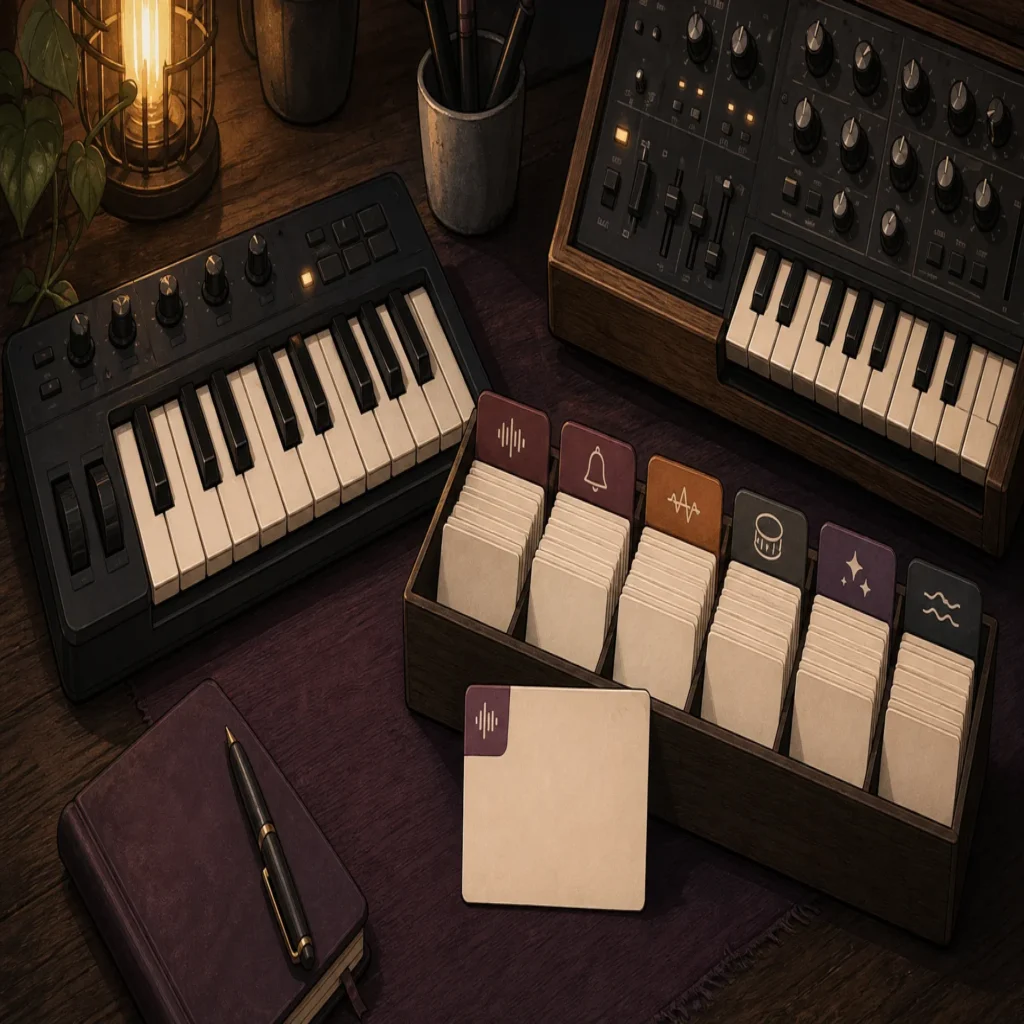
This is different from choosing a drum one-shot or an audio loop. A sound bank usually gives you playable presets inside an instrument, while a sample pack often provides recorded audio files such as kicks, snares, or loops. Some products include both, so check what is actually included rather than relying on the label.
The time advantage is mainly about fewer repetitive decisions, not less creative work. A 2026 Sound On Sound survey found that almost three-fifths of respondents saw potential for AI to speed up or automate tedious production tasks. That survey was about AI, not sound banks, so it does not establish how many minutes a preset library saves. It does, however, underline a useful distinction: tools can reduce routine friction while leaving musical choices to you.
When a sound bank speeds up beatmaking most
A bank is most useful when its sounds match the work you actually make. If you produce trap, drill, R&B, pluggnb, dark trap, lo-fi, or phonk, a focused selection in those styles can reduce the time spent auditioning sounds that do not fit your arrangement. Genre fit will not write the beat for you, but it can get you closer to a useful starting point.
Familiarity also matters. A well-organized library helps only if you can understand its categories and quickly return to sounds you like. Save favorites, label custom presets clearly, and build a small personal shortlist from any library you use. That way, the value compounds: you are not starting the same search from scratch in every session.
Since 2020, we have built Pendora around hand-crafted sounds for several of these genres. The full edition includes 275+ presets along with expansion packs, drumkits, MIDI, and FX assets. That range gives producers a focused palette to explore, though the right fit and any time saved still depend on your taste and workflow. For a broader starting point, see the best sound banks.
How preset browsing can erase the time saved
A large library can create a new kind of delay: scrolling through hundreds of options without a clear idea of what you need. A preset that is close but not quite right may lead to repeated adjustments to its filter, envelope, effects, or octave. If that becomes a habit, a short search can turn into a long sound-design detour.
One remedy is to start each session with a simple brief: “soft bell for the hook,” “dark pad under the vocal,” or “short pluck for the counter melody.” Then audition a few candidates, choose one, and move on. If none fits, customize a near match or switch to a different source instead of continuing to browse without a limit.
Evidence about music tools supports keeping this balance between efficiency and creative control, but it does not prove that presets are inherently faster. In a 2026 survey of 1,194 creators, Sonarworks’ survey described interest in technical assistance alongside caution about delegating creative decisions. The survey addressed AI, not sound-bank browsing. Applied to presets, the practical lesson is to use them as starting points and make the final choices yourself.
Choose a bank and test if it suits your workflow
Judge a sound bank by how quickly it helps you reach a sound you would actually use, not by the number of presets alone. Check whether its genre and timbres suit your sessions, whether its categories make sense to you, and whether you can shape presets without losing momentum. Consider your existing setup too: Serum, Vital, Omnisphere, Kontakt, and other instruments may already cover the sounds you need.
Try a simple session test. Pick a sound you need, note how long it takes to find a suitable starting point, then check whether you can adapt it and continue arranging. Repeat the test with your usual tools. The aim is not a universal speed score, but a practical comparison in your own DAW and with your own musical taste.
A January 2026 MIDiA creator survey report analyzes responses from 2,109 music creators surveyed in 2025, including DAW and software user profiles. It does not measure preset-search time, which is one reason to test a bank in your own setup instead of expecting a fixed time saving. If you are comparing instruments built around playable presets, our overview of the best sound bank VSTs can help you assess your options.
Make the sound bank work for your session
An organized sound bank can save time when its presets fit your genre, its structure makes sense to you, and you can move from auditioning to arranging without getting stuck in endless browsing. Keep a shortlist of useful sounds, customize presets when needed, and build from scratch when you have a specific sound in mind. The best measure is whether your own sessions move forward with less friction while still sounding like your work.
Explore a focused sound bank for beatmaking
If your sessions often slow down while you search for melodic sounds, a genre-focused bank can give you a more direct place to start. Our Pendora sound bank is designed for styles including trap, drill, R&B, pluggnb, dark trap, lo-fi, and phonk, with hand-crafted presets intended to help you find a sound that fits your direction.
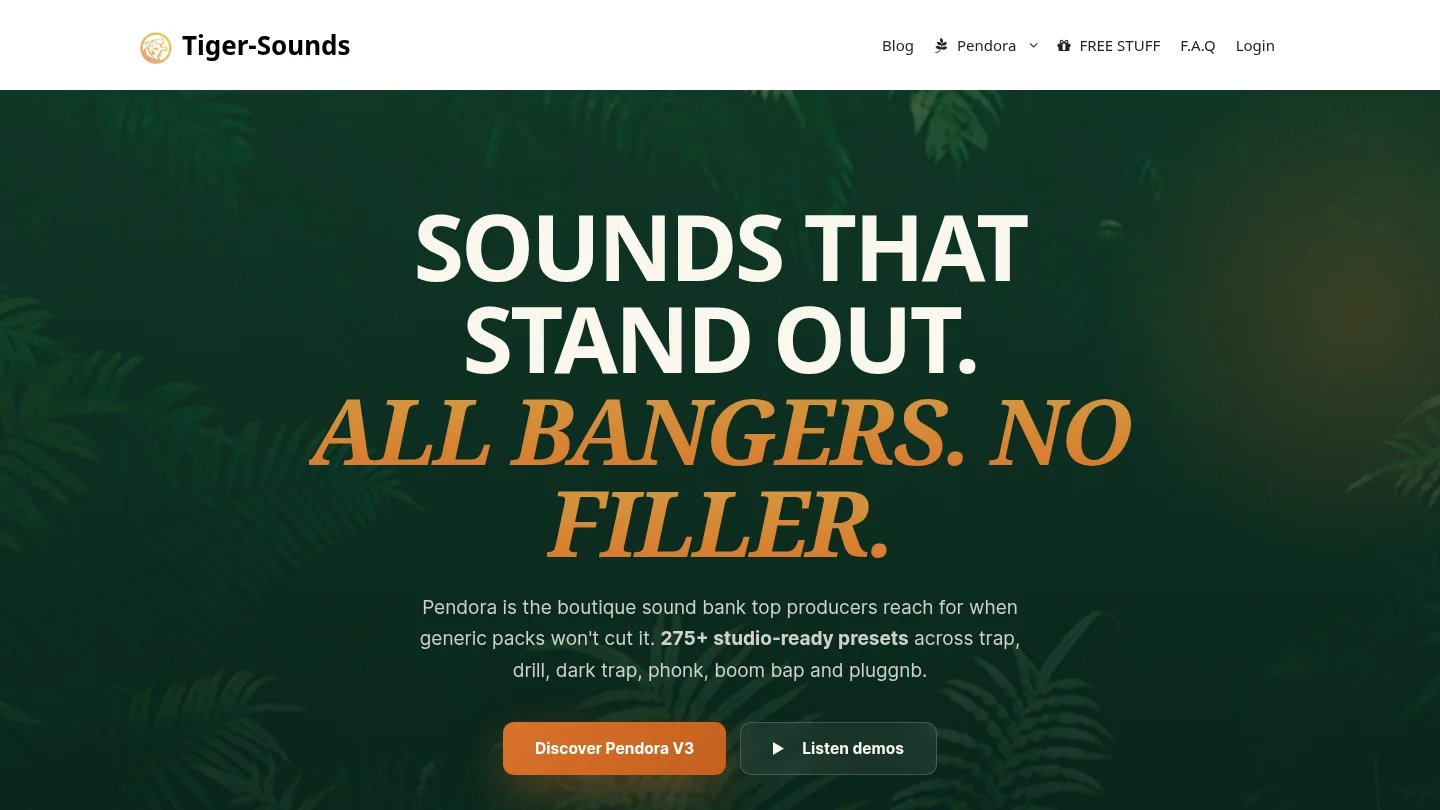
The full Pendora edition includes 275+ presets, three expansion packs, a Producer Kit, two drumkits, MIDI, and FX assets. It is a one-time purchase with lifetime updates under the stated terms, and commercial use is royalty-free within those licensing terms. Check the product details and compatibility for your setup before choosing our sound bank for making beats.
Frequently Asked Questions
Are sound banks faster than building presets from scratch?
They can be faster when a preset is close to the sound you need, because you can start by playing or editing it rather than building every parameter yourself. If it requires extensive changes, designing from scratch may be just as efficient.
Do presets make a beat sound less original?
Not automatically. Your choice of notes, rhythm, arrangement, processing, and how you modify a preset all shape the result.
What is the difference between a sound bank and a sample pack?
A sound bank commonly contains playable presets for an instrument, while a sample pack often contains recorded audio such as one-shots and loops. Some collections combine both, so check the contents before choosing.
How can I avoid wasting time browsing presets?
Start with a clear sound description, audition a small number of options, and save useful presets to a shortlist. If none fits, customize a close option or move on rather than browsing indefinitely.
How do I know whether a sound bank is right for me?
Check its genre fit, organization, customization options, and compatibility with your instrument and DAW. Then test how it performs in a real session using sounds you would actually need.