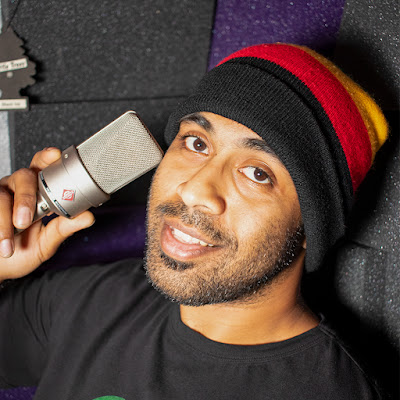
You can make a full trap beat in BandLab for free, in the browser or on your phone, with no plugins to install. BandLab gives you drum pads loaded with trap kits, a piano roll for programming 808s and hi-hat rolls, free trap sample packs, and a full mixer with EQ, saturation, and compression, all before you spend a dollar. The tradeoff: BandLab’s browser and mobile apps cannot load third-party VST plugins, so once you outgrow the stock sounds you will need to move to a DAW that supports them.
This guide walks through building a trap beat in BandLab from an empty project to an exported WAV, then covers exactly when and how to graduate to a VST-capable setup like Cakewalk Sonar or FL Studio.
- Why BandLab works for your first trap beat
- Step 1: Set the tempo and pick a drum kit
- Step 2: Program hi-hats and rolls
- Step 3: Build the kick and clap pattern
- Step 4: Write a sliding 808 bassline
- Step 5: Add a melody
- Step 6: Mix it with BandLab’s stock FX
- Step 7: Export your beat
- When BandLab starts feeling limited
- FAQ
Why BandLab works for your first trap beat
BandLab is free with no paid tiers or watermarked exports, and it runs in a browser, on iOS and Android, and as a desktop app, all syncing to the same cloud project. That matters if you are cooking up ideas on your phone between classes or a shift and finishing the arrangement later on a laptop.
For a first trap beat, the relevant tools are the Drum Pads instrument with trap-specific kits, a piano roll for 808s and melodies, an FX Preset Generator for quick mix chains, and a library of free loop packs like Underground Trap Mega and Trap MIDI Essentials. Projects cap at 15 minutes and 16 audio or MIDI tracks, which is more than enough for a two-minute type beat.
Step 1: Set the tempo and pick a drum kit
Set your project tempo before adding a single sound. Trap sits at 130 to 150 BPM, with 140 BPM as the most common starting point. In BandLab, open Instruments, choose the Drum Pads category, and load the Trap Kit instrument, which gives you a kick, clap, snare, and hi-hat mapped and ready to sequence in the grid editor.
Step 2: Program hi-hats and rolls
Hi-hats carry the groove in trap, more than the kick does. Start with a straight eighth-note pattern across all four bars, then go back and vary the velocity on alternating hits so the pattern breathes instead of sounding like a metronome.
For rolls, swap individual eighth-note hi-hats for rapid 32nd-note bursts, the “hat roll” that signals a fill or a buildup. BandLab’s own tutorial on making a trap beat walks through this exact velocity-alternation technique for smoother-sounding rolls, and credits the sound to short, aggressive bursts modeled on the Roland TR-808.
Step 3: Build the kick and clap pattern
Keep the kick and clap simple relative to the hi-hats. A common starting pattern places claps on beats 1.3 and 2.3, with kicks landing on syncopated eighth-note positions around them, then repeats across the remaining bars. Once the loop feels static, add a snare fill using a secondary snare sound at 1/16 resolution every four or eight bars, plus one extra kick placement, to break up the repetition without changing the core groove.
Step 4: Write a sliding 808 bassline
The sliding 808 is what separates a trap bassline from a plain kick-and-sub pattern. Program your 808 in the piano roll following your kick pattern, then glide the pitch between notes instead of triggering a fresh hit each time, the technique that gives trap and drill basslines their signature slide. BandLab’s virtual instruments include pitched 808 patches built for this; drag the note length across the gap between two pitches and enable portamento or glide on the instrument to hear the slide.
If your 808s still sound thin or muddy once you start layering other elements, the fix is usually in the mix stage, not the note choice. Our guide on how to mix 808s without mud covers EQ carving and sidechain compression in more depth than BandLab’s stock tools alone can show you.
Step 5: Add a melody
A dark bell, pluck, or pad melody is what turns a drum loop into a beat. BandLab’s free loop library includes packs like Future Trap and Trap Pop Fusion with pre-made melodic loops you can drag straight into the timeline, or you can play your own with the Drum Pads synth instruments in the piano roll. Stick to a minor key, since almost all commercial trap leans minor or Phrygian for its darker character.
This is also the point where a lot of beatmakers hit a wall: BandLab’s stock synths are functional but generic, and thousands of other users are pulling from the same free loop packs. If your melodies keep sounding like everyone else’s, that is less a BandLab problem and more a sound-source problem, covered in the graduating section below.
Step 6: Mix it with BandLab’s stock FX
BandLab’s mixer includes EQ, compression, reverb, and saturation on every track, plus an FX Preset Generator that builds a starting chain for you and a blend slider to dial the amount of processing from 0 to 100%. For a trap mix, that is usually enough to get a beat sounding presentable: high-pass your melodic layers so they do not fight the 808, compress the drum bus lightly, and use the saturation FX sparingly on the 808 to help it translate on phone speakers.
What the stock mixer cannot do is give you the exact tonal character of a specific hardware emulation or a boutique saturation plugin, since BandLab cannot load VST or AU effects in the browser or mobile app. For a first beat this rarely matters. It starts to matter once you are comparing your mixes to reference tracks and hearing a gap you cannot close with the built-in FX alone.
Step 7: Export your beat
Export as a lossless WAV directly from BandLab, at no cost and with no watermark. Go to your project menu and choose Export, select WAV, and download or save it to your BandLab cloud library. That file is immediately usable for uploading to a type beat channel, sending to an artist, or importing into another DAW if you want to keep building on it elsewhere.
When BandLab starts feeling limited
The wall most beatmakers hit is not BandLab’s mixer, it is BandLab’s sound library not loading third-party plugins. The browser Studio and the mobile app are built on web technology that cannot host VST, VST3, AU, or AAX plugins, so any sound bank or synth you buy from an outside developer will not open inside BandLab directly. That includes Pendora and every other preset-based VST on the market.
You have two honest paths from here, depending on budget:
- Stay free, move to Cakewalk Sonar. Cakewalk Sonar is BandLab’s own full desktop DAW for Windows, free with a BandLab account, and it supports VST3 and ARA plugins, according to Bedroom Producers Blog’s coverage of its 2025 relaunch. It is Windows-only and some premium add-ons sit behind a paid subscription, but the core VST-hosting DAW costs nothing.
- Move to a paid DAW built for beatmaking. FL Studio is what most trap and drill producers on YouTube actually use, and it hosts VST3 and AU plugins on both Windows and Mac. KVR Audio’s listing for Cakewalk is a useful reference if you want to compare plugin-hosting DAWs side by side before picking one.
Once you are in a VST-capable DAW, a preset-based sound bank closes the gap BandLab’s stock synths cannot: Pendora Lite is a 30-preset entry point at 29 EUR, built specifically for trap, drill, and phonk, and it is a reasonable first VST purchase if your budget is close to zero. If you outgrow the Lite pack, the full Pendora V3 ships 275+ presets across bells, plucks, 808s, and pads for 149 EUR, with a 4.7 out of 5 rating from 59 verified buyers. For a wider first look at the category before spending anything, our best trap VST plugins roundup compares Pendora against other trap-focused options.
| Setup | Cost | VST support | Platforms | Best for |
|---|---|---|---|---|
| BandLab Studio | Free | None (browser and mobile) | Browser, iOS, Android, desktop app | Writing your first beats anywhere, zero setup |
| Cakewalk Sonar | Free (some add-ons paid) | VST3, ARA | Windows only | Staying free while unlocking VST plugins |
| FL Studio | Paid, one-time license | VST2, VST3, AU | Windows, Mac | The standard workflow most trap producers land on |
FAQ
Can you use VST plugins in BandLab?
Not in the browser version or the mobile app, since both run on web technology that does not host third-party plugin formats. Cakewalk Sonar, BandLab’s separate free Windows DAW, does support VST3 plugins.
Is BandLab good enough to make a full trap beat?
Yes. It has trap-specific drum kits, pitched 808 instruments, free trap loop packs, and a mixer with EQ, compression, and saturation, which covers every stage from programming drums to exporting a finished WAV.
What BPM should I use for a trap beat?
130 to 150 BPM covers most trap, with 140 BPM as the most common tempo. Some producers program at a half-time feel around 70 BPM so the hi-hat rolls still read as fast subdivisions without the grid feeling rushed.
Can I export a BandLab beat and open it in FL Studio later?
Yes. Export the project as a WAV and import it as an audio track in any other DAW. What you cannot carry over directly are BandLab’s own instrument patches, since those only exist inside BandLab’s engine.
Do I need Pendora to make a trap beat in BandLab?
No. BandLab’s free trap kits and loop packs are enough to finish a beat with zero spend. A preset-based VST like Pendora Lite becomes relevant once you move to a VST-hosting DAW and want melodic and 808 sounds that are not pulled from the same free packs everyone else is using.
The short version: BandLab gets a full trap beat from tempo to export for free, and the only real limit is that it cannot load outside VST plugins. Build your first few beats there, then decide if Cakewalk Sonar’s free VST support or a paid DAW like FL Studio fits your workflow better before spending on plugins. When you are ready for that step, Pendora Lite is a low-risk way to add a sound that is not in every free loop pack on the internet.