Summary: For trap beatmaking, Pendora V3.0 is the strongest first choice when you want a focused melodic sound bank and ready-to-load presets; Serum 2 and Vital suit hands-on synthesis, NEXUS5 covers a large preset library, SubLab focuses on 808 bass, and XO organizes drum samples. Match a trap VST to your actual gap: melodies, low end, sound design, or drum sequencing.
Need a trap VST plugin that gets you from an idea to a beat without a long search through sounds? Pendora V3.0 takes the first position here for its genre-focused melodic presets, while the right choice still depends on whether you need a sound bank, custom synthesis, 808 design, or drum sequencing. Our overview of best trap VST plugins covers more options for a trap-first setup.
Trap production often brings together tuned 808 kicks, snare rolls, and quick hi-hat patterns. Those tasks call for different tools, so a preset bank, a synthesizer, a bass instrument, and a drum sample organizer should not be judged as if they do the same job. MusicRadar outlines these trap production essentials, which also make useful criteria when choosing a plugin.
How the six trap VST options compare
The positions below put Pendora first for a trap-focused preset workflow, then show where each specialist tool fits. They are not a claim that one plugin replaces every role. Prices are US listings where available on October 14, 2026; sales and regional checkout amounts can change.
| Position | Plugin | Main role | Workflow and content | US price shown |
|---|---|---|---|---|
| 1 | Pendora V3.0 | Trap-focused sound bank | Ready-to-play melodic presets and production assets | €149 on some pages; $147 on another |
| 2 | Serum 2 | Hybrid synthesizer | Deep sound design with multiple oscillator types | $249 |
| 3 | NEXUS5 | Preset-led virtual instrument | Large factory library with editing and sample import | $179 Starter listing, regular $249 |
| 4 | SubLab | 808 and sub-bass instrument | Dedicated bass tools, samples, and sound packs | $29 introductory listing, $70 list price |
| 5 | XO | Drum sample organizer and sequencer | Sample browsing, beat presets, and groove editing | $149, or $9.99 monthly for 15 months |
| 6 | Vital | Wavetable synthesizer | Hands-on sound design with a free Basic tier | Basic tier is free |
Choose by the production task
What slows your session down most: searching for a melody, shaping a sliding 808, or programming hats? A producer who already has a favorite sampler may need a melodic instrument, while someone with strong melodies may get more value from a dedicated low-end tool or a faster way to audition drum samples.
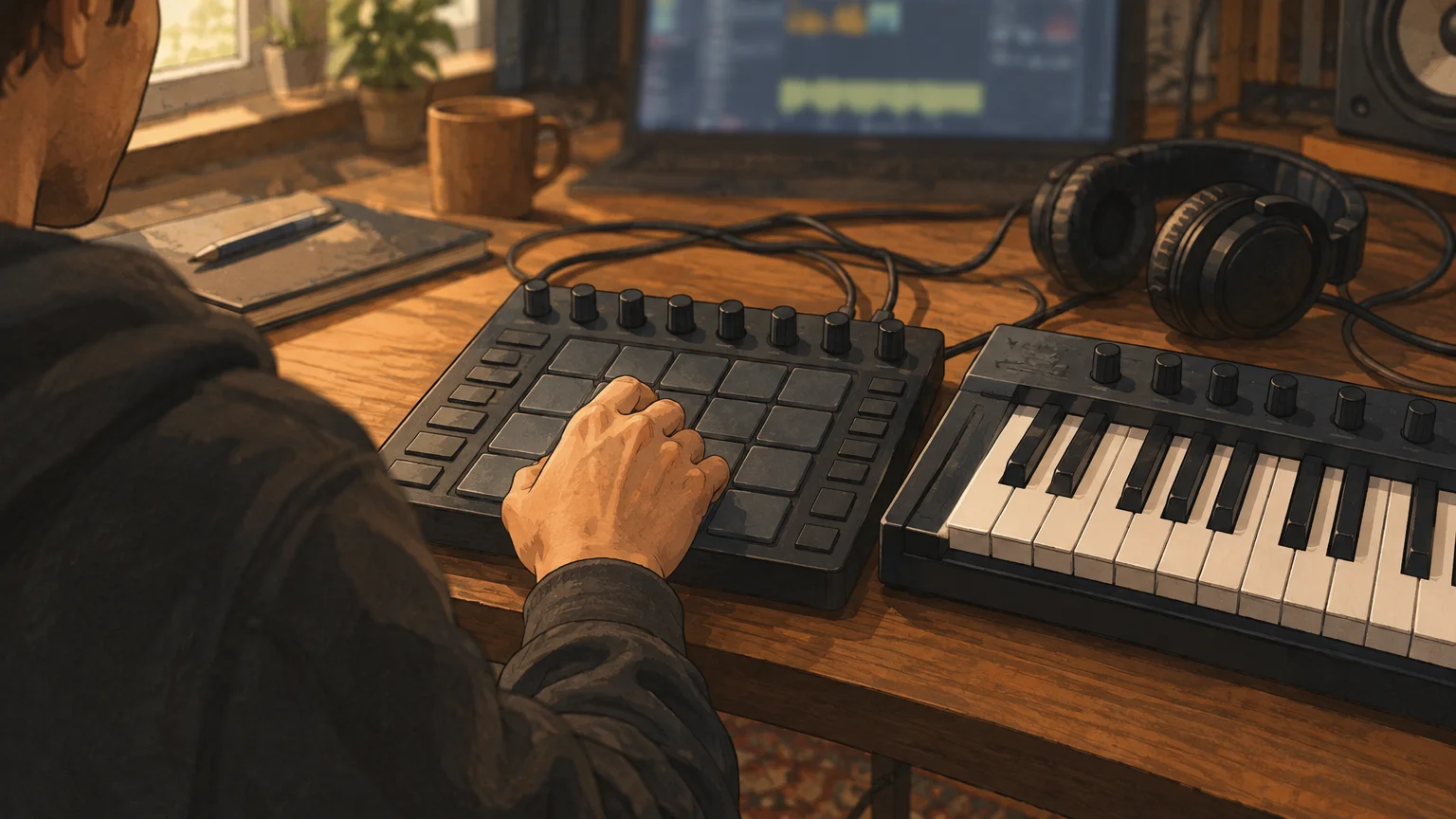
For a starting sound you can play immediately, a preset bank reduces the need to build every patch from zero. For a custom lead or bass tone, a synthesizer gives you more control but asks for more sound-design time. A drum tool solves a separate problem: auditioning, arranging, and shaping one-shots into a beat.
The tools, compared in detail
1. Pendora V3.0
Best for: Producers looking for a sound bank focused on melodic trap, drill, R&B, pluggnb, dark trap, lo-fi, and phonk.
Our full edition is a sound-bank instrument, not a blank-slate synthesizer. It contains 275+ studio-ready presets across 30+ sound categories, along with expansion packs, a Producer Kit, drumkits, FX, and MIDI content. Tiger-Sounds displays a 4.71/5 rating for the full edition, based on 59 verified-buyer reviews. For more genre-focused options, see our VSTs for trap producers.
Pendora is a one-time purchase with free lifetime updates. Commercial use for beats you sell, place, or license is royalty-free under the product licensing terms, with no additional royalties owed; account sharing and redistribution are excluded. VST3 is supported on Windows and macOS, while AU is supported on macOS. The stated system support is macOS 11 Big Sur or later and Windows 10 or 11, 64-bit only.
Pros:
- Trap and related genre presets provide a focused starting point for melodies, pads, bells, plucks, and other parts of a beat.
- The full edition combines presets with kits, MIDI, effects, and other production assets in one bank.
- One-time ownership and the stated royalty-free commercial terms suit producers who sell, place, or license beats.
Cons:
- It is designed to load and shape presets, not to replace a flexible synthesizer for building every sound from scratch.
2. Serum 2
Best for: Producers who want hands-on control over synth leads, basses, and other custom sounds.
Custom synthesis is Serum 2’s main strength. It combines wavetable, multisample, sample, granular, and spectral oscillators, and includes 626+ presets and 288 wavetables. The listed price is $249; supported formats include VST3, AU, and AAX, 64-bit. Its official system requirements include Windows 10 or later and macOS High Sierra or later for Intel, or Big Sur or later for Apple Silicon.
Sound design takes more active work than selecting a finished genre-focused patch. The principles behind building a drum tone from oscillator, filter, and envelope choices are explored in this bass-drum synthesis explanation.
Pros:
- Several oscillator types and detailed modulation support original sound design.
- Sample and wavetable editing can extend a patch beyond its factory starting point.
- The $249 purchase includes lifetime free updates, and the upgrade is free for existing Serum 1 owners.
Cons:
- It is a general-purpose sound-design instrument, so shaping a patch around a specific trap idea takes more work than loading a preset bank.
3. NEXUS5
Best for: Producers who want a broad preset library with editing tools and room to add more content.
NEXUS5 combines sample playback with multiple synthesis engines and includes 5,454 presets in its standard edition. Its preset-led workflow suits quick auditioning, while its open architecture also supports creating presets and importing samples. The current US Starter listing showed $179 against a regular $249 price. Installation requires about 47 GB for the plugin and factory content; listed formats include VST, VST3, AU, and AAX, 64-bit.
Pros:
- The large factory library offers a wide range of starting sounds beyond trap.
- Preset editing and sample import give it more flexibility than a sound bank limited to its included patches.
- It supports major DAWs including FL Studio, Ableton Live, and Logic Pro.
Cons:
- The factory installation takes substantial disk space, and a broad library can involve more browsing than a tightly genre-focused bank.
4. SubLab
Best for: Producers whose main requirement is shaping 808s and sub-bass.
SubLab is a dedicated sub-bass instrument with synth, sample, and X-Sub engines, plus distortion and compression tools. Its library includes 250 samples and six signature Bass Packs, and it allows you to add your own samples. The product page displayed an introductory price of $29 against a $70 list price. It supports VST2, VST3, AU, and AAX, and lists FL Studio, Ableton Live, Logic, Pro Tools, and other DAWs among its tested hosts. See our guide to 808 VST plugins if you are comparing tools for the low end.
808 pitch choices affect more than note names. A study of TR-808 bass drum transposition discusses a production example where the song’s key is adjusted to retain the drum’s characteristic sound, rather than simply retuning the drum. Read the study’s discussion of 808 pitch and timbre.
Pros:
- Its dedicated bass engines and processing focus the workflow on 808 and sub-bass creation.
- Factory samples and Bass Packs provide starting points, while sample import supports custom material.
- It includes glide controls and several distortion options for shaping bass patches.
Cons:
- Its main role is low-end design, so it is not a replacement for a melodic preset bank or a complete drum programming tool.
5. XO
Best for: Producers who spend too long sorting through one-shot samples and assembling drum sounds.
Sample organization is XO’s core function. It groups sounds by sonic similarity for auditioning and swapping, and includes 8,700+ one-shot samples and 240+ editable beat presets. Groove templates and adjustable pattern controls support beat sequencing. The US listing showed $149, with a rent-to-own option of $9.99 per month for 15 months. XO is available as VST, AU, and AAX, and also runs as a standalone application. For sample libraries that pair with a drum workflow, browse our best trap drumkits.
Pros:
- Sample similarity browsing can make it quicker to audition and replace one-shots.
- Editable beat presets and groove tools support pattern building as well as sample selection.
- It can work with personal sample libraries, not only its included one-shots.
Cons:
- XO organizes and sequences drum samples, rather than serving as a synth for creating a new 808 tone from oscillators.
6. Vital
Best for: Producers who want to learn wavetable sound design without paying for Vital’s Basic tier.
Vital is a visual wavetable synth with spectral warping, an editable wavetable interface, and modulation tools. Its free Basic tier includes the full synth engine, 75 presets, and 25 wavetables. The official system requirements list Windows 10 or later, macOS 10.15 or later, or Ubuntu Linux 18.04 or later, on a 64-bit system with OpenGL 3 or higher.
Pros:
- The free Basic tier provides the full synth engine rather than a reduced feature set.
- Wavetable editing, sample conversion, and modulation support detailed patch creation.
- Its cross-platform system support includes Windows, macOS, and Linux.
Cons:
- It is a sound-design instrument, so producers seeking finished trap presets will need to build or source the sounds they want.
Which tool fits your beatmaking workflow?
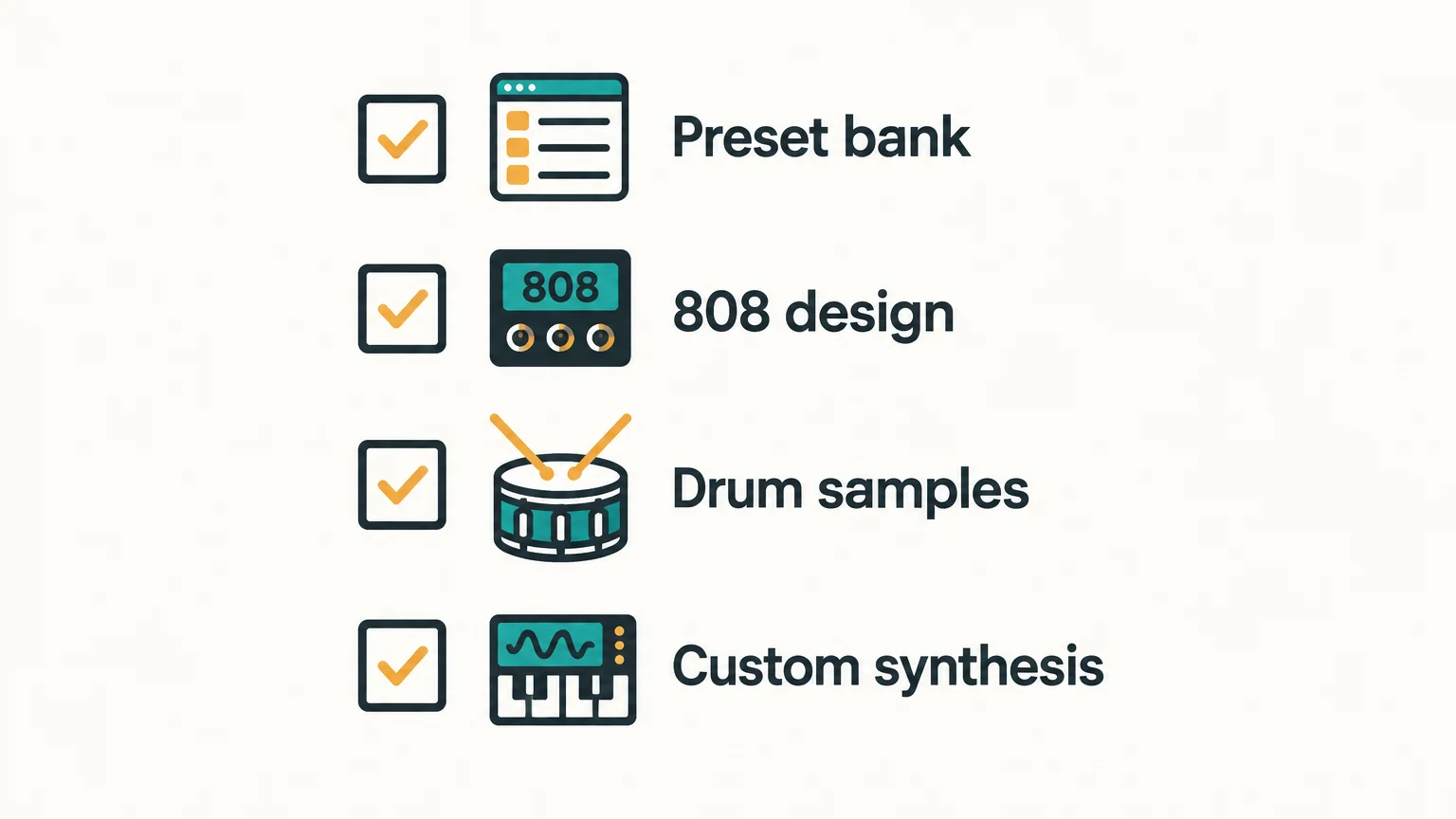
Start with the part of your session that needs attention. Choose Pendora when you want a focused bank of melodic trap and related sounds; choose Serum 2 or Vital when you want to design patches; consider NEXUS5 when library breadth and preset editing matter; use SubLab for 808 and sub-bass work; and choose XO for drum sample browsing and sequencing.
Check compatibility before purchasing: confirm your DAW supports the plugin format and that your operating system meets the product’s requirements. Then compare the actual workflow you need, not just preset counts. A focused bank and a flexible synth solve different problems, and many sessions benefit from using more than one kind of tool.
Conclusion
For a trap-first preset workflow, Pendora V3.0 is the most direct choice in this comparison. Serum 2 and Vital prioritize custom synthesis, NEXUS5 offers a broader library, SubLab concentrates on low end, and XO addresses drum sample browsing. The best trap VST for your session is the one that fills its actual gap, whether that is melodic presets, 808 design, or faster drum programming.
Start with genre-focused trap sounds
If your main friction is opening a general-purpose synth and browsing for sounds that fit the track, a focused bank is a practical alternative. Our full Pendora edition is built around trap, drill, dark trap, phonk, boom bap, pluggnb, and related melodic production, giving you playable starting sounds to shape in your beatmaking session.
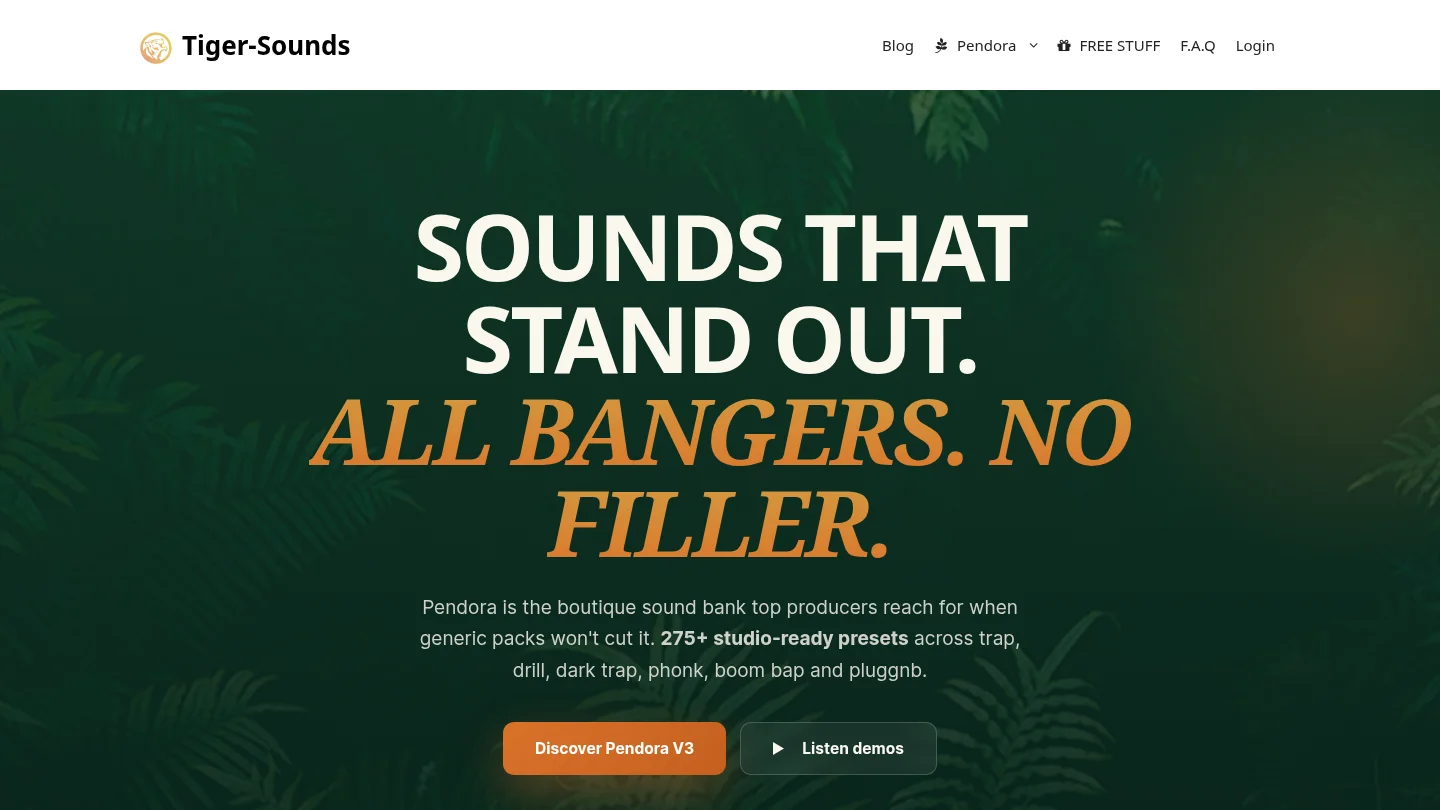
The full bank includes 275+ presets across 30+ sound categories, plus expansion packs, a Producer Kit, drumkits, FX, and MIDI content. It supports VST3 on Windows and macOS and AU on macOS, with macOS 11 Big Sur or later, Windows 10 or 11, and 64-bit systems. It is a one-time purchase with free lifetime updates. Commercial beat use is royalty-free under the product licensing terms, excluding account sharing and redistribution. Explore our Pendora sound bank for trap production.
Frequently Asked Questions
Is a trap VST the same as an 808 plugin?
No. A trap VST can be a synth, preset bank, or drum tool, while an 808 plugin focuses on bass and kick tones.
Do I need Serum or Vital to make trap melodies?
No. A preset bank can provide playable melodic sounds, while Serum and Vital suit producers who want to build and edit synth patches themselves.
Can one plugin handle melodies, 808s, and hi-hats?
Some instruments cover several sound sources, but specialized tools focus on different tasks. Choose based on whether you need melodic sounds, bass design, or drum sequencing first.
What should I check before buying a trap VST?
Confirm its plugin format, operating system requirements, and support for your DAW. Then decide whether you need ready-made presets, sound design controls, or a dedicated drum or bass workflow.
Can I use Pendora V3.0 in beats I sell?
Yes, commercial beat use is royalty-free under the product licensing terms, with no additional royalties owed. Account sharing and redistribution are excluded.