Summary: A sound bank is for producers who want a curated set of playable sounds suited to their music and workflow, rather than another broad folder to search. It can help with starting melodies, choosing presets and building a consistent palette, but it is not essential for every beatmaker. The right choice depends on what you make and where your production time goes.
A sound bank earns its place when it helps you get from an idea to a usable sound without making preset browsing the session’s main activity. If you make beats regularly, a focused collection can put relevant sounds within reach. Our explanation of why producers choose sound banks over making their own sounds looks at that practical trade-off.
Who is a sound bank really for? It can suit a new producer learning to build arrangements, an experienced beatmaker who wants a defined palette, or a commercial producer who needs reliable starting points across sessions. It is less useful when the sounds do not fit your genre, you already have a palette you know well, or your main need is audio files rather than playable presets.
Who benefits most from a sound bank?
Consider a beatmaker opening FL Studio, Ableton Live or Logic Pro with a clear musical role in mind: a bell for the hook, a pad behind the chords, or a dark 808 for the low end. A genre-focused sound bank can make those starting points easier to locate than a large collection spanning unrelated styles. The value is not simply having more presets. It is having sounds that make sense for the music you actually produce.
This can be useful for producers working repeatedly in trap, drill, melodic trap, R&B, pluggnb, dark trap, lofi or phonk. A coherent palette gives you options that sit in the same general production world, while leaving you free to edit, layer and process sounds for each track. Tiger-Sounds focuses Pendora on these styles and related lanes; it is a specific sound direction, not a claim that one bank fits every producer.
That kind of workflow also makes sense for producers who release or license beats. Berklee’s 2026 survey of 1,003 industry participants found that 92.2% of respondents integrate their own original music into video projects. That figure does not establish a need for any particular tool, but it reflects one context in which having a usable production palette can be relevant. Berklee’s 2026 report
What does a sound bank give you that a sample pack does not?
The terms can overlap, but they often describe different ways of working. A sound bank may provide playable presets inside a virtual instrument, so you can perform parts with MIDI and adjust the sound in the plugin. A sample pack typically centers on audio files, such as loops or one-shots, that you import, chop or arrange in your DAW. Check what a specific product contains rather than relying on its label alone. Our guide explains how a sound bank differs from a sample pack.
That distinction matters when you already have tools such as Serum, Vital, Omnisphere or Kontakt. A sound bank is not automatically a replacement for those instruments. It may instead provide a curated set of sounds for a particular production direction, while your existing synths and samplers remain useful for other parts of the track or for deeper sound design.
If you prefer to build melodies by playing notes and shaping presets, a playable bank may suit your process. If you mainly want to drag a vocal chop, percussion loop or field recording into the arrangement, an audio-focused collection may match the task better. Some producers use both, because musical parts and isolated audio textures solve different production needs.
When is making sounds from scratch a better fit?
If you enjoy starting with an oscillator, choosing a wavetable and shaping envelopes, filters and modulation, designing patches from scratch can be part of the appeal. A preset bank may still give you useful starting material, but it will not replace the control or the learning that comes from building a sound yourself. Producers often combine approaches: begin with a preset, then adjust it until it fits the track.
A sound bank is also not a shortcut to musical judgment. In a February 2026 survey of nearly 1,200 music creators, respondents identified creative skills such as musicality, critical listening and composition as essential to production. The survey does not test sound banks, but it supports a useful distinction: tools can provide starting points, while the producer still decides what works in the beat. Sound On Sound’s 2026 survey
For producers who want to compare preset-based and self-directed workflows, why producers choose sound banks over making their own sounds is a useful place to start. The practical question is whether you want to spend more session time designing the source sound or writing and arranging with a sound that is already close to your target.
Can a sound bank help with beat block or preset hunting?
It can give you a more directed place to begin when a blank project or a sprawling preset browser makes it hard to commit to an idea. Try choosing a sound by musical role, then write a short phrase around it. A bell might suggest a sparse melody; a pad could prompt a chord progression; a pluck might give the drums a rhythmic counterpoint. If the sound does not work in context, change it or move on rather than building the whole track around it.
The benefit is not guaranteed time saved. Familiarity with your DAW, the quality of the sound organization, and your own decision-making all matter. A focused bank may reduce the number of unrelated presets you audition, but it will not make every sound fit every project. For a closer look at that workflow question, read whether sound banks save time when making beats.
For example, Pendora is a genre-focused sound bank with presets and accompanying production assets for beatmaking. Tiger-Sounds states that more than 500 producers use Pendora; that is a company-stated adoption figure, not an independent count. Its full-edition page displays a 4.71 out of 5 rating from 59 verified-buyer reviews, which offers prospective buyers a specific customer-feedback signal to consider alongside sound demos and product details.
How can you decide if a sound bank belongs in your setup?
Start with the work you want it to do, not the advertised preset count. If you need a playable melodic palette for a recurring genre, assess whether the sounds cover the roles you use. If you already have a capable synth but struggle to find relevant starting points, a focused bank may add value without requiring a new production method. NAMM’s September 2026 Global Report covers worldwide music, sound and event-technology data; broad industry figures, however, cannot determine whether a specific collection fits an individual producer’s workflow. NAMM’s industry insights
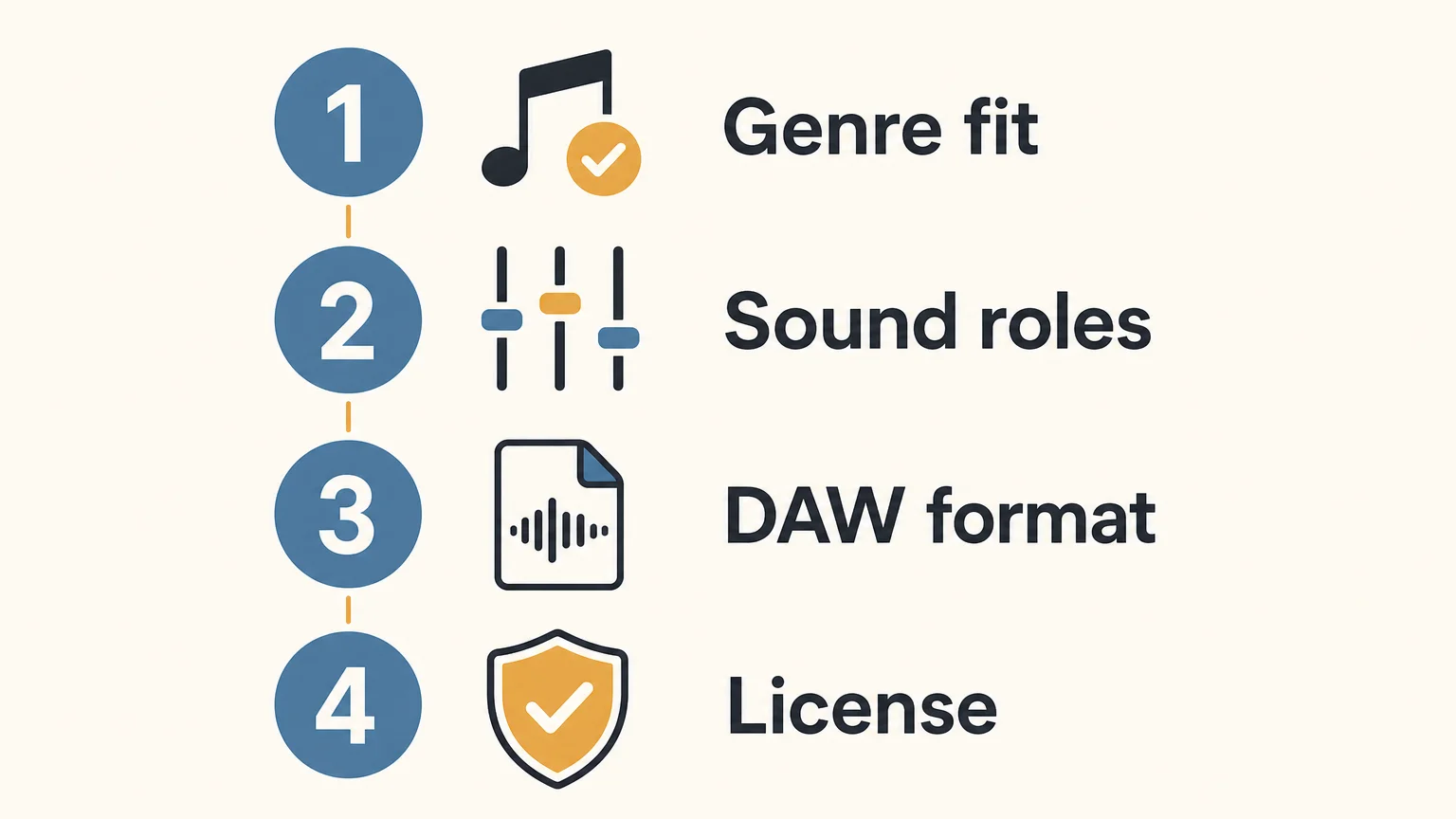
Before choosing, listen to demos in a musical context and check what is included. Confirm whether the product is a plugin with playable presets, a collection of audio files, or a combination. Then review compatibility with your operating system, DAW and plugin format, plus the license terms for any beats you plan to sell, place or license.
For producers who want to try a smaller selection before considering a broader library, Pendora Lite contains 30 hand-picked presets, bonus kits and a MIDI pack. Tiger-Sounds also offers the free Temple Drumkit through newsletter signup. These are evaluation options, not a reason to buy if the sounds or format do not suit your sessions.
Who might not need another sound bank?
You may not need one if your current instruments already cover the sounds you use, your sessions are not slowed by sound selection, or you prefer to create each patch from an initialized synth. Buying more presets will not by itself make a beat more original or help you finish an arrangement. A tool is useful when it addresses a real gap in your process.
It may also be the wrong format if you need environmental recordings, vocal samples or ready-to-arrange loops rather than MIDI-playable instrument sounds. In that case, inspect the exact contents and terms before purchasing. Do not assume that a product called a sound bank contains the same material as another product with a similar name.
Choose for the work you actually make
A sound bank is for a producer whose workflow benefits from a curated, playable set of relevant sounds. It can help narrow preset searches and give you material to shape into melodies, chords and bass parts, but it cannot replace arrangement decisions, listening skills or sound design when those are the parts of production you want to do yourself. Before adding one, match its sound palette, contents, format and licensing to your real sessions, then audition the sounds against a beat you would actually make.
Explore a focused sound bank for beatmaking
If your regular sessions involve melodic trap, drill, dark trap, phonk, boom bap or pluggnb, a genre-focused bank may give you a more relevant starting point than browsing presets across unrelated styles. Choose based on the sounds and workflow you need, rather than preset quantity alone.
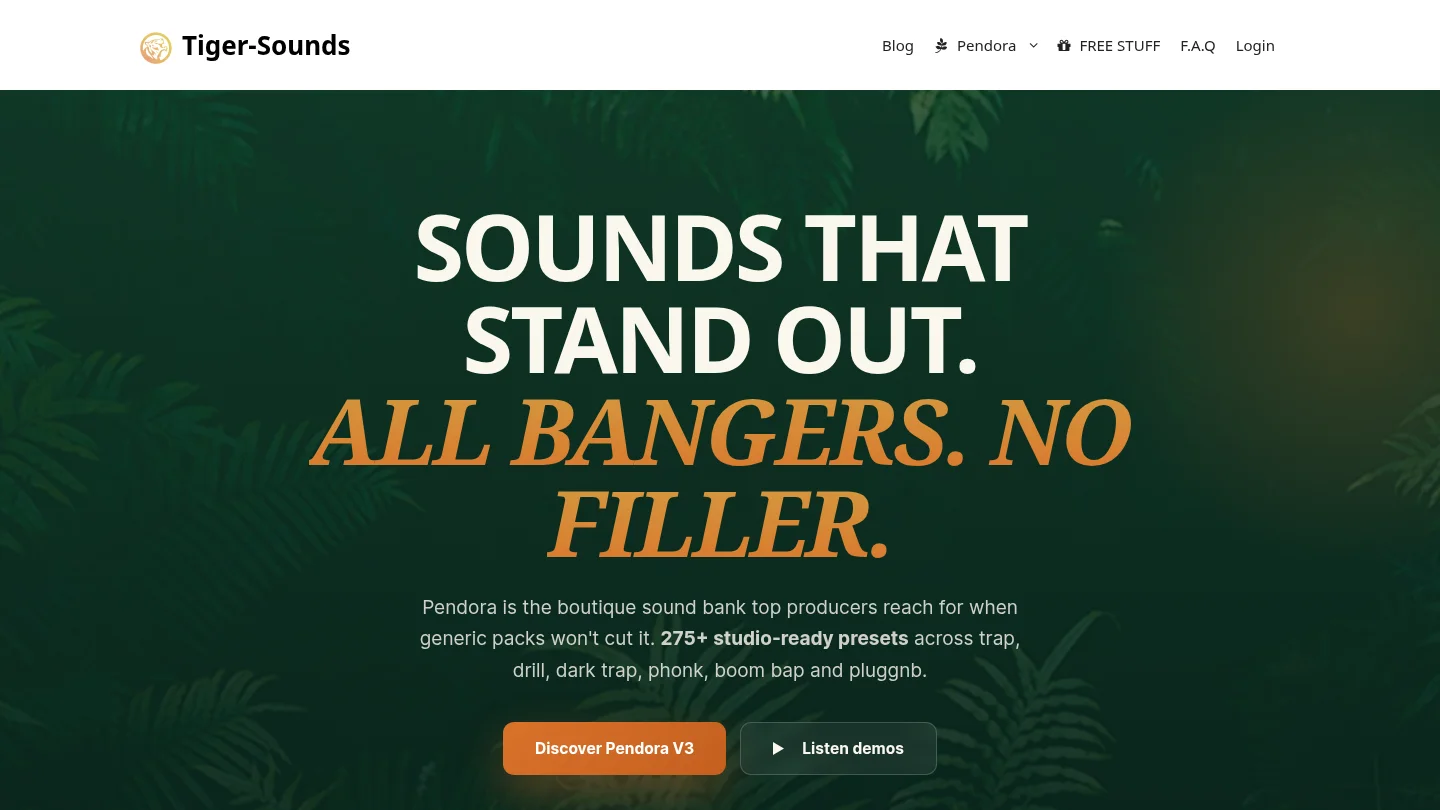
Our Pendora sound bank includes 275+ studio-ready presets across more than 30 sound categories, alongside production assets such as drumkits, MIDI, effects and risers. It is a one-time purchase with royalty-free commercial use under the stated product terms; account sharing and redistribution are excluded. Explore the Pendora sound bank and review the contents and compatibility details before deciding whether it fits your setup.
Frequently Asked Questions
Is a sound bank only for beginner producers?
No. Beginners may use one to get playable sounds while learning a DAW, and experienced producers may use one to access a focused palette. The fit depends on workflow and sound, not skill level alone.
Does a sound bank replace Serum or another synthesizer?
Not necessarily. A sound bank may provide presets for a particular instrument or a playable instrument of its own, while a synthesizer can offer broader sound-design controls; check the product format and requirements.
Is a sound bank the same as a sample pack?
Not always. Sound banks often focus on playable presets, while sample packs commonly provide audio files such as loops and one-shots, though product contents can overlap.
Can producers use sound-bank presets in commercial beats?
That depends on the product’s license, so read its terms before releasing, selling or licensing a beat. Pendora includes royalty-free commercial use under its stated product terms, excluding account sharing and redistribution.
What should I check before buying a sound bank?
Listen to demos, confirm the sounds suit your genre and check the plugin format, operating-system and DAW compatibility. Review the included content and license, and consider whether your current tools already cover the same need.