Summary: A hip-hop beatmaker builds an instrumental from a groove, a musical idea, low end, and an arrangement that leaves room for an MC. A reliable process is to choose a direction, program drums, add a sample or original melody, fit the bass, create section changes, then balance and test the mix on more than one playback system.
What makes a loop feel ready for an artist rather than unfinished? It is less about adding tracks than giving the drums, melody, and bass clear roles. A hip-hop beatmaker builds that balance in a DAW, whether the starting point is a sample-based boom-bap loop or a melodic trap idea. For FL Studio producers reviewing instrument options, our article on hip-hop plugins for FL Studio is a useful reference.
A beatmaking session can begin with a drum pattern, a chord, or a sound that suggests a mood. A 2019 study of online beat-production videos found that tutorials often focused on composing new beats rather than simply reproducing existing material, as described in the study of beatmaking tutorials. That distinction matters: learn the tools by building a fresh pattern, testing choices in context, and revising by ear.
What does a hip-hop beatmaker do?
An MC arrives with a vocal idea, but no backing track. The beatmaker shapes an instrumental that gives the performance a pulse and mood, then develops it into clear sections an artist can follow. That work might involve programming drums, writing a melody, chopping audio, arranging transitions, and preparing a mix for recording.
The role is defined by musical decisions, not by a specific machine or plugin. FL Studio, Ableton, and Logic Pro all provide ways to sequence drums, edit MIDI, arrange audio, and mix. In a 2026 qualitative study based on interviews with 13 practicing producers, participants described learning through trial and error, online tutorials, and collaboration. The 2026 producer study offers a snapshot of those participants, not a survey of every beatmaker.
Choose the beat’s pocket before choosing sounds
If you decide the mood first, sound selection gets easier. A loose boom-bap groove might start with a chopped sample and a kick-snare pattern. A melodic trap or drill beat may begin with a sparse synth phrase, sharper hats, and a more active low end. These styles do not share one fixed tempo or drum formula, so choose a pace that supports the vocal pocket you want.
Make a short reference list for the session: a mood, a rough tempo, and one or two sounds that fit the direction. Then stop browsing when you find a musical starting point. The aim is not to collect the most sounds, but to find elements that work together and give the beat an identity.
Program drums for pocket, not density
A kick and snare that feel right can carry a loop before you add anything else. Establish the backbeat, then place kicks where they create forward motion. Add hi-hats for pulse and variation, using changes in velocity or timing to shape the drum pocket. A short pause or a slightly shifted hit can add more feel than a busy pattern.
Listen to the drums with the melody, not just in solo. If the hats crowd the vocal rhythm or the kick interrupts the sample’s natural accents, remove or move a few hits. For FL Studio sessions where you need a narrower choice of starting sounds, our sound kits for FL Studio page is relevant to browsing kits for that DAW.
Build the musical hook with a sample or instrument
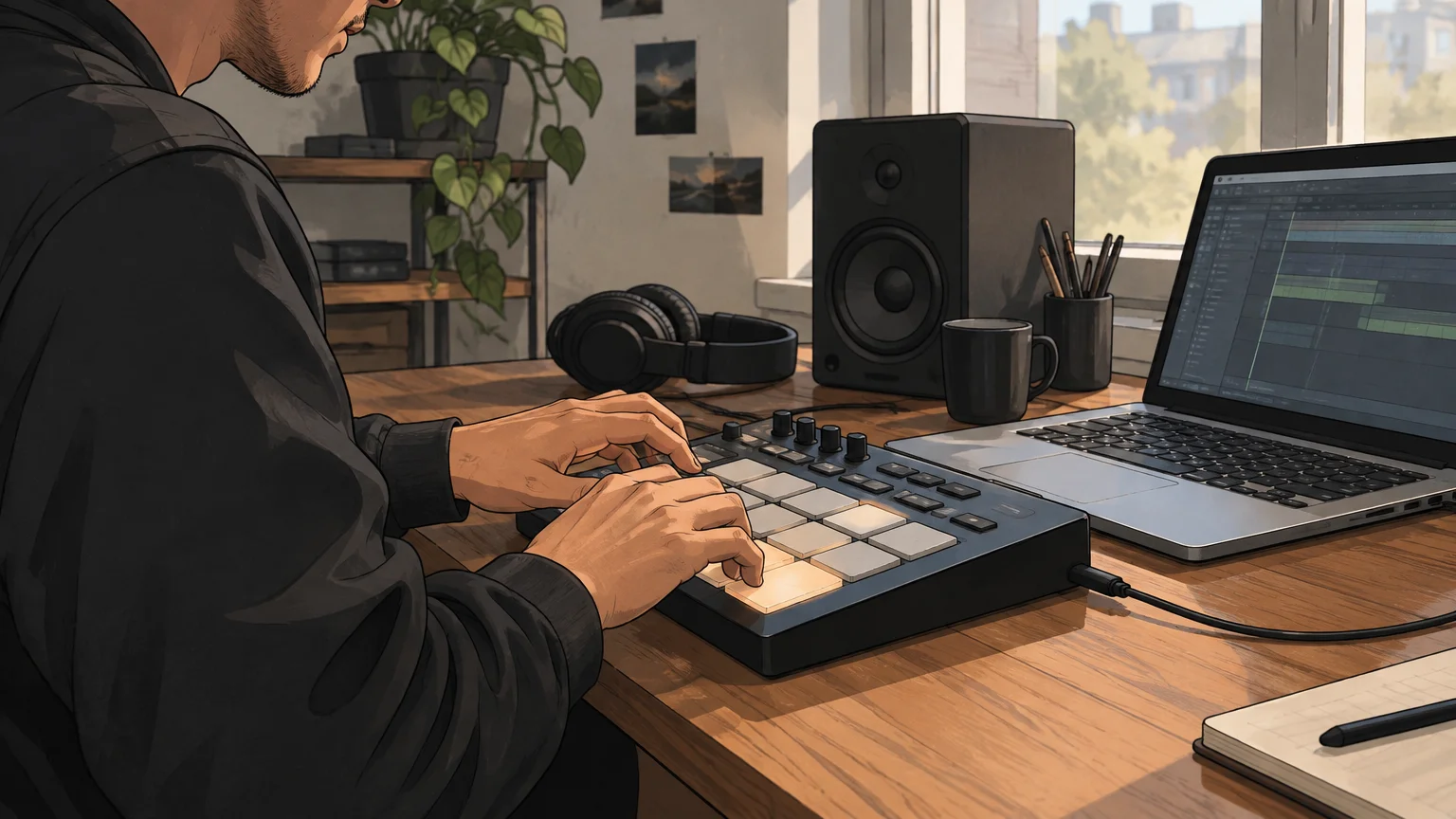
When a sample already carries a strong rhythm or emotion, let it guide the drums. Chop the phrase into smaller pieces, change the order, or pitch a fragment to make it serve the new beat. If you write from scratch, a short chord progression or a two-bar melody can be enough. Keep the midrange open so an MC has space to deliver a vocal.
Serum or Vital can shape a synth line, while Omnisphere or Kontakt may suit a session that calls for a broader instrument palette. For a focused preset bank across melodic trap, drill, R&B, pluggnb, dark trap, lo-fi, and phonk, our Pendora sound bank includes 275+ studio-ready sounds across 30+ categories. If you want to spend less time auditioning patches, see our notes on presets that help with beat making. For any sample-based release, use material you have permission to release.
Make the 808 support the groove
Once the melody and drums have a direction, write an 808 bassline that supports the rhythm. Tune the sample before entering pitched notes, then test it against the kick. A sustained 808 and a long kick can compete for the same low-end space; shortening a note or choosing a different kick may solve the clash before you reach for processing.
Let the style guide the bass choice. Trap and drill often use sliding 808 notes as part of the beat’s movement, while a boom-bap track may call for a shorter bass sound or a sampled line. Keep the bass pattern simple at first, and add slides or rhythmic changes only when they strengthen the groove.
Arrange and mix a beat that welcomes vocals
A strong four-bar loop still needs contrast to work as a song. Build sections such as an intro, verse, hook, and outro, then create changes with dropouts, small drum fills, or an added melodic layer. Treat vocal space as part of the arrangement: a rapper needs room in the midrange and clear cues for where each section begins.
For U.S. context, Berklee’s national 2026 survey of 1,003 video creators, musicians, marketers, and music supervisors found that 92.2% of respondents used their own original music in video projects in some form. The Berklee 2026 survey covers a broad video ecosystem, not beatmakers alone. If your instrumental will support video or a vocalist, prepare clear section changes and listen to the mix on headphones and small speakers.
Start mixing with levels. Make the kick, snare, 808, and main musical element distinct before adding EQ, compression, or saturation. Use those tools to address a specific problem, then check that the beat still works as a whole. A clean beat arrangement and a balanced level usually matter more than a long effects chain.
Build a beat with clear roles
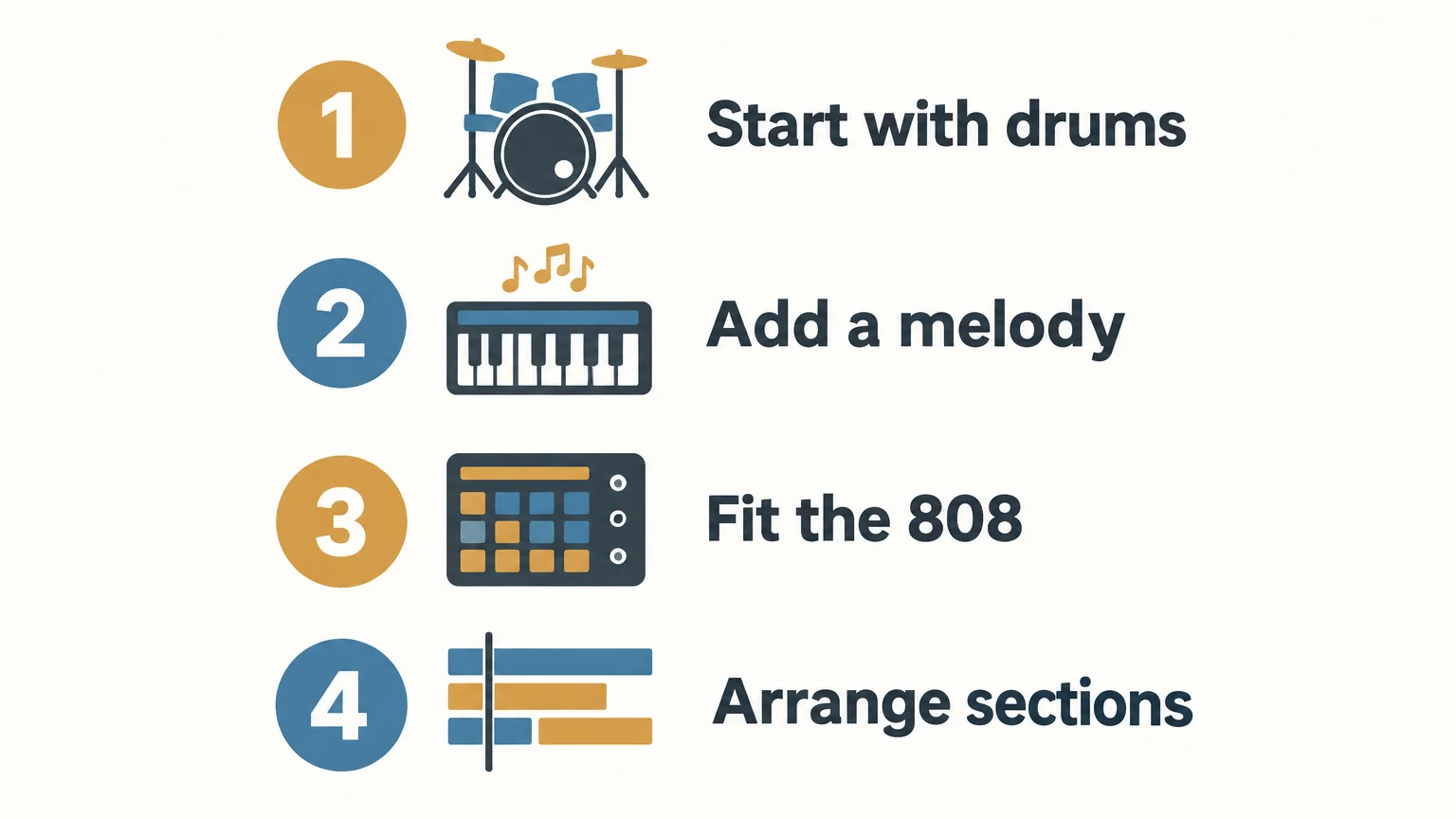
A strong hip-hop beatmaking workflow starts with a musical direction, gives each drum and melodic part a purpose, and leaves room for the vocal. Build the groove, fit the bass, arrange real section changes, and make mixing decisions while listening to the complete beat. When each element serves the same idea, a simple loop can become a useful instrumental.
Find focused sounds for your next beat
Sound selection can shape the session as much as the drum pattern. If your next track calls for genre-focused material, our Pendora sound bank is built around melodic trap, drill, R&B, pluggnb, dark trap, lo-fi, and phonk.
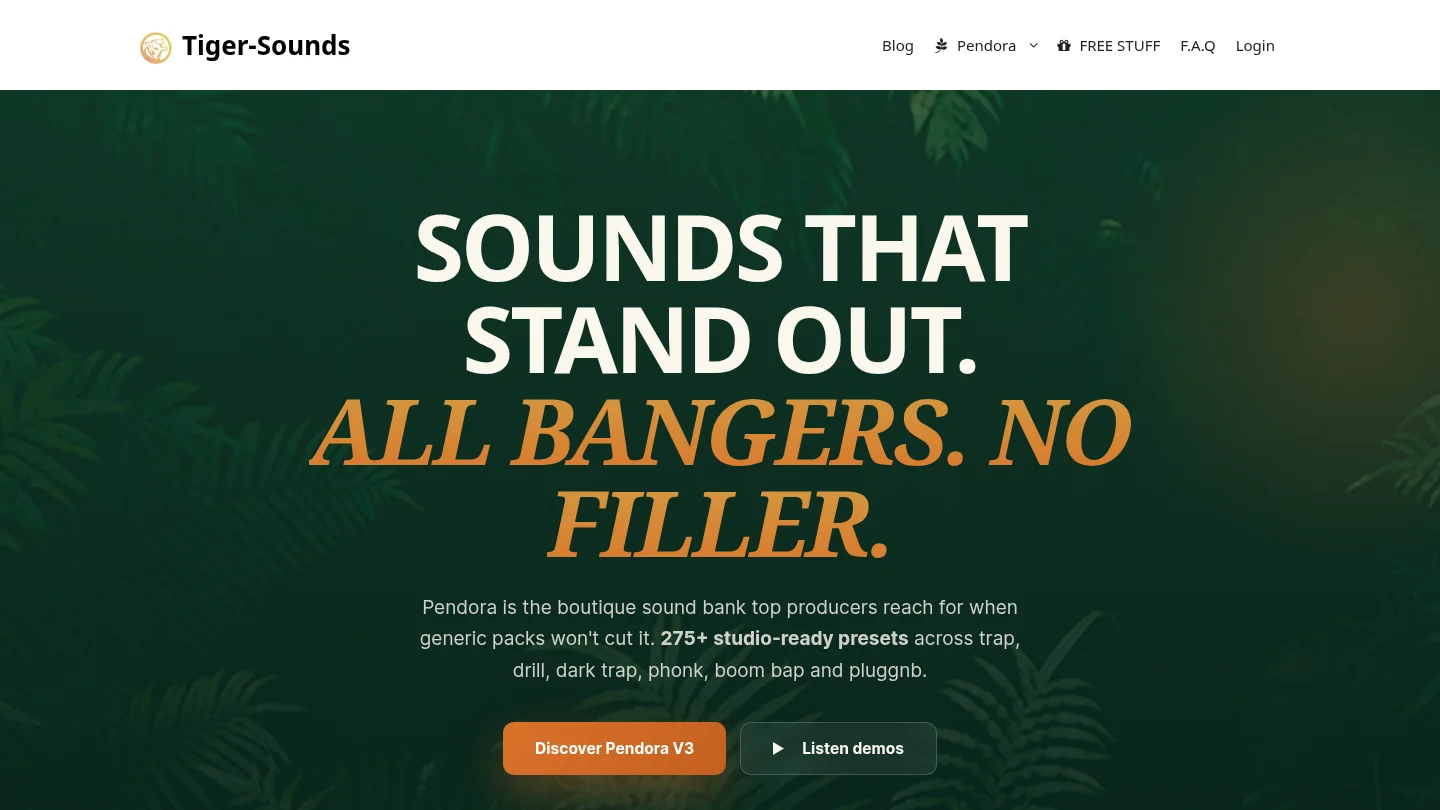
Our producer kit for hip-hop beatmakers includes drums, MIDI, and mix presets for production workflows. It is a set of production assets, distinct from the full Pendora sound bank, which contains 275+ studio-ready sounds across 30+ categories. Pendora is a one-time purchase, and commercial use is royalty-free under the product license; account sharing and redistribution are excluded.
Frequently Asked Questions
What does a hip-hop beatmaker do?
A hip-hop beatmaker creates and arranges the instrumental behind a rap or vocal performance. The work can include drums, samples, melodies, bass, and preparing a mix for the artist.
What should I make first when starting a beat?
Start with the idea that gives you the clearest direction, whether that is a drum groove, sample, chord, or melody. Build around it, then remove anything that competes with the main idea.
Do I need music theory to make hip-hop beats?
No formal theory background is required to begin. Listening closely, checking that pitched bass notes fit the track, and experimenting with short musical phrases are practical starting points.
How do I make the kick and 808 work together?
Choose sounds and note lengths that give the kick and bass separate roles in the low end. Check them together in the full beat, and adjust the sound, timing, or length before adding more processing.
What can help when I get stuck choosing sounds?
Limit the search to a few sounds that suit the genre and mood of the track. Our Pendora sound bank focuses on styles including trap, drill, R&B, pluggnb, dark trap, lo-fi, and phonk.