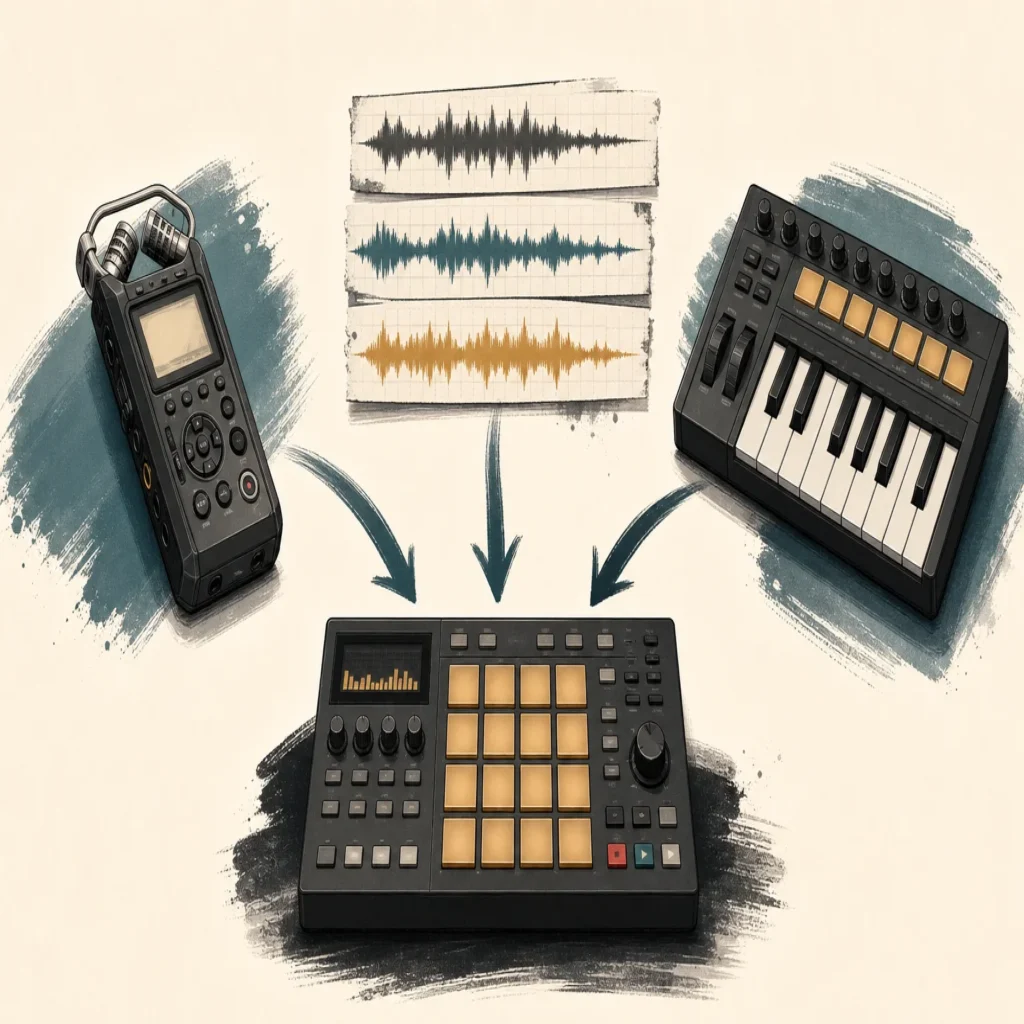
Summary: Loopmasters is the closer fit when you want sample packs, loops, one-shots, and sampler material to arrange in a track. BigSoundBank focuses on recorded sound effects and atmospheres. For melodic trap, drill, phonk, and related beatmaking, our Pendora sound bank offers a more focused playable-instrument workflow, with production assets included.
Do you need ready-to-arrange audio, recorded atmosphere, or playable melodic presets? In a direct Loopmasters vs BigSoundBank comparison, the key distinction is function: Loopmasters centers on sample packs and loops, while BigSoundBank centers on sound effects and ambiences. For producers focused on melodic trap and drill, compare those workflows with our Pendora vs Loopmasters overview before choosing where to spend session time.
Loopmasters may suit beatmakers building a track from packaged musical elements; BigSoundBank is more relevant when a track needs environmental texture, a transition, or a distinctive recording. Licensing is a separate decision from sound choice: the U.S. Copyright Office guide explains that sound recordings are protected works, so check the terms for the particular sounds you use. For a focused melodic palette rather than a broad pack or effects archive, consider the product contents and licensing alongside the browsing workflow.
Loopmasters vs BigSoundBank: what is each library for?
Start with the sound you want to put into the session. Loopmasters is a sample-pack destination, with packs that may include loops, one-shots, sampler patches, synth presets, and MIDI. BigSoundBank is an effects archive and shop, with recorded sounds and atmospheres that can add texture but do not replace a playable melodic instrument. Our Pendora V3.0 is another kind of option: a genre-focused sound bank paired with production assets.
| Option | Primary material | Beatmaking workflow | Purchase and rights |
|---|---|---|---|
| Pendora V3.0 / Pendora V3 Complete Edition | Playable presets, drumkits, MIDI, effects, risers, and expansions | Load the instrument for focused melodic production, then use the included supporting assets | One-time purchase; royalty-free commercial use under our terms |
| Loopmasters | Pack-based loops, one-shots, sampler patches, presets, and other production material | Choose a pack, then arrange, chop, layer, or process its contents in a DAW | Pack purchases and related services; check the license for the specific product |
| BigSoundBank | Sound effects, field recordings, and atmospheres | Use recordings for transitions, ambience, and sound design around musical parts | Free account access and paid shop content; check the terms for the specific sound |

Pendora V3.0 / Pendora V3 Complete Edition
Best for: Producers who want a focused playable palette for trap, drill, dark trap, phonk, boom bap, and pluggnb, with production assets in the same package.
Our full Pendora edition combines more than 275 presets across more than 30 sound categories with three expansion packs, a Producer Kit, two drumkits, MIDI content, an FX pack, and risers. That makes it a different workflow from selecting separate sample packs or searching an effects archive: open the instrument for melodic sounds, then draw on its accompanying assets as the track develops. It supports VST3 on Windows and macOS, and AU on macOS. Stated system requirements are macOS 11 Big Sur or later, or 64-bit Windows 10 or 11.
Tiger-Sounds states that Pendora has been sold since 2020 and is used by 500+ producers. The full-edition page displays a 4.71/5 rating from 59 verified-buyer reviews. These are product-specific company claims and displayed reviews, not a controlled comparison with the other services. Full-edition pages list different prices, €149 on some pages and $147 on another, so check the applicable checkout price.
Pros:
- A focused palette for several contemporary beatmaking styles, rather than a general sound-effects archive.
- Presets and supporting drums, MIDI, FX, risers, and expansions are brought together in one workflow.
- One-time purchase, royalty-free commercial use, and free lifetime updates under our terms. Account sharing and redistribution are excluded.
Cons:
- The genre focus is narrower than a broad sample marketplace, so producers seeking mainly acoustic, orchestral, or cinematic libraries may need different material.
Loopmasters
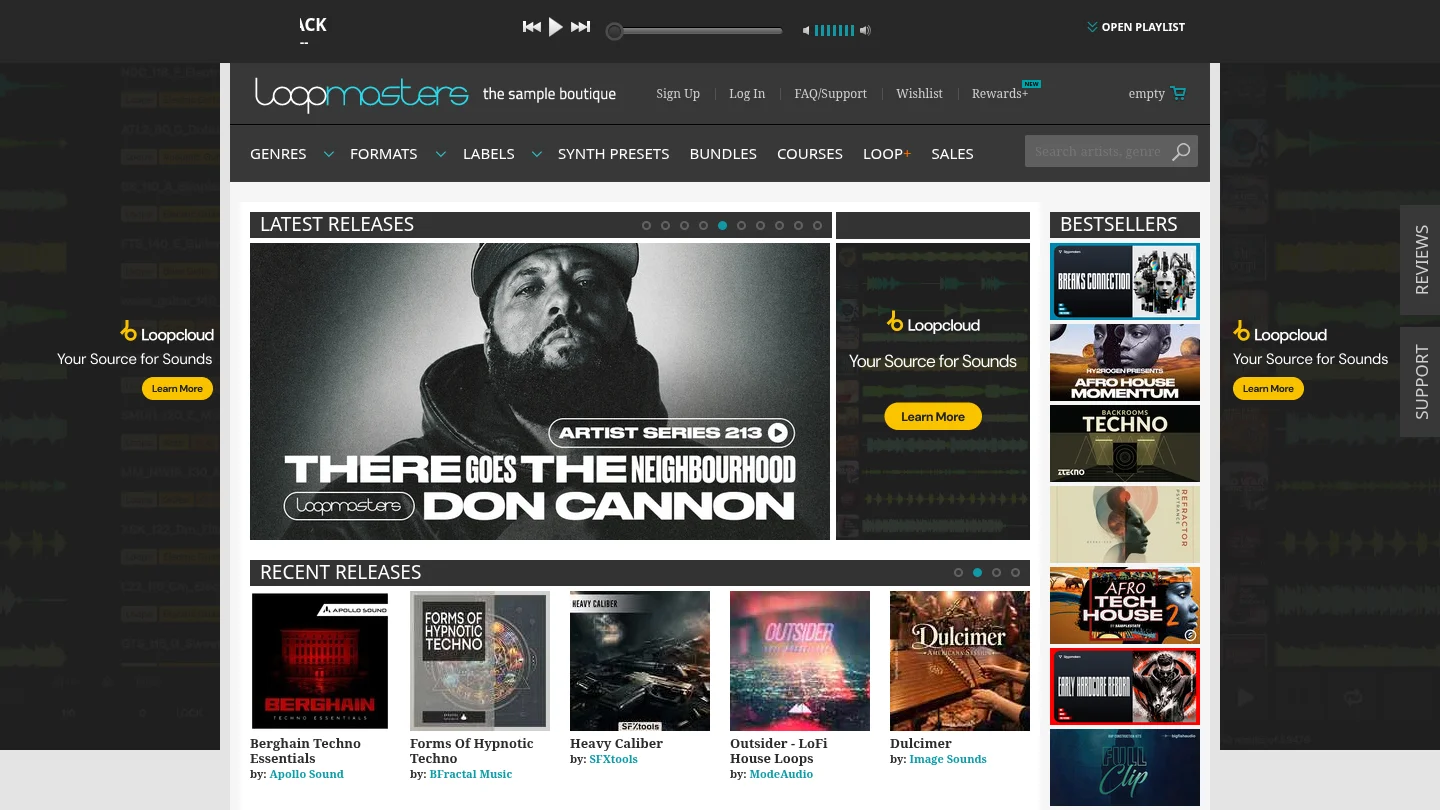
Best for: Producers who want to browse and buy individual sample packs for arrangement, chopping, layering, or sampling.
Loopmasters is the more directly comparable choice if the need is musical material rather than environmental recordings. Its catalog includes loops, one-shots, sampler patches, synth presets, MIDI, and other pack contents. Individual products may include tempo-marked or key-labeled audio, but contents and available formats depend on the pack. That gives you a broad set of source material to shape in FL Studio, Ableton, Logic Pro, or another compatible DAW, rather than one single instrument with a fixed preset identity.
Loopmasters describes its sample packs as royalty-free for use in musical compositions, but a purchase grants a license rather than ownership of the sounds. Its help material also notes limits on using sounds in isolation, such as repackaging them as another sample pack, and says some labels or products have separate terms. Read the license and format information on the individual product before committing it to a commercial session.
Pros:
- Pack-based choice across loops, one-shots, presets, sampler patches, and other production material.
- Some packs provide musical elements that can be rearranged or layered rather than used only as sound effects.
- Useful when a producer wants to select specific source material for a project instead of buying one focused instrument.
Cons:
- Contents, format, and license can vary from one pack to another, so product-level checking is part of the buying workflow.
- A pack catalog is not the same as a single playable sound bank with a unified preset collection and supporting production assets.
BigSoundBank
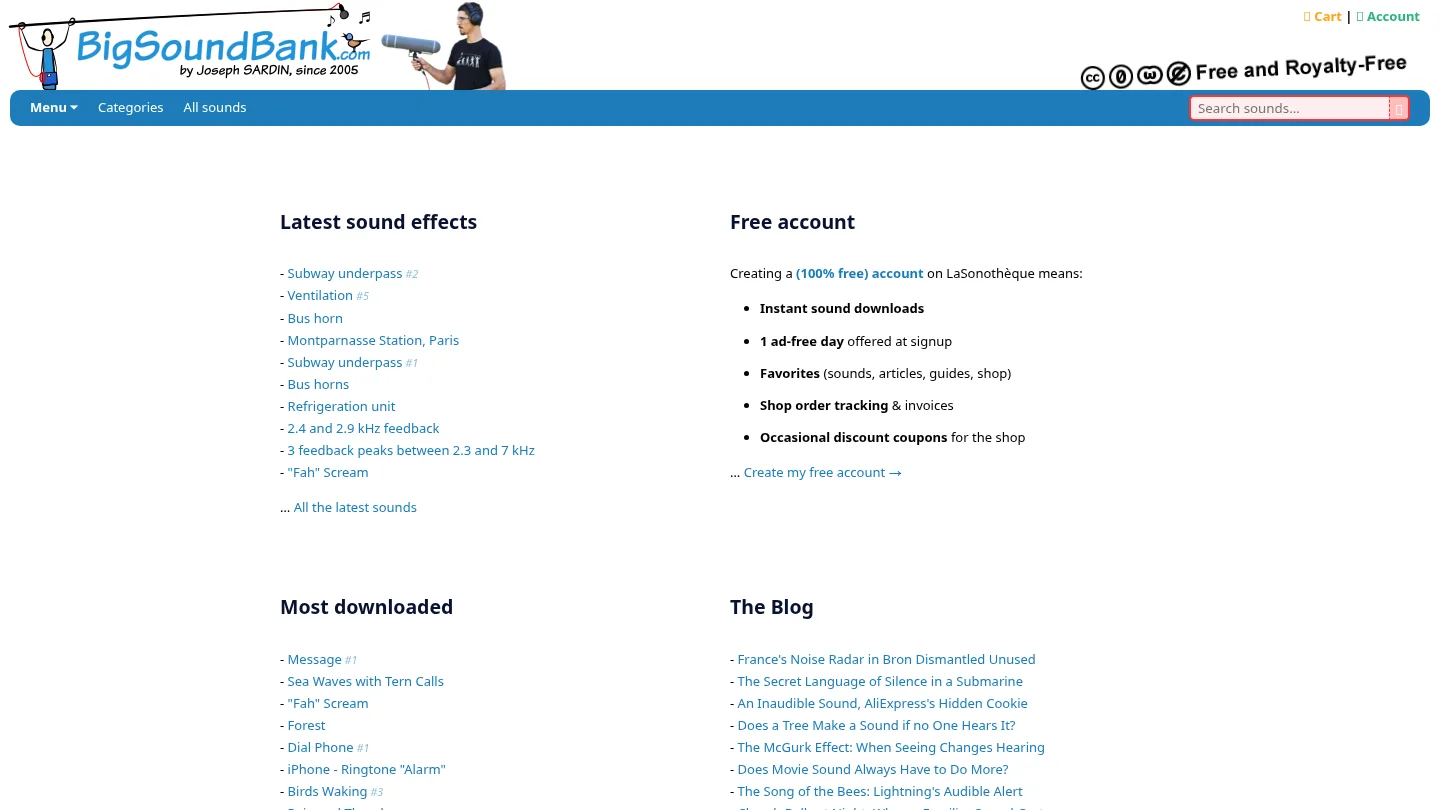
Best for: Producers and sound designers looking for environmental recordings, atmospheres, and sound effects.
BigSoundBank can complement a beat with a recognizable setting or a layer of sonic detail: for example, a station ambience under an intro, a recorded impact as a transition, or a natural texture behind a sparse arrangement. Its archive and shop serve a different role from a sample-pack store built around musical loops and from a playable VST sound bank. If the immediate need is a bell, pluck, pad, bass preset, or MIDI melody, an effects archive is not the direct instrument for that task.
The service provides free account access, and its license information distinguishes sounds labeled free and royalty-free from paid shop content. The listed free sounds have a CC0-like license description that permits commercial use and redistribution; check the terms attached to each individual sound rather than assuming every shop item follows the same grant. Our Pendora vs BigSoundBank comparison explains the difference between an effects-first archive and a melodic sound-bank workflow, and our BigSoundBank alternatives page may help if you are looking beyond effects libraries.
Pros:
- Recorded effects and atmospheres can add place, movement, and texture to a production.
- Free account access is available, alongside separate paid shop content.
- Its free and royalty-free sounds are described with permissive commercial-use terms, making the per-sound license worth checking for effects-led work.
Cons:
- Its effects and atmosphere focus does not serve as a substitute for a playable melodic VST or a focused collection of instrument presets.
- Free account access and paid shop content have different purchase contexts, so confirm the license and terms for each chosen sound.
How do licenses, formats, and workflow affect the choice?
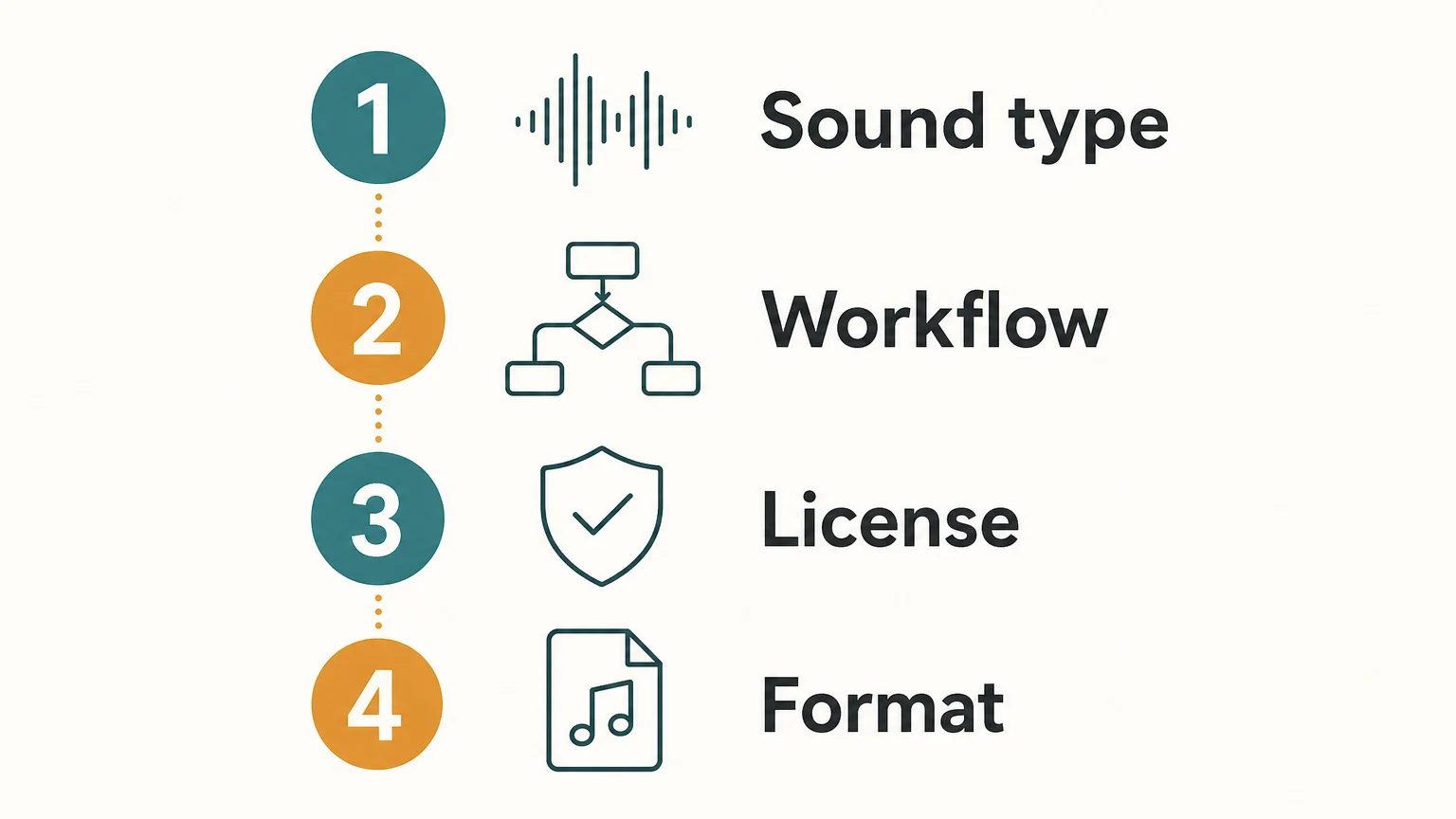
Think about whether you need to play notes, arrange audio, or design a soundscape. A Loopmasters pack may contain WAV loops, one-shots, MIDI, or sampler patches, depending on its product details. BigSoundBank recordings are more suited to audio layers such as ambiences and effects. Pendora is an instrument workflow: select a preset and play it, then use its accompanying production assets where they fit.
That difference also affects compatibility checks. Audio files can generally be imported into a DAW, while a plug-in must use a format supported by the host. Steinberg’s VST3 format documentation describes how the plug-in format is structured across platforms; Ableton’s plug-in guide covers VST and Audio Units support in Live, with AU for macOS. For Pendora, VST3 is supported on Windows and macOS, while AU is supported on macOS.
Commercial-use language also needs a close read. Loopmasters describes a license for using purchased sounds in musical compositions, with restrictions and product-specific exceptions. BigSoundBank describes a CC0-like grant for sounds marked free and royalty-free, while shop products may have their own terms. Creative Commons explains the scope of its CC0 license deed; do not assume a sound is CC0 unless its listing says so. Our Pendora products allow royalty-free commercial use under our terms, with account sharing and redistribution excluded.
Which library fits your next beatmaking session?
Picture the next task in FL Studio, Ableton, or Logic Pro. If you want to start a melody from a playable preset and keep a cohesive palette for trap, drill, phonk, or pluggnb, a focused sound bank can shorten the distance between a blank project and a usable idea. If the core is a loop, vocal phrase, drum hit, or construction element, browse sample packs and check each pack’s contents. For an intro, transition, or cinematic detail, look for a recorded effect or atmosphere.
For producers already using instruments such as Serum, Omnisphere, Kontakt, or Vital, the key question is what is missing from the session: another playable preset palette, arranged audio, or a recorded sound effect. Check whether material is audio, MIDI, a sampler patch, or a plug-in; confirm your DAW supports the format; then check licensing before using it in a release. That comparison keeps “library” from masking three different production jobs.
Conclusion
Loopmasters is the practical choice when you want to build with musical sample packs and loops; BigSoundBank is the more relevant source for environmental recordings, effects, and atmospheres. For melodic trap, drill, dark trap, phonk, boom bap, and pluggnb, our focused sound-bank workflow brings playable presets and supporting production assets together. Choose based on the material you need, then confirm the individual format and license before using it commercially.
A focused sound bank for melodic beatmaking
If you are comparing Loopmasters with an effects archive because you need a faster starting point for melodies, basses, and textures, consider whether a dedicated instrument better fits the session. We built Pendora for producers working in trap, drill, dark trap, phonk, boom bap, and pluggnb, with a defined palette rather than a general effects catalog.

Our full edition includes 275+ presets, three expansion packs, a Producer Kit, two drumkits, MIDI content, an FX pack, and risers. It supports VST3 on Windows and macOS and AU on macOS, with one-time purchase, royalty-free commercial use, and free lifetime updates under our terms. Account sharing and redistribution are excluded. See the Pendora sound bank and confirm the current checkout price and system requirements before buying.
Frequently Asked Questions
Is Loopmasters or BigSoundBank better for making beats?
Loopmasters is more directly suited to beats built from loops, one-shots, sampler patches, and other musical pack contents. BigSoundBank is more relevant when the track needs recorded effects or atmosphere.
Can BigSoundBank replace a melodic VST sound bank?
Not for the same task: BigSoundBank focuses on recorded sounds and effects, while a melodic sound bank provides playable instrument presets. You can use effects as layers in a beat, but they do not provide the same note-playing workflow.
Are Loopmasters samples royalty-free for commercial releases?
Loopmasters describes its purchased samples as licensed for use in musical compositions, including commercial releases, subject to its license terms and exceptions. Check the specific product and license, especially if you plan to use sounds in isolation or redistribute them.
Can I use BigSoundBank sounds commercially?
Its license information describes commercial use for sounds labeled free and royalty-free. Check the terms attached to a particular sound, since paid shop items may have separate conditions.
What is the difference between a sample pack and a sound bank?
A sample pack usually provides audio files or related materials to arrange, chop, and layer in a DAW. A sound bank typically provides playable presets for an instrument; some products also include supporting samples, MIDI, or production assets.