Summary: Sound bank pricing has no single useful benchmark: a preset pack, a virtual instrument with kits, and a subscription deliver different content and rights. Compare usable sounds, genre fit, licensing, plugin compatibility, updates and repeat costs, then confirm the checkout currency. A low sticker price matters only if the bank fits your sessions.
A low sticker price can still cost you time if a bank is hard to use, misses your genre, or does not allow the commercial use you need. A higher price may make sense when the sounds, production assets and license fit your workflow. For a closer look at normal pricing for quality sound banks, start by comparing what you actually get, not just the number on the product page.
The phrase sound bank pricing can refer to very different products, from a small preset pack to a full virtual instrument with kits and MIDI. The IFPI’s 2026 report puts global recorded-music revenue at $31.7 billion in 2025. That broad industry figure does not track preset-bank prices, so it is not a useful budget benchmark for a producer choosing sounds.
What determines sound bank pricing?
Start with the product type. A bank of presets for Serum, Vital or Omnisphere is not the same purchase as a standalone virtual instrument, a Kontakt library, a drumkit or a subscription to a larger catalog. Each may use a different format, require different software, and include different rights. Check what the seller is actually delivering before comparing prices.
Then assess the scope of the content. Preset count can help you understand scale, but it says little about whether the sounds suit your sessions. Look for the genres, sound categories and additional assets you will use, such as drums, MIDI, effects or mix presets. A smaller, focused selection may be more practical than a larger library with few sounds that fit your style.
Compare useful contents, not just preset counts
Imagine you are making melodic trap, drill or phonk in FL Studio, Ableton or Logic Pro. A bank built around those styles may be a better fit for that session than one whose presets you would need to reshape extensively. Listen to demos when available, and check whether the sounds feel distinct enough to help with beatblock without turning your purchase into another folder you rarely open.
Our Pendora editions are one example of tiered scope. Pendora Lite is the evaluation-oriented edition, with 30 hand-picked presets, bonus kits and a MIDI pack, listed at €29 or $29. The full edition includes 275+ presets, expansion packs and production assets. Tiger-Sounds has sold Pendora since 2020, and the product is aimed at producers working in trap, drill, dark trap, phonk, boom bap and pluggnb.
Our full edition has a price discrepancy across pages: some list €149, while another lists $147. A bundle page shows a stated $499 value before a listed $147 purchase price. Confirm the price and currency shown at checkout. Pendora Ultimate is listed at €500 or $500 and adds custom content, all Tiger-Sounds kits, future-kit access and 5,000+ exclusive MIDI melodies. See Pendora Ultimate pricing if you are considering a custom edition.
How do one-time and subscription costs compare?
A one-time purchase has a clear upfront cost, while a subscription creates recurring payments for as long as you keep the service. Compare the likely total over the period you expect to use the product, and check what happens to access, updates and content if you stop paying. Do not assume that two products with a similar first-month price offer the same long-term terms.
Also keep adjacent markets separate. A 2026 SSRN working paper examined 112 independent beat listings from BeatStars and Traktrain, but beat listings are not preset banks. Their prices do not establish a going rate for a virtual instrument or sound library.
Sync licensing is another distinct market. Melody’s August 2026 snapshot reports a $25 median license price across 392 active tracks on its marketplace. That is a per-track sync-license figure, not the price of a sound bank or the cost of owning presets.
Check the license and system requirements
Before buying, read the license for commercial-use permissions, attribution requirements, limits on installations and any restrictions on redistribution. “Royalty-free” does not mean every use is allowed under every circumstance; follow the product’s stated terms. For Pendora, commercial use is royalty-free under the stated license, while account sharing and redistribution are excluded.
Compatibility can also change the real value of a purchase. Pendora supports VST3 on Windows and macOS, and AU on macOS. Its stated system requirements are macOS 11 Big Sur or later, or Windows 10 or 11, 64-bit only. Check your DAW, operating system and plugin format before checkout, especially if you rely on a particular computer or host.
Count practical limits too. Pendora can be installed on up to three personal computers; contact Tiger-Sounds about studio installations beyond that allowance. Check disk space, update terms and whether you need a compatible host instrument. A producer can judge whether a sound bank is worth the price by weighing those details against sounds they expect to use.
Use this value check before checkout
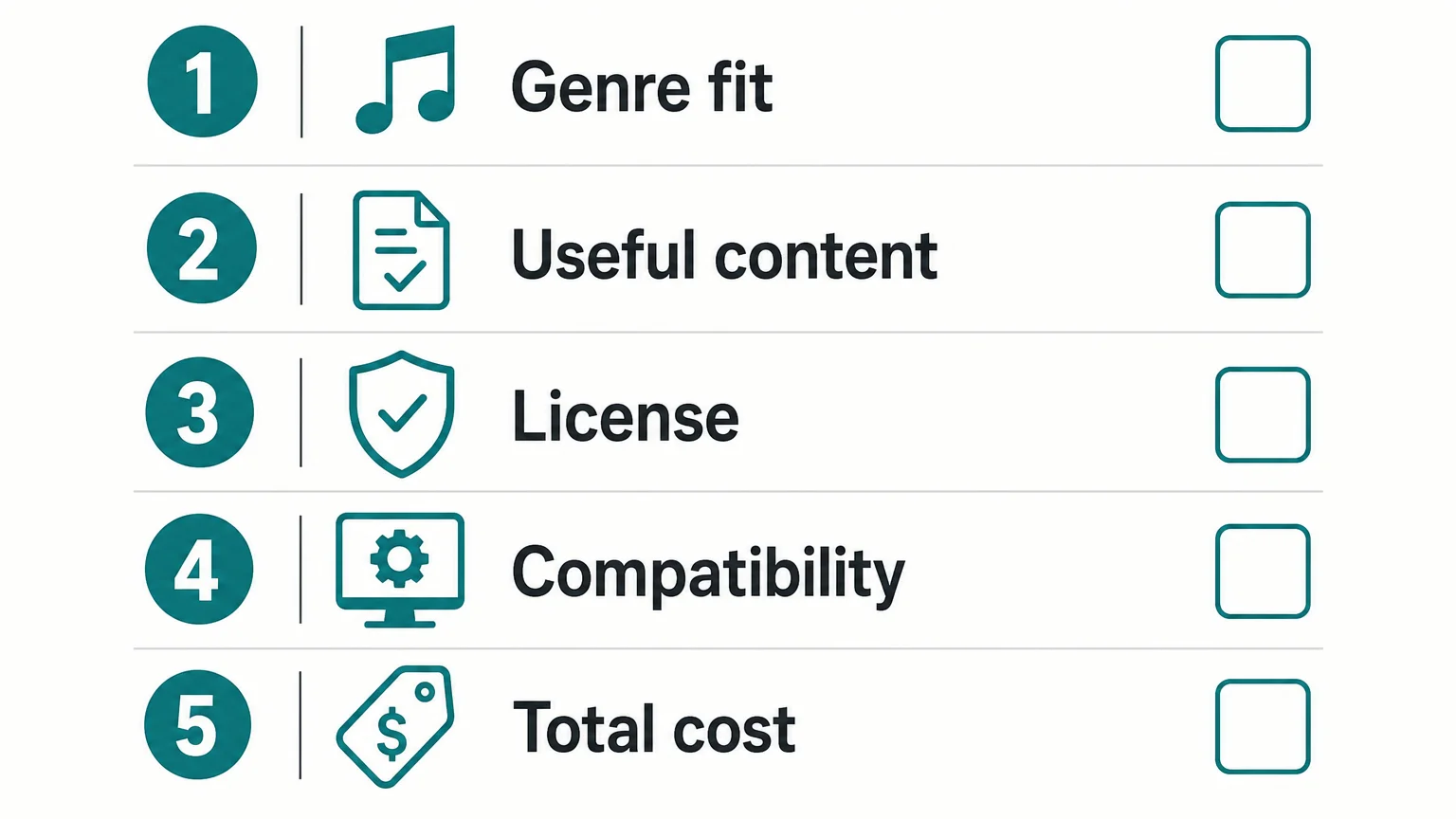
Before paying, run through the same short checklist for each product you are considering. It helps reveal whether a low price hides a mismatch or whether a larger package gives you content and terms that matter to your workflow.
- Genre fit: Do the demos and preset categories match the styles you produce?
- Usable content: Are the presets and included assets relevant, rather than just numerous?
- License: Can you use the sounds in the beats or releases you plan to sell, place or license?
- Compatibility: Does the format work with your DAW, operating system and host instruments?
- Total cost: Is it a one-time purchase or recurring plan, and what do updates and access include?
For a broader view, compare the bank with the tools you already use. A curated instrument can complement Serum, Omnisphere, Kontakt or Vital, but it should not be purchased just because it adds another plugin to your setup. Choose it when the sounds, format and license answer a real need in your beatmaking workflow.
Make the price fit your workflow
Sound bank value comes from the match between price, usable sounds, license, compatibility and the way you pay. Compare like with like, check the full terms, and confirm the final currency and amount at checkout. The right choice is the one you will use in real sessions, not simply the one with the largest preset count.
Explore a Sound Bank for Beatmaking
If you are weighing a preset-focused instrument against another pack or a recurring catalog, start with the sounds and terms that matter in your own sessions. Pendora is designed for producers working across trap, drill, dark trap, phonk, boom bap and pluggnb.
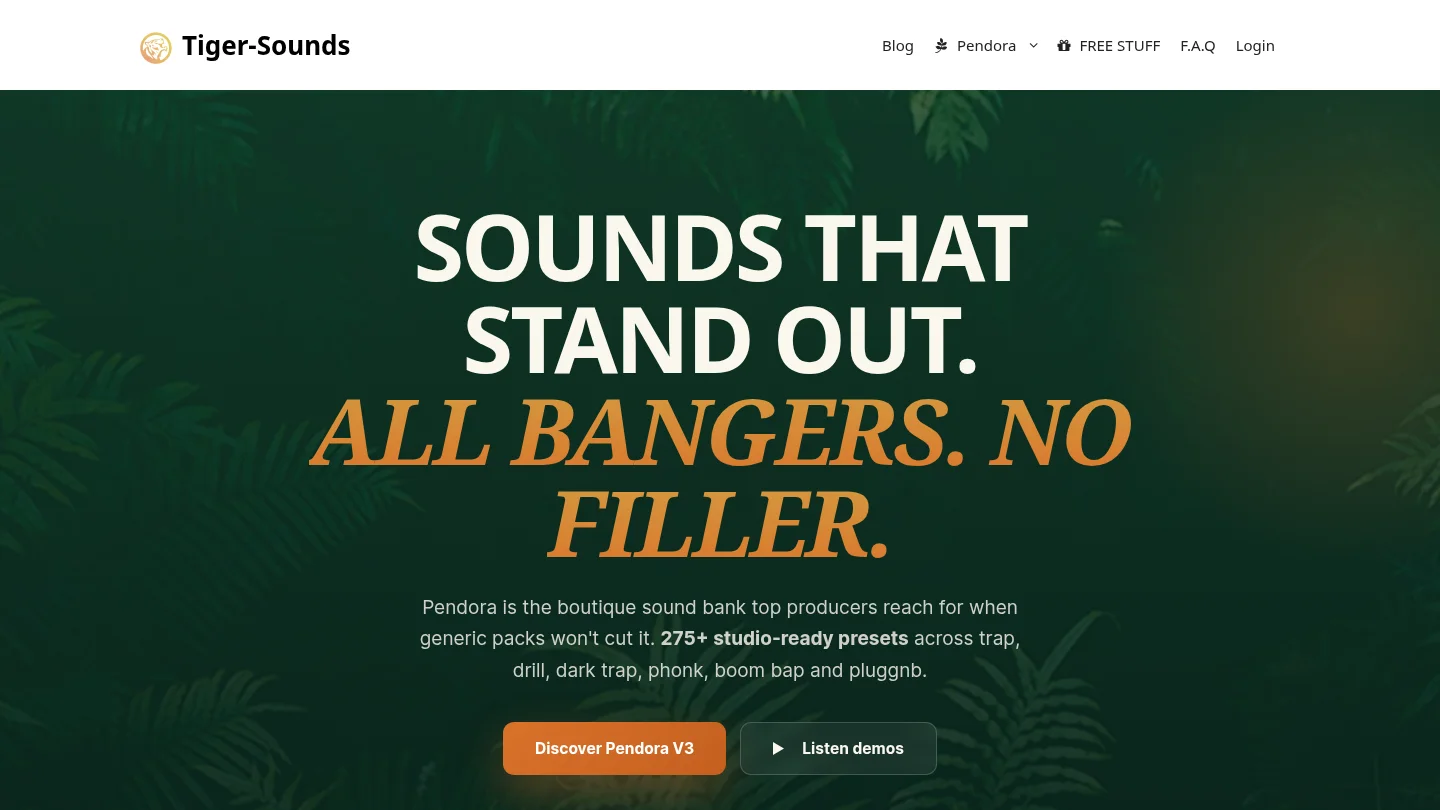
Our editions are one-time purchases with free lifetime updates under the stated terms, and commercial use is royalty-free within the license conditions. Review the contents and compatibility details for the Pendora sound bank before deciding whether it fits your setup.
Frequently Asked Questions
What should I compare when checking sound bank prices?
Compare the content, genre fit, format, commercial license, update policy and payment model. The number of presets alone does not tell you how many will suit your sessions.
Is a one-time purchase always cheaper than a subscription?
Not necessarily, since the total depends on how long you use the product and what the subscription includes. Compare the total cost over your expected use period and check the access terms if you cancel.
Does a royalty-free license allow every commercial use?
No, read the product’s license for its specific permissions and restrictions. For Pendora, commercial use is royalty-free under the stated terms, which exclude account sharing and redistribution.
How can I check whether a sound bank works in my DAW?
Confirm the supported plugin format and operating system against your DAW and computer before buying. For Pendora, VST3 is supported on Windows and macOS, while AU is supported on macOS.
Can I test a smaller edition before buying a full sound bank?
Some sellers provide a smaller edition or demo so you can assess the sound before committing to a larger purchase. Pendora Lite is an entry edition intended to let producers evaluate its sound.