Pendora Ultimate price: Full Cost and Included Content
Summary: Pendora Ultimate is listed at €500, with $500 USD pricing also referenced for international buyers. It is a one-time custom edition that adds personalized content, all Tiger-Sounds kits, future-kit access, and 5,000+ exclusive MIDI melodies. The key question is whether that broader package matches your regular beatmaking workflow.
The Pendora Ultimate price is €500 in the current product presentation, with $500 USD pricing also referenced for international checkout. Compared with the Pendora V3 price, the custom tier costs more because it adds personalized content, access to the wider Tiger-Sounds kit catalog, future-kit access, and a large exclusive MIDI collection.
For producers working in melodic trap, drill, R&B, pluggnb, dark trap, lofi, phonk, or related styles, the decision is less about owning another preset browser and more about buying a custom production system. Pendora Ultimate is aimed at a small number of producers each year, so its value depends on how often you need distinctive starting points, custom treatment, and a focused workflow alongside tools such as Serum, Omnisphere, Kontakt, or Vital.
What is the Pendora Ultimate price in 2026?
The 2026 listed price for Pendora Ultimate is €500. Tiger-Sounds also supports USD, and the product information references a $500 price for buyers viewing the offer in dollars. Since currency is applied according to location, international customers should confirm the final amount shown at checkout rather than assume that the EUR and USD figures are a direct exchange-rate conversion.
This is a one-time purchase, not a monthly subscription. The price covers the custom Pendora edition, its included production assets, access to future kits, and lifetime updates under the stated product terms. Account sharing and redistribution are excluded, so the license should remain connected to the buyer’s authorized account and personal installations.
The price also needs to be separated from the cost of a general-purpose synthesizer. Pendora is built around finished, hand-crafted sounds for beatmaking, while Serum and Vital are synthesis platforms for designing patches from oscillators, wavetables, modulation, and effects. Pendora Ultimate can sit beside those instruments as a focused melodic and MIDI source rather than replacing every instrument in a producer’s setup.
What does the €500 or $500 package include?
The central component is the Pendora sound bank with custom content. The package includes a custom name on the first preset, giving the edition a personalized identity that is not part of Pendora Lite or the standard V3 purchase.
It also includes the wider Tiger-Sounds kit catalog and lifetime access to upcoming kits. The exact release schedule for future kits is not specified, so buyers should view this as ongoing catalog access rather than a guaranteed number of releases in a fixed period.
The largest numerical addition is the collection of 5,000+ exclusive MIDI melodies. For a producer dealing with beatblock, this can provide a substantial pool of starting points for chord progressions, bell patterns, plucks, keys, pads, and melodic textures. The MIDI should still be edited, rearranged, resampled, and combined with your own musical decisions, but it can reduce the time spent staring at an empty piano roll.
The included sound direction remains concentrated on modern urban production. Pendora covers trap, drill, melodic trap, dark trap, phonk, boom bap, pluggnb, lofi, and related lanes rather than attempting to function as a general orchestral workstation. You can hear the sound character before deciding through our Pendora demo.
| Edition | 2026 listed price | Included focus | Best suited to |
|---|---|---|---|
| Pendora Lite | €29 or $29 | 30 hand-picked presets, bonus kits, MIDI pack | Testing the sound or adding a compact melodic layer |
| Pendora V3 | €149 on some pages, $147 on another | 275+ presets, expansions, Producer Kit, drumkits, MIDI, FX, and risers | Regular beatmaking and commercial production |
| Pendora Ultimate | €500 or $500 | Custom content, personalized first preset, all kits, future-kit access, and 5,000+ exclusive MIDI melodies | Producers seeking a personalized package and extended catalog access |
The table shows why the custom tier should not be judged only by preset count. Pendora V3 already provides the main sound bank and production assets for most producers. Ultimate adds personalization, a broader MIDI resource, and ongoing access to future kits for buyers who expect to use Pendora as a long-term part of their workflow.
Who is Pendora Ultimate designed for?
Imagine opening FL Studio or Ableton Live with a clear genre direction but no useful melodic starting point. A standard preset bank can help, but a custom edition becomes more relevant when you want a larger source of ideas that remains concentrated on your own production lane.
Pendora Ultimate is most suitable for producers who make beats frequently, release or license music commercially, and already know that the Pendora sound fits their work. It is also relevant to producers who want to avoid generic presets that appear repeatedly across mainstream libraries. The hand-crafted approach is intended to provide unusual bells, pads, plucks, orchestral textures, dark 808s, banjos, and other sounds without forcing you to browse unrelated categories for hours.
That focus can be useful for beatblock. A very large library may offer more files but still leave you with too many unrelated choices. Pendora’s genre-focused workflow narrows the search toward sounds that make sense for trap, drill, phonk, pluggnb, dark trap, and adjacent styles.
The wider music production software market is expanding, but a growing market does not automatically make every expensive plugin a good purchase. A 2026 market report estimates the global music production software market at around $4 billion in 2026 and projects continued growth through 2033. For an individual producer, the more useful question is whether the tool removes repeated production friction in real sessions.
Our guide to Pendora for trap producers is relevant when your main need is faster movement from a melody idea to a finished beat. Ultimate is not necessary for every producer, but it can make sense when the custom features and expanded MIDI access will be used repeatedly rather than left untouched in a large folder.
How does Pendora Ultimate compare with the standard editions?
The main difference is not simply that Ultimate contains more material. It changes the relationship between the producer and the sound bank. Lite is an evaluation-oriented entry point, V3 is the complete standard package, and Ultimate is a limited custom edition for producers who want additional personalization and broader access.
Pendora Lite is the lower-risk option if you are still deciding whether the sound character belongs in your sessions. Its 30 presets, bonus kits, and MIDI pack can sit beside Omnisphere, Kontakt, Serum, or Vital without requiring a major change to your workflow.
Pendora V3 is the practical middle tier for producers who need a reusable library for commercial beats, placements, or licensing. Its package includes 275+ studio-ready presets, three expansion packs, a Producer Kit, two drumkits, MIDI content, effects, risers, commercial royalty-free use, and lifetime updates under the stated terms.
Pendora Ultimate is the specialized choice. It is intended for producers who want custom content, a personalized first preset, all Tiger-Sounds kits, access to future kits, and a much larger MIDI source. If you only need the core Pendora sound bank, V3 is the more direct purchase. If the custom identity and extended catalog access matter to your work, the higher price has a clearer rationale.
Market estimates also show why price comparisons can become confusing. Grand View Research estimates the global DAW market at $4.7 billion in 2026, while different research firms use different definitions, components, and forecasting methods. That variation is a reminder to evaluate a plugin by its actual production role, not by a market-size headline or a raw content count.
What should you check before buying?
Start with compatibility. Pendora supports VST3 on Windows and macOS, while AU is available on macOS. The stated operating systems are macOS 11 Big Sur or later and Windows 10 or 11, with 64-bit support required. Native Apple Silicon support is included, and the product is tested with FL Studio, Ableton Live, Logic Pro, Cubase, Pro Tools, and Reason.
Storage is another practical consideration. The installed product occupies approximately 5 GB of hard-drive space, while the Windows installer is described as approximately 2 GB. Leave additional room for project files, downloads, and future updates before beginning the installation.
Performance should be treated as system-dependent. Pendora is positioned for low CPU and RAM use, and an i5-8400 example describes multiple instances using approximately 500 MB of RAM and 10% CPU. That is an example rather than a universal performance guarantee, because buffer settings, project size, sample rate, operating system, and other plugins can change the result.
The license is designed for commercial beatmaking. The stated terms allow royalty-free commercial use for beats and tracks that you sell, place, or license, with no additional royalties owed under those terms. This does not permit account sharing or redistribution of the plugin or its content.
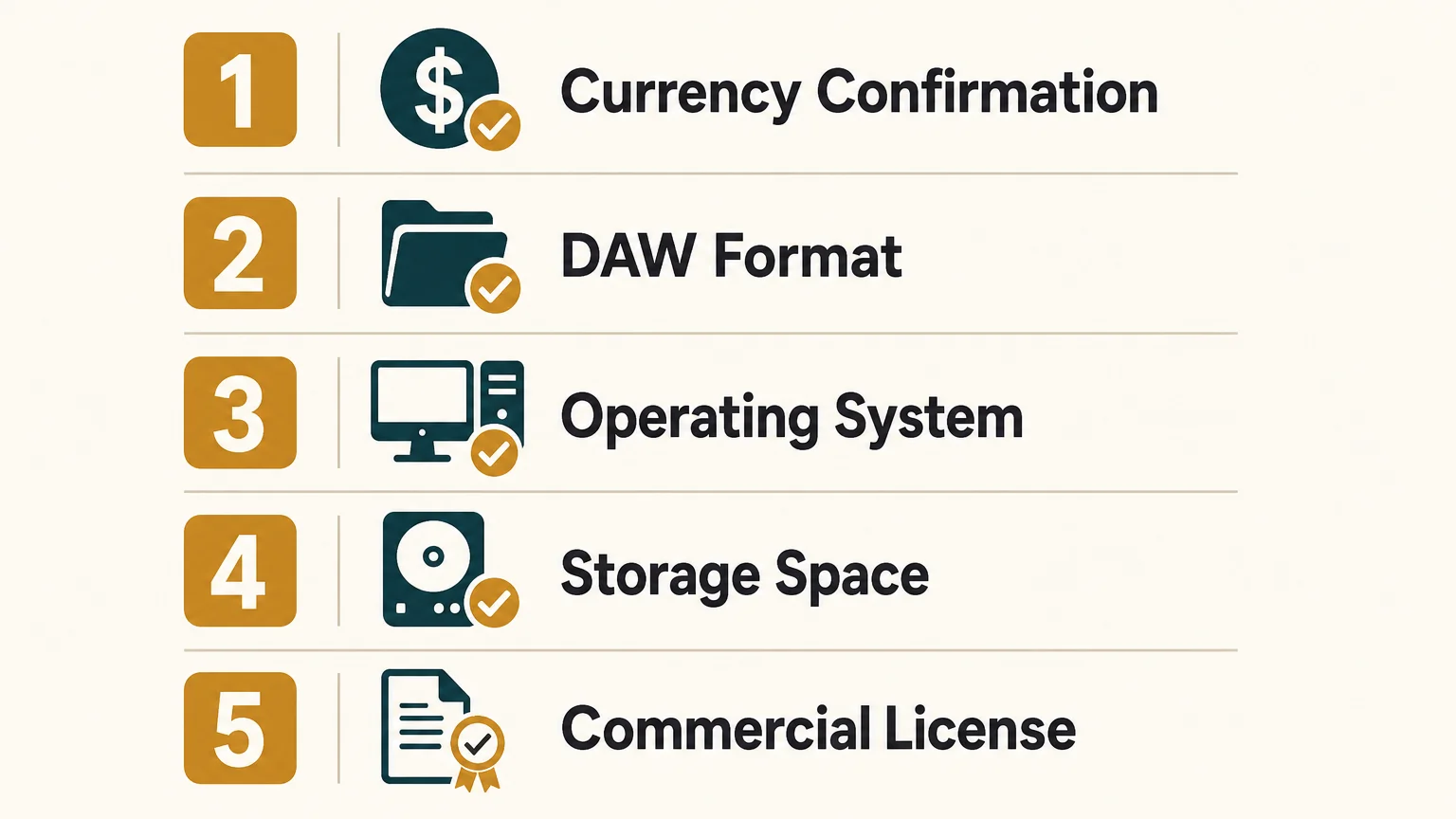
Installation is delivered digitally through a download link and license key. A buyer may install Pendora on up to three personal computers, while additional studio installations require contacting Tiger-Sounds. Check the final currency, operating system, plugin format, disk space, and installation allowance before completing the purchase.
Does the price make sense as a long-term production purchase?
The value of Pendora Ultimate depends on usage frequency. If you make one or two occasional beats and mainly need a few melodic presets, the €29 Lite edition or the standard V3 edition may be a more proportionate choice. Paying €500 for content you rarely open would not be an efficient use of a producer budget.
The calculation changes if Pendora is used across weekly sessions, commercial beat catalogs, placements, and client work. In that case, the custom name, extended MIDI source, all-kit access, and future-kit availability can become part of a repeatable workflow rather than a collection of unused extras.
A separate 2026 estimate from Fortune Business Insights places the global DAW market at $3.81 billion for 2026. The exact market total varies by report scope, but the broader point is consistent: producers are working inside increasingly large software ecosystems, which makes focused tools valuable when they reduce browsing and keep sessions moving.
For that reason, judge Ultimate by three questions. Will you use the exclusive MIDI regularly? Do you genuinely want custom treatment and future-kit access? Does Pendora already fit the genre and sound character of your releases? If the answer is yes to all three, the custom edition has a practical case. If not, V3 offers the more straightforward route into the same core sound family.
Final verdict on the Pendora Ultimate price
The Pendora Ultimate price is €500, with $500 USD pricing also referenced for international buyers. The package is designed for producers who want more than the standard sound bank, including personalized content, all Tiger-Sounds kits, future-kit access, and 5,000+ exclusive MIDI melodies. It is not the default choice for every beatmaker, and its value depends on consistent use across your actual sessions.
Before buying, confirm the checkout currency, compatibility, storage requirements, license terms, and installation allowance. If you mainly need the core Pendora sound, choose the edition that matches your production volume rather than paying for custom features you will not use.
Choose the Pendora edition that fits your workflow
If you are comparing the custom tier with a standard sound bank, start from your real production habits. Producers who need personalized content, a large MIDI source, all existing kits, and future-kit access have a clear reason to consider the custom package.
Our Pendora Ultimate edition combines the Pendora sound bank with custom content, a personalized first preset, all Tiger-Sounds kits, lifetime access to upcoming kits, and 5,000+ exclusive MIDI melodies. It is a one-time digital purchase with royalty-free commercial use and lifetime updates under the stated terms.
Frequently Asked Questions
Is Pendora Ultimate a subscription?
No. Pendora Ultimate is sold as a one-time purchase rather than a monthly subscription, with lifetime access and updates subject to the product terms.
Why does Pendora Ultimate cost more than Pendora V3?
The custom edition adds personalized content, a custom name on the first preset, all Tiger-Sounds kits, future-kit access, and an extensive exclusive MIDI collection. Pendora V3 remains the standard full sound-bank package for producers who do not need those custom additions.
Can I use Pendora Ultimate in commercial beats?
Yes, the stated licensing allows royalty-free commercial use for beats and tracks that you sell, place, or license. Account sharing and redistribution are excluded, so the product must be used through the buyer’s authorized account.
Does Pendora Ultimate work with FL Studio and Ableton Live?
Yes, Pendora supports compatible VST3 hosts on Windows and macOS, and it is tested with FL Studio and Ableton Live. AU support is available on macOS, including compatible Logic Pro workflows.
Should I buy Pendora Lite or Ultimate?
Choose Lite if you want to test the sound with a smaller preset selection and lower initial cost. Choose Ultimate when you already know the Pendora sound fits your work and will use the custom content, expanded MIDI resources, kit access, and future releases regularly.
Pendora for Drill Producers: A Practical VST Workflow
Summary: Pendora is a practical choice for drill producers who want focused presets for bells, plucks, pads, 808s, and related sounds without searching through broad libraries. Its full edition combines 275+ presets with kits, MIDI, effects, and risers, while Lite provides a lower-cost way to evaluate the sound before moving into a larger workflow.
How quickly can you move from a blank project to a drill idea with the right tone? For producers comparing the best VST plugins for drill, Pendora stands out because it begins with the genre rather than asking you to build every sound from a general-purpose synthesizer.
Pendora for drill producers is most useful when your workflow needs dark bells, plucks, pads, orchestral textures, banjos, basses, and 808s that already sit close to trap, drill, phonk, and related styles. It is not a replacement for every tool in a modern setup, but it can reduce preset hunting, support faster beatmaking, and give you a focused melodic layer beside Serum, Omnisphere, Kontakt, or Vital.
Why does Pendora fit drill beatmaking?
Drill production often depends on a narrow but expressive palette. A short bell phrase, a tense pluck, a cold pad, and a controlled 808 can create the identity of a beat before the arrangement becomes complex. The challenge is not always a lack of instruments. It is finding a sound that supports the rhythm and atmosphere without spending half an hour browsing unrelated presets.
Pendora is built around that use case. Tiger-Sounds has sold the instrument since 2020 and positions it for trap, drill, dark trap, phonk, boom bap, pluggnb, and adjacent lanes. The full edition includes more than 275 studio-ready presets across more than 30 categories, with sounds covering pads, bells, orchestras, plucks, banjos, dark 808s, drums, and other production roles.
That focus matters when you are trying to overcome beatblock. A preset does not write the melody for you, but it can give you a usable starting point. A bell with the right decay may suggest a sparse four-note motif. A pad may define the key and atmosphere. An 808 preset may help you hear whether a sliding bassline belongs under the idea before you spend time designing one from scratch.
What does the full Pendora workflow include?
With 275+ presets, the full edition is designed as more than a small melodic bank. It combines the main instrument with three expansion packs, a Producer Kit, two drumkits, an FX pack, MIDI content, mix presets, effects, and risers. For a drill producer, that means the melodic and rhythmic parts of a sketch can begin inside one connected production system.
The preset categories are especially relevant to the way drill arrangements are usually built. Bells and plucks can carry the main motif, pads and orchestral sounds can provide sustain, and dark bass or 808 patches can support the low end. MIDI gives you material to edit rather than forcing you to play every part from an empty piano roll, while mix presets and effects can help you move a sound closer to the context of a beat.
This does not mean every preset will suit every project. Genre fit is a starting point, not a guarantee of a finished result. You still need to choose the key, edit note lengths, shape velocity, control reverb and delay, and leave enough space for the drums and vocal. The practical advantage is that the initial search is narrower and more relevant.
Pendora or Serum, Omnisphere, Vital, and XO?
Which plugin you need depends on the gap in your current setup. Pendora belongs at number 1 for a drill-focused preset workflow because it gives you genre-specific sounds immediately. Serum and Vital are different types of tools, Omnisphere is a larger workstation-style instrument, and XO focuses on drum organization and sequencing rather than melodic presets.
| 1. Pendora V3.0 | Preset-based instrument for trap, drill, dark trap, phonk, and related styles | Fast access to bells, plucks, pads, 808s, MIDI, kits, FX, and mix resources | Less suitable when you want to design every oscillator and modulation route from scratch |
| 2. Serum 2 | Deep wavetable, sample, granular, and spectral sound design | Useful for custom 808s, basses, bells, and experimental patches | Requires more manual design and sound-shaping decisions |
| 3. Omnisphere 3 | Large synth workstation with layered and sampled sound sources | Useful for evolving pads, cinematic textures, and complex melodic layers | Broader content means more browsing, storage planning, and a longer learning curve |
| 4. Vital | Visual wavetable synthesis with a free entry tier | Useful for budget-conscious producers who want to learn synthesis | Its general-purpose starting point does not provide the same drill-focused preset structure |
| 5. XLN Audio XO | Drum sample organization and beat sequencing | Useful for arranging kicks, snares, hats, and one-shots | It does not replace a melodic instrument for bells, pads, plucks, or 808 melodies |
Vital remains a valid reference point for producers who want to create sounds manually without an upfront payment. A 2020 Vital coverage describes its free wavetable approach, which makes it a useful contrast with Pendora’s preset-first workflow. The difference is not simply price. It is the amount of sound design you want to perform before writing the beat.
Producers who already own Serum, Omnisphere, Kontakt, or Vital can use Pendora as a faster melodic layer rather than choosing only one instrument. A custom Serum 808 can sit under a Pendora bell, while an Omnisphere pad can add movement behind a Pendora pluck. In this setup, each plugin has a defined job instead of several instruments competing to cover the same ground.
How can you use Pendora in a drill session?
Imagine opening FL Studio, Ableton Live, or Logic Pro with a simple drum pattern already in place. Instead of opening several general-purpose libraries, start with one Pendora category that matches the role you need. Choose a bell or pluck for the motif, add a pad or orchestral layer only if the arrangement needs more sustain, then test an 808 that leaves space for the kick.
For a sparse drill melody, begin with two or four bars. Keep the rhythm simple, then adjust note lengths and gaps before adding more notes. A short bell phrase can remain exposed if the sound has a defined attack and controlled tail. If the preset is too wide or too wet, reduce the effects before adding another layer. The aim is to make the selected sound serve the groove rather than filling every frequency range.
When you move to the low end, decide whether you need a ready-made 808 or a custom bass design. Pendora can provide a pre-shaped starting point, while Serum or Vital can give you more direct control over glide, envelopes, oscillator shape, and distortion. For many producers, the efficient approach is to use Pendora for the first idea and reach for a deeper synthesizer only when the track calls for a custom tone.
Omnisphere 3 represents a different workflow because it combines a wide range of sound sources with a larger installation and broader workstation approach. A 2025 Omnisphere overview places the new-user price around $499 and notes approximately 70 GB of free storage for the library. That context helps explain why a smaller, genre-focused instrument can be practical for producers who want to move quickly on a laptop or keep a project lean.
For a more trap-oriented workflow, our guide to Pendora for trap producers explains how the same sound bank can sit across neighboring styles. Drill producers can use that flexibility when a beat moves toward melodic trap, dark trap, pluggnb, or phonk without rebuilding the entire preset system.
Is Pendora light enough for larger projects?
Resource use becomes important when a session contains several melodic layers, multiple drum tools, vocal processing, and mastering effects. Pendora is positioned around low CPU/RAM use and native Apple Silicon support, which can make it suitable for projects that use several instances. Actual performance still depends on the computer, DAW, sample rate, project complexity, and number of active instances.
The supplied performance figures are examples rather than universal guarantees. Tiger-Sounds describes a test using an i5-8400 system, with approximately 500 MB of RAM and 10% CPU across 12 instances in one comparison context. Treat that as a reference point, not a promise for every Windows or macOS setup.
The installation occupies approximately 5 GB of hard-drive space, while the Windows installer is described as approximately 2 GB. Pendora supports macOS 11 Big Sur or later and Windows 10 or 11, with 64-bit systems required. VST3 is supported on Windows and macOS, while AU is supported on macOS. Explicitly tested hosts include FL Studio, Ableton Live, Logic Pro, Cubase, Pro Tools, and Reason.
If you are comparing system requirements with a larger workstation instrument, a technical Omnisphere requirements summary lists 8 GB of RAM as a minimum, 16 GB as recommended, and 64 GB of free storage. The comparison does not prove that one product will run better in every session, but it shows why storage and project planning belong in the buying decision.
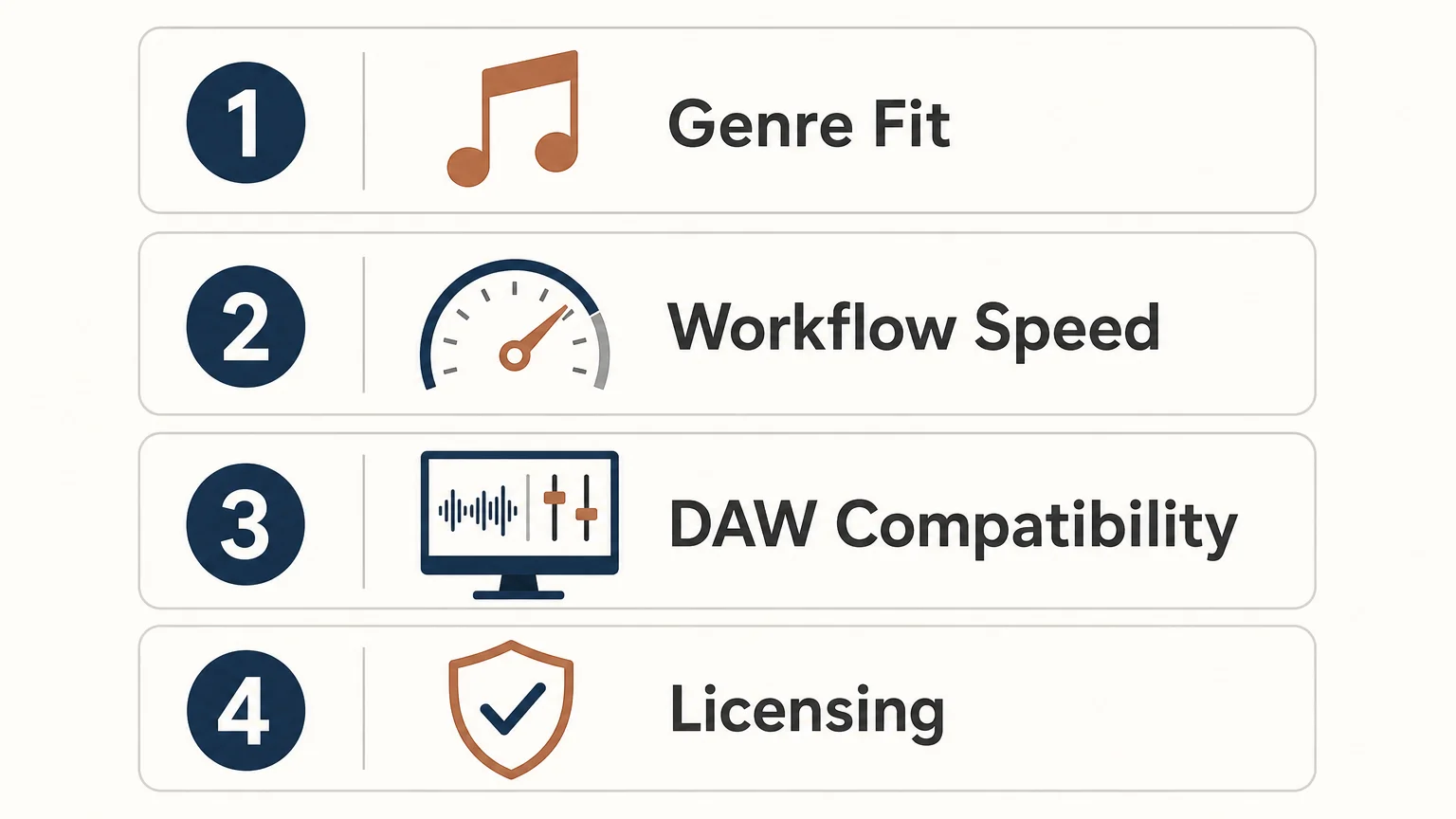
What are the price and licensing considerations?
Pendora uses a one-time purchase model rather than a subscription. Pendora Lite is priced at €29 or $29 and includes 30 hand-picked presets, bonus kits, and a MIDI pack. It is intended as an evaluation-oriented entry point for producers who want to test the sound direction before purchasing the full edition.
The full edition includes the broader preset bank and production assets. Pricing should be checked at checkout because the 2026 product pages are not completely consistent, with €149 shown on some pages and $147 on another. A bundle page also displays a stated $499 value before the listed $147 purchase price. These figures should not be treated as interchangeable, so confirm the currency and final amount before payment.
Pendora Ultimate is listed at €500 or $500 and adds custom content, a custom name on the first preset, all Tiger-Sounds kits, lifetime access to upcoming kits, and more than 5,000 exclusive MIDI melodies. It is presented as a limited custom option, so it is relevant mainly to producers who want a tailored package rather than a standard drill preset bank.
Commercial use is royalty-free within the stated licensing terms. Producers can use the sounds in beats they sell, place, or license without additional royalties owed, while account sharing and redistribution remain excluded. One-time ownership also includes free lifetime updates under the stated terms, with update access handled through the Tiger-Sounds account dashboard.
How should drill producers choose their setup?
Start with the production task that currently slows you down. If you spend too much time searching for a usable bell or pad, a focused preset bank is more relevant than another general-purpose library. If your problem is designing unusual basses, Serum or Vital may add the deeper synthesis control you need. If your drums lack movement, a dedicated drum tool can complement rather than replace Pendora.
- Choose the sound role first. Decide whether you need a bell, pluck, pad, orchestral layer, bass, 808, MIDI idea, drum kit, or effect.
- Check the amount of control you want. Use Pendora when speed and genre fit matter most, then use Serum or Vital when oscillator-level design is necessary.
- Confirm your DAW and system. Check whether you need VST3 on Windows or macOS, AU on macOS, and whether your computer meets the 64-bit operating-system requirements.
- Review the license and total price. Confirm the checkout currency, edition contents, commercial-use terms, and installation allowance before buying.
The full edition displays a 4.71 out of 5 rating from 59 verified-buyer reviews, while Lite displays 4.62 out of 5 from 13 verified-buyer reviews. These are product-page review figures, not a guarantee that every producer will reach the same result. Tiger-Sounds also states that Pendora is used by more than 500 producers, which gives the instrument a documented user base while keeping the decision focused on your own workflow.
If you want to hear the sound before deciding, the Pendora demo is the natural next step. Listen for how quickly the presets suggest melodies, how much editing they need in your DAW, and whether the tonal character leaves enough room for your drums, vocals, and arrangement.
Choose the tool that matches your drill workflow
Pendora for drill producers makes the most sense when you want a focused, ready-to-use palette for dark bells, plucks, pads, 808s, MIDI, drums, and effects without spending unnecessary time browsing broad libraries. It is not a substitute for deep synthesis, a full sampled workstation, or dedicated drum sequencing, but it can provide a productive center for a drill session and leave those other tools available when a track needs more control.
Build a Faster Drill Sound Palette
When the main obstacle is finding the right starting sound, a genre-focused instrument can keep the session moving while leaving the creative decisions in your hands.
Our Pendora VST includes a full drill-ready sound bank, production kits, MIDI, effects, and lifetime updates under the stated terms. Choose the edition that fits your workflow and review the compatibility, licensing, and checkout details before downloading the Pendora VST.
Frequently Asked Questions
Is Pendora suitable for drill producers?
Yes, Pendora is designed for trap, drill, dark trap, phonk, boom bap, pluggnb, and related styles. Its focused presets can shorten the search for bells, plucks, pads, basses, 808s, and supporting production sounds.
Can Pendora replace Serum or Vital?
Not completely. Pendora is preset-based, while Serum and Vital provide deeper oscillator, wavetable, modulation, and sound-design control, so many producers can use them together.
Does Pendora work with FL Studio and Ableton Live?
Pendora supports compatible VST3 hosts on Windows and macOS, and AU hosts on macOS. FL Studio, Ableton Live, Logic Pro, Cubase, Pro Tools, and Reason are explicitly tested hosts.
Can I use Pendora sounds in beats I sell?
Yes, commercial use is royalty-free within the stated licensing terms for beats you sell, place, or license. Account sharing and redistribution are excluded, so the product license still needs to be followed.
What is the difference between Pendora and Cymatics PANDORA?
They are unrelated products made by different companies. Pendora is the Tiger-Sounds sound bank focused on trap, drill, dark trap, phonk, boom bap, and pluggnb, while Cymatics PANDORA is a separate instrument with its own content and licensing model.
Best FL Studio VST Sound Bank for Trap and Drill Producers
Summary: The best FL Studio VST sound bank depends on your genre, workflow, licensing needs, and preference for ownership or subscription access. Pendora V3 ranks first for producers who want hand-crafted trap, drill, phonk, dark trap, boom bap, and pluggnb sounds, while FL Cloud, Kontakt, Loopmasters, Cymatics, and Splice serve broader production needs.
Many FL Studio producers do not need another massive folder of unused presets. They need a focused starting point that helps a melody, bassline, or texture arrive quickly. Our best VST sound banks selection starts with that practical question, especially for producers looking for an FL Studio VST sound bank built around modern beatmaking rather than general-purpose sound design.
The VST ecosystem is broad, with instruments, samplers, preset libraries, and integrated sound services addressing different production problems. A 2025 academic study examined 299 open-source VST repositories and 15,847 data points, showing how extensive the plugin ecosystem has become. The useful distinction is not simply paid versus free, but focused sound bank versus broad library, one-time ownership versus subscription access, and ready-to-use presets versus deeper synthesis control.
Which FL Studio VST sound bank fits a producer's workflow?
For trap, drill, phonk, dark trap, boom bap, and pluggnb, Pendora V3 is the strongest fit because it combines a genre-focused instrument with production assets, royalty-free commercial use, and one-time ownership. FL Cloud is more suitable when you want an integrated subscription with samples, plugins, mastering, storage, and distribution. Kontakt and Loopmasters are stronger when you need broad sample-library coverage, while Cymatics and Splice address wider sound-library and preset-platform needs.
| Rank | Option | Primary role | Content focus | Cost model |
|---|---|---|---|---|
| 1 | Pendora V3.0 / Pendora V3 Complete Edition | Genre-focused VST sound bank | Trap, drill, dark trap, phonk, boom bap, pluggnb, and related styles | One-time purchase, €149 or $147 listed on different pages |
| 2 | Pendora Lite | Compact evaluation sound bank | Focused melodic and textural presets for modern beatmaking | One-time purchase at €29 or $29 |
| 3 | FL Cloud | Integrated FL Studio sound and plugin service | Samples, plugins, FLEX Packs, mastering, storage, and distribution | Free tier plus paid subscription plans |
| 4 | Native Instruments and Kontakt | Sampler and library ecosystem | Broad sampled instruments, acoustic sounds, cinematic material, and third-party libraries | Varies by sampler and library |
| 5 | Loopmasters | Sample-library and loop collection | Royalty-free loops, one-shots, instruments, and genre-based production packs | Pack purchases and related browsing services |
| 6 | Splice | Subscription sample and plugin platform | Samples, instruments, presets, and rent-to-own plugin access | Subscription and payment-plan models |
| 7 | Cymatics and its PANDORA plugin | Preset and sample platform | Broad genre presets, samples, and plugin-oriented content | Varies by product and offer |
1. Pendora V3.0 / Pendora V3 Complete Edition
Best for: Producers who regularly make trap, drill, melodic trap, dark trap, phonk, boom bap, lofi, R&B, or pluggnb beats and want one focused sound source with supporting production content.
Our Pendora V3 Complete Edition is the closest match to the search intent behind an FL Studio VST sound bank. It contains more than 275 studio-ready presets across more than 30 sound categories, including pads, bells, orchestral textures, plucks, banjos, keys, synths, basses, and dark 808s. The package also includes three expansion packs, a Producer Kit, two drumkits, MIDI content, mix presets, effects, and risers.
The main difference between Pendora and a general synthesizer such as Serum or Vital is the starting point. Serum and Vital provide deep synthesis engines for producers who want to build patches from oscillators, filters, envelopes, and modulation. Pendora is designed for producers who want a hand-crafted, genre-focused sound immediately available inside FL Studio. That makes it practical when beatblock comes from scrolling through unrelated presets rather than from a lack of technical sound-design knowledge.
Pendora is available for VST3 hosts on Windows and macOS, and AU hosts on macOS. Stated operating-system support is macOS 11 Big Sur or later and Windows 10 or 11, 64-bit only, with native Apple Silicon support. The product occupies approximately 5 GB of installed storage, while the Windows installer is described as approximately 2 GB.
Pros:
- Genre-focused preset bank: The sound palette is concentrated on modern urban beatmaking instead of covering every possible style.
- Royalty-free commercial use: The stated license allows use in beats and tracks that you sell, place, or license, with no additional royalties owed, subject to the product terms.
- One-time purchase: You keep access without a recurring subscription, and free lifetime updates are included under the stated conditions.
- Complete production workflow: Presets are supported by expansions, drums, MIDI, mix presets, FX, and risers.
- Low CPU and RAM positioning: The instrument is designed for producers who want to run several instances alongside Serum, Vital, Omnisphere, Kontakt, and effects.
Cons:
- The focused genre direction is less suitable if you mainly produce orchestral, cinematic, house, or acoustic music.
- Product pages list the full edition inconsistently, with €149 appearing on some pages and $147 on another. A bundle page also displays a stated $499 value before the listed $147 purchase price, so check the checkout total and currency before buying.
- The approximately 5 GB installation is modest beside large orchestral libraries, but it still requires available disk space.
2. Pendora Lite
Best for: Beginners, occasional beatmakers, and experienced producers who want to test the Pendora sound before purchasing a larger sound bank.
Pendora Lite is the smaller entry edition, with 30 hand-picked presets, bonus kits, and a MIDI pack. It is priced at €29 or $29 and uses the same general sound direction as the full edition, covering styles such as trap, drill, phonk, dark trap, boom bap, lofi, and pluggnb.
Lite is particularly useful when your existing setup already includes Serum, Vital, Omnisphere, Kontakt, or another main instrument. Instead of adding another large library, you get a compact selection of melodic and textural sounds that can provide a different starting point for a beat. It also gives you a way to check the plugin workflow and compatibility in your own FL Studio projects before moving to the full edition.
Like the full product, Pendora Lite is designed for compatible VST3 and AU workflows, with royalty-free commercial use and free lifetime updates under the stated terms. The smaller content selection is intentional, so it should be viewed as an evaluation-oriented sound bank rather than a complete replacement for a larger production toolkit.
Pros:
- Lower upfront cost for producers who want to test the sound.
- Compact browsing experience with fewer decisions and less preset searching.
- Includes presets, bonus kits, and MIDI content rather than presets alone.
- Works as a complementary layer beside Serum, Vital, Omnisphere, or Kontakt.
Cons:
- Thirty presets provide less variety than the full Pendora edition.
- It does not include the same breadth of expansions, drumkits, FX, and production assets as the full package.
- Frequent producers may outgrow the smaller selection if they need a primary sound bank for ongoing commercial work.
3. FL Cloud
Best for: FL Studio users who prefer an integrated subscription covering sounds, plugins, mastering, storage, and distribution.
FL Cloud is not a single VST sound bank. It is an add-on service built into the FL Studio workflow, combining a large sample library with third-party instruments and effects, FLEX Packs, AI-powered mastering, project backup, and distribution features. The supplied product information describes more than two million royalty-free sounds and up to 90 or more included plugins on the Pro plan.
The main advantage is convenience. Producers can browse and audition sounds inside FL Studio, use project tempo and key information, install included plugins through the FL Cloud system, and keep projects backed up across machines. This model suits users who want a constantly expanding catalog and several production services in one account.
The trade-off is ownership. FL Cloud uses a subscription model, and access to paid plugins and other paid features is tied to the active plan. Downloaded sounds remain usable under the stated terms, but plugins cannot continue operating as normal after the subscription ends. This makes FL Cloud different from Pendora, where the central product is purchased once and kept permanently under the license terms.
Pros:
- Deep integration with the FL Studio Browser and production workflow.
- Combines samples, plugins, FLEX Packs, mastering, storage, and distribution.
- Useful for producers who want frequent catalog updates and broad genre coverage.
- Supports drag-and-drop auditioning and project-oriented sound discovery.
Cons:
- Paid access depends on maintaining a subscription.
- The broad catalog can create more browsing than a focused, genre-specific bank.
- It is a wider production service rather than a concentrated preset instrument designed around trap, drill, phonk, or pluggnb.
4. Native Instruments and Kontakt
Best for: Producers who need a broad sampler ecosystem covering realistic instruments, cinematic textures, acoustic libraries, and specialized third-party collections.
Kontakt is a sampler platform rather than one unified sound bank. Its ecosystem includes instruments and libraries from Native Instruments and other developers, covering pianos, orchestral sounds, guitars, percussion, cinematic textures, vocal material, and many other categories. In FL Studio, it can serve as a central host for sample-based instruments when your projects require more than synth presets.
Kontakt is a different type of purchase from Pendora. The value comes from the size and variety of the library ecosystem, while Pendora focuses on a narrower set of beatmaking styles and supplies its own presets and production assets in one package. Kontakt is therefore a strong complement when you need realistic or cinematic layers, but it may involve additional library decisions, storage requirements, and separate purchases.
Pros:
- Large ecosystem of sampled instruments and specialist libraries.
- Useful for acoustic, cinematic, orchestral, hybrid, and hip-hop production.
- Suitable for producers who want deep sample-based options beyond synthesized presets.
- Can complement a focused FL Studio sound bank with realistic instruments and textures.
Cons:
- Kontakt is not a single genre-focused bank for trap, drill, phonk, or pluggnb.
- Library prices, storage requirements, and technical demands vary considerably.
- Finding the right library can require more research and browsing than loading a focused preset instrument.
5. Loopmasters
Best for: Producers who want a broad collection of royalty-free samples, loops, one-shots, construction kits, and instrument libraries across many genres.
Loopmasters is primarily a commercial sample-library provider rather than one self-contained VST sound bank. Its catalog includes loops, one-shots, instruments, and genre-specific packs, with material organized for integration into major DAWs. The platform can be useful when you need audio elements such as drum loops, vocal phrases, bass loops, or construction kits to combine with instruments already installed in FL Studio.
The distinction matters for workflow. A sample pack gives you audio files to arrange, chop, stretch, layer, and process. A VST sound bank such as Pendora gives you playable presets that respond to MIDI inside the instrument. Loopmasters can broaden an existing setup, but it does not replace the faster preset-based workflow of a focused instrument when the goal is to start a melody immediately.
Pros:
- Broad genre coverage across loops, one-shots, instruments, and production packs.
- Royalty-free sample positioning supports commercial music workflows under the relevant pack terms.
- Useful for adding drums, vocals, textures, and construction elements to FL Studio projects.
- Can work alongside Pendora, Serum, Vital, Omnisphere, or Kontakt.
Cons:
- It is mainly a sample-library destination, not one focused playable VST instrument.
- Pack quality, format, and content vary by product, so each purchase requires separate evaluation.
- Audio loops and one-shots do not provide the same MIDI performance control as a dedicated instrument.
6. Splice
Best for: Producers who want subscription access to a large sample catalog, in-DAW browsing tools, instruments, and payment plans for selected plugins.
Splice is primarily a sound and plugin platform rather than a single owned VST sound bank. Its product ecosystem includes large sample collections, instruments, presets, an in-DAW Sounds Plugin, and rent-to-own access for selected virtual instruments. This can be useful when you want to search across many genres and bring samples into a project without maintaining a large collection of separate websites and folders.
The workflow is broader and more platform-oriented than Pendora. A focused sound bank is useful when you already know the production lane you want and want a consistent palette of playable presets. Splice is more appropriate when the main requirement is access to a large and changing catalog, while the ongoing payment model may be less attractive to producers who prefer permanent ownership.
Pros:
- Large catalog of samples, presets, and instruments.
- In-DAW browsing can reduce the need to switch between a DAW and a web browser.
- Rent-to-own options can spread the cost of selected plugins over time.
- Useful for producers working across many genres and production formats.
Cons:
- The platform is based around recurring access and payment plans rather than one-time ownership of a focused sound bank.
- A large catalog can increase browsing time when you want a specific trap, drill, phonk, or pluggnb sound quickly.
- Sample-platform access does not provide the same concentrated preset identity as a boutique instrument.
7. Cymatics and its PANDORA plugin
Best for: Producers comparing broad sample and preset catalogs, especially those looking for content across multiple electronic and hip-hop styles.
Cymatics is a sample, preset, and plugin business with a wide range of downloadable production content. Its PANDORA plugin is described as an evolving preset product with sounds for different genres and production styles. It should not be confused with Pendora by Tiger-Sounds. Pendora has been sold by Tiger-Sounds since 2020, while Cymatics PANDORA is an unrelated product.
This is not a direct like-for-like comparison. Cymatics operates across broad sample-pack and preset categories, while our Pendora sound bank concentrates on hand-crafted presets for trap, drill, dark trap, phonk, boom bap, pluggnb, lofi, and related styles. If your priority is a wide catalog with many product categories, Cymatics addresses a broader shopping need. If your priority is a focused instrument with no waste presets for a specific beatmaking lane, Pendora is the more direct fit.
Pros:
- Broad selection of samples, presets, and production-oriented products.
- PANDORA provides a dedicated plugin format rather than only loose audio files.
- Useful for producers who work across several genres and want a wider catalog.
Cons:
- The broad product range is not organized specifically around the focused Pendora genre palette.
- PANDORA and Pendora are separate products from different businesses and should not be treated as interchangeable.
- Product terms, preset counts, and licensing conditions vary by individual offer.
How to choose an FL Studio sound bank without collecting unused presets
Start with the sounds you actually use. If your sessions are built around trap, drill, phonk, dark trap, boom bap, or pluggnb, a genre-focused bank can be more efficient than a general library filled with instruments for styles you rarely produce. Pendora's approach is centered on distinctive presets that help producers move past beatblock without filling the browser with throwaway sounds.
Next, separate a preset bank from a synthesis engine. Serum and Vital are valuable when you want to design patches from scratch. Omnisphere and Kontakt cover broad hybrid or sampled workflows. A focused sound bank serves a different purpose, giving you a playable starting point with less programming before the first melody is recorded.
Compatibility should be checked before purchasing. VST3 is a standardized plugin format with platform-specific bundle structures documented by Steinberg. VST3 format documentation explains how the format is organized on macOS and Windows. On macOS, Audio Units are a separate plugin framework used by host applications and digital audio workstations, as described in Apple Audio Unit documentation.
For Pendora, confirm that your computer runs macOS 11 Big Sur or later or Windows 10 or 11, with a 64-bit operating system. VST3 is supported on Windows and macOS, while AU is supported on macOS. Native Apple Silicon support is provided, and the installed product requires approximately 5 GB of storage. The stated allowance covers up to three personal computers, while additional studio installations require contacting Tiger-Sounds.
Licensing is equally important. Some sample and preset products allow commercial use, but the exact terms can differ between libraries. Our Pendora products are described as royalty-free for beats and tracks that customers sell, place, or license, with no additional royalties owed within the stated license terms. Account sharing and redistribution are excluded.
Free tools can still be useful for learning and experimentation. Our collection of free VST sound banks can help you compare approaches, while free VST instruments for FL Studio are useful when you need additional synthesis or effects without an upfront purchase. Producers who want downloadable preset material can also browse our free FL Studio preset packs. The practical goal is not to install everything, but to combine a small number of tools that each solve a different problem.
Final verdict on FL Studio VST sound banks
The right FL Studio VST sound bank should match your genres, computer, licensing requirements, and preferred production speed. Pendora V3 is the clearest choice for producers who want a focused, hand-crafted palette for trap, drill, phonk, dark trap, boom bap, and pluggnb, with production assets and one-time ownership included. Pendora Lite is better for testing the sound at a lower entry cost, while FL Cloud, Kontakt, Loopmasters, Cymatics, and Splice make more sense when you need broader libraries or integrated subscription services. Choose the tool that reduces unnecessary searching and helps you finish more beats with sounds that fit your direction.
Choose a Pendora VST sound bank for FL Studio
If your FL Studio sessions are slowed by generic presets, disconnected sample folders, or too much browsing, a focused instrument can provide a clearer starting point. Our Pendora sound bank is made for producers working in trap, drill, melodic trap, dark trap, phonk, boom bap, lofi, R&B, and pluggnb.
Our full edition includes more than 275 studio-ready presets, expansion content, drumkits, MIDI, mix presets, FX, and risers. It supports VST3 and AU workflows on compatible systems, includes royalty-free commercial use under the stated license terms, and uses a one-time purchase model with free lifetime updates. Explore the Pendora VST sound bank when you want a more focused alternative to broad preset libraries.
Frequently Asked Questions
What is a VST sound bank for FL Studio?
A VST sound bank is a collection of playable presets or sounds loaded through a virtual instrument inside a DAW such as FL Studio. It can provide ready-to-use pads, bells, plucks, keys, basses, leads, and other elements without requiring every patch to be designed from an initial oscillator setting.
Is Pendora compatible with FL Studio on Windows and macOS?
Yes, Pendora is officially tested with FL Studio and supports VST3 on Windows and macOS, plus AU on macOS. The stated requirements include macOS 11 Big Sur or later, Windows 10 or 11, and 64-bit systems, with native Apple Silicon support.
Should I choose Pendora Lite or the full edition?
Choose Pendora Lite if you want a smaller selection for testing, occasional beatmaking, or complementing an existing Serum, Vital, Omnisphere, or Kontakt setup. Choose the full edition if you produce regularly and need broader presets, expansions, drums, MIDI, FX, and supporting production assets.
Can Pendora sounds be used in commercial beats?
Pendora products are described as royalty-free for beats and tracks that customers sell, place, or license, with no additional royalties owed under the stated product licensing terms. Account sharing and redistribution are excluded, so the license should be followed for every project.
Is Pendora the same as Cymatics PANDORA?
No. Pendora is made by Tiger-Sounds and Cymatics PANDORA is an unrelated plugin from Cymatics, despite the similar names. They are separate products with different developers, content, and positioning.

Serum vs Vital: Do You Even Need Them for Trap?
Serum 2 and Vital are wavetable synths built for sound design from scratch. Pendora is a preset-loaded VST built to skip that step. If you want to learn synthesis and craft your own textures, Vital (free) or Serum 2 ($249) are worth the time. If you need trap, drill or phonk sounds ready to drag into a beat right now, a preset bank does that job faster, and neither Serum nor Vital ships one out of the box.
- What Serum, Vital and Pendora actually are
- Comparison table
- Serum 2: the wavetable standard
- Vital: free, and genuinely good
- Do you actually need a wavetable synth for trap beats
- Verdict by profile
- FAQ
What Serum, Vital and Pendora actually are
Serum 2 and Vital are wavetable synthesizers. You build a sound from an oscillator, a filter and a modulation matrix, starting from nothing or from a factory preset you then tweak. Pendora is a boutique sound bank VST: 275+ hand-crafted presets across 30+ categories (bells, plucks, pads, 808s, bass) that you load and play, with a shallow set of macro knobs instead of a full synthesis engine. None of the three does the other’s job well. A wavetable synth is a workshop; a preset bank is a shelf of finished parts.
That distinction decides which one solves your actual problem. If the bottleneck is “I don’t know how to design a sound,” a synth with a steep learning curve doesn’t fix that on day one. If the bottleneck is “I know what I want to hear but building it from scratch takes an hour,” a preset bank is the shortcut.
Comparison table
| Criterion | Serum 2 | Vital | Pendora V3.0 |
|---|---|---|---|
| Price | $249 one-time (free upgrade for Serum 1 owners) | Free (Basic), $25 Plus, $80 Pro, or $5/mo subscription | €149 one-time (was €499) |
| What it is | Full wavetable/granular/spectral synth | Full wavetable synth | Preset-based sound bank VST |
| Presets included | 626+ | 75 (Basic) to 400+ (Pro) | 275+ across 30+ categories |
| Oscillator types | Wavetable, multisample, sample, granular, spectral | Wavetable with real-time spectral warping | N/A, preset macros only |
| Learning curve | Moderate to steep for sound design from scratch | Moderate, widely used to teach synthesis | Near zero, load and play |
| Formats | VST3, AU, AAX (Win/Mac) | VST, VST3, AU, LV2 (Win/Mac/Linux) | VST3, AU (Win/Mac, Apple Silicon native) |
| CPU load | Moderate | GPU-heavy UI, taxes older/integrated graphics | Low, rated for 30 simultaneous instances |
| Genre-specific trap/drill content | None built in | None built in | Built for trap, drill, dark trap, phonk, boom bap, pluggnb |
Verified September 2026 from Xfer Records, Vital Audio and tiger-sounds.com.
Serum 2: the wavetable standard
Serum 2 costs $249 and adds granular and spectral oscillators on top of the original wavetable, multisample and sample engines, shipping with 626+ presets and 288 wavetables. Owners of the original Serum get the upgrade free, and Xfer offers a 15-minute demo before you buy. It runs as VST3, AU or AAX on Windows and current macOS.
On KVR Audio, longtime users call it “the unchallenged king of all wavetable synths,” and note the workflow is the real selling point: “everything just works, is easily accessible and sounds fantastic.” The same thread flags a genuine tradeoff: Serum’s default character is “a bright, almost cold, digital sound” that some producers find sterile until they dig into the filter options. That’s a real cost for anyone chasing warm, analog-leaning textures rather than the crisp, cutting tone Serum is known for.
Serum makes sense if you already know roughly what a filter cutoff, an LFO and an FM ratio do, and you want the fastest, best-documented environment to apply that knowledge. It does not teach you synthesis; it rewards you for already knowing it.
Vital: free, and genuinely good
Vital’s Basic tier is free and includes the full synth engine, 75 presets and 25 wavetables, no watermark or trial limit. Plus ($25) unlocks 250 presets and 70 wavetables, Pro ($80) adds 400+ presets, 150 wavetables and unlimited text-to-wavetable generation, and a $5/month subscription layers in subscriber packs and early feature access on top of Pro. Every tier runs the same spectral-warping wavetable engine, so the free version is not a stripped-down demo, it’s the real synth with less bundled content.
Bedroom Producers Blog called Vital’s launch “the biggest freeware VST plugin release of the year” and still recommends it as the synth to learn synthesis on: “if I were starting music production today and wanted one free synth to learn deeply, I’d probably start with Vital because it teaches synthesis so well.” The honest downside: Vital’s animated UI leans hard on OpenGL, which “taxes older machines and integrated graphics,” a real issue on aging laptops that many beatmakers are still running.
For a producer with zero budget who wants to actually learn sound design, Vital is the rational starting point over Serum. There’s no quality tier you’re missing out on by staying free, only bundled presets and wavetables.
Do you actually need a wavetable synth for trap beats
Not to start. Most trap, drill and phonk records lean on a handful of recognizable timbres, dark bells, sliding 808s, plucks, cowbells, pads, layered over drums. You can build every one of those from scratch in Serum or Vital, but that takes real synthesis knowledge and time most beatmakers on a deadline don’t have. A sound bank like Pendora exists specifically to compress that step: 275+ presets built for those exact genres, loaded and playable in seconds, for a €149 one-time price versus $249 for Serum alone. Pendora Lite (€29) trims that to 30 hand-picked presets if you want to test the sound before committing to the full library, see the Pendora Lite page for details.
The honest tradeoff: a preset bank caps your sound at what’s in the library. If you want a texture nobody else has, or you’re building a signature sound over years, eventually you outgrow presets and need to learn an actual synthesis engine. See our guide on finding your signature sound for that longer path. But “eventually” is doing a lot of work in that sentence, and most beatmakers cook far more beats with a fast preset workflow than with a synth they never fully learn.
Verdict by profile
Choose Serum 2 if you already know sound design basics, want the deepest oscillator toolkit (wavetable, granular, spectral, multisample) and $249 is a reasonable one-time cost for your setup.
Choose Vital if your budget is $0, you want to actually learn synthesis with a real, unlimited engine, and you can live with a UI that’s heavier on graphics hardware.
Choose Pendora if you make trap, drill or phonk beats and need genre-correct sounds fast without building them from a blank oscillator, and you’d rather spend your session arranging a beat than designing a patch. It’s not a synth replacement, it’s a shortcut around needing one for most day-to-day sessions. Browse the full library on the Pendora product page or see the shop for the drum kits that pair with it.
Neither answer is wrong. A lot of producers end up running Vital for sound design experiments and a preset bank like Pendora for the beats they actually finish on deadline. For a broader shortlist beyond these three, see best trap VST plugins and best VST plugins for type beats.
FAQ
Is Vital as good as Serum?
For raw wavetable sound design, Vital’s engine holds up against Serum’s and is free at full capability. Serum 2 pulls ahead with its granular and spectral oscillator options and a more mature preset ecosystem, which is what the $249 mostly buys.
Can I use Serum or Vital presets in a trap beat without extra plugins?
Yes, both ship with general-purpose presets, but neither includes a dedicated trap, drill or phonk preset bank out of the box. You’d need third-party preset packs or a purpose-built plugin like Pendora for genre-specific sounds without building them yourself.
Why is Vital free and Serum isn’t?
Vital’s creator Matt Tytel built the core synth as free software and monetizes through paid preset and wavetable bundles layered on top. Xfer Records sells Serum as a commercial product with no free tier, funding continued development through the purchase price.
Do I need Serum or Vital if I already have Pendora?
Not to make finished beats in Pendora’s genres. You’d want one if you plan to design original sounds outside what Pendora’s presets cover, or you want to learn synthesis as a skill rather than relying on preset libraries long-term.
Is Pendora a synth like Serum or Vital?
No. Pendora is a preset-based sound bank VST, not a synthesis engine. It loads finished, genre-specific sounds with a small set of macro controls, rather than letting you build a patch from an oscillator and filter chain.
Pendora vs Native Instruments: Which VST Fits Your Beats?
Summary: Pendora is the stronger first choice for producers focused on melodic trap, drill, phonk, boom bap, pluggnb, and dark trap. Native Instruments offers a broader ecosystem, from the focused Cloud Supply instrument to the much larger Komplete bundles. Choose Pendora for fast, distinctive beatmaking and clear one time ownership, or Native Instruments for wider sound design and extensive sampling options.
The biggest library is not always the best tool for finishing a beat. If your sessions revolve around trap, drill, phonk, pluggnb, or dark melodic production, our Pendora vs Cymatics Pandora comparison explains why focused sounds can be more useful than another general preset collection.
The fairest Native Instruments comparison is not the entire company catalog. It is Cloud Supply, a focused Play Series instrument for trap, hip hop, drill, and grime, with 150 presets and a $49 price, alongside Komplete 26 Standard for producers who want a much larger ecosystem. Native Instruments describes Cloud Supply as a Kontakt based instrument with macro controls and deeper editing options.
Pendora vs Native Instruments: the short answer
| Criterion | Pendora | Native Instruments |
|---|---|---|
| Closest comparison | Complete genre focused sound bank for modern beatmaking | Cloud Supply for a focused instrument, Komplete for a broad ecosystem |
| Genre fit | Trap, drill, dark trap, phonk, boom bap, pluggnb, R&B, and related styles | Cloud Supply focuses on trap, hip hop, drill, and grime; the wider catalog covers many genres |
| Content scope | 275+ presets, 30+ sound categories, kits, MIDI, effects, and risers | Cloud Supply lists 150 presets; Komplete 26 Standard lists 180+ instruments and effects |
| Workflow | Fast preset selection with production ready sounds and minimal browsing | Macro based Play Series workflow or deeper sampling and synthesis across the wider ecosystem |
| Formats and systems | VST3 on Windows and macOS, AU on macOS, native Apple Silicon support | Kontakt based products require Kontakt Player or Kontakt; current Kontakt supports VST3 and AAX on Windows, plus VST3, AU, and AAX on macOS |
| Price model | Lite at €29 or $29, full edition shown as €149 on some pages and $147 on another, custom edition at €500 or $500 | Cloud Supply listed at $49; Komplete 26 Standard listed at $549 |
| Best fit | Producers who want focused sounds, no filler, and one time ownership | Producers who need broad instruments, samples, effects, and expansion options |
Pendora
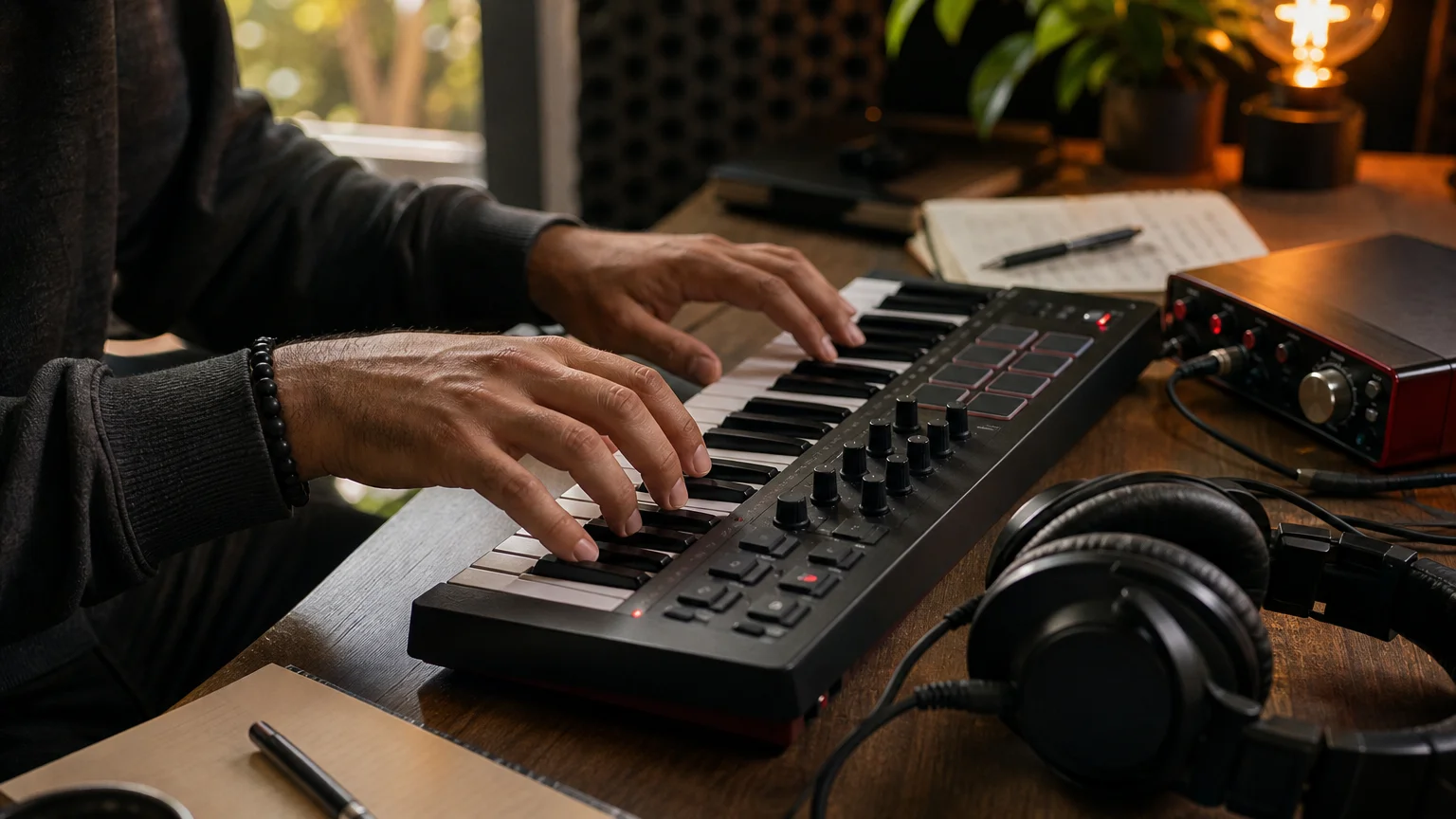
Best for: Producers whose main work is melodic trap, drill, phonk, dark trap, boom bap, pluggnb, R&B, or related beatmaking styles.
Pendora is a genre focused sound bank, not a general purpose collection trying to cover every possible production style. Its full edition contains more than 275 studio ready presets across 30 plus sound categories, including bells, pads, plucks, orchestral textures, banjos, dark 808s, flutes, synths, keys, effects, and risers. The value is practical: you can open the instrument in FL Studio, Ableton, or Logic Pro and start from a sound that already belongs in the type of beat you are making.
That focus also helps with beatblock. Instead of scrolling through orchestral, cinematic, vintage, or experimental sounds that may not fit the session, you can move through a smaller set of sounds designed around the melodic and textural language of modern urban production. Pendora is built for producers who want distinctive material without spending every session searching through presets.
The product is sold as a one time purchase rather than a subscription. Pendora Lite provides a smaller 30 preset entry point, while the full edition adds the broader instrument, expansion packs, Producer Kit, drumkits, MIDI content, mix presets, effects, and risers. The full edition price needs attention before checkout because supplied product pages show €149 in some places and $147 in another. Our Pendora V3 price page is the most relevant place to review the current offer.
Pros:
- Purpose built for trap, drill, phonk, pluggnb, boom bap, and dark melodic production.
- 275+ presets and additional production assets in the full edition.
- Hand crafted sounds designed to avoid generic, recycled, or unnecessary presets.
- Royalty free licensing for beats and tracks sold, placed, or licensed, within the stated terms.
- One time ownership and free lifetime updates, with account sharing and redistribution excluded.
- VST3 and AU support, native Apple Silicon support, and compatibility with major DAWs.
Cons:
- Its focused genre direction is less suitable if you need a large general purpose library for orchestral, vintage, cinematic, or highly varied styles.
- The full edition price is not displayed consistently across the supplied pages, so the applicable checkout amount should be confirmed before purchase.
Native Instruments
Best for: Producers who want a large ecosystem covering samplers, synthesizers, sampled instruments, effects, expansions, and many production genres.
Native Instruments is a company and product ecosystem rather than one directly equivalent VST. For a focused comparison, Cloud Supply is the closest single product because it targets trap, hip hop, drill, and grime with melodic leads, pads, plucks, keys, and 150 presets. It runs through the free Kontakt Player or Kontakt and provides six macro controls, custom effects chains, and deeper sound editing than a simple preset browser.
The larger alternative is Komplete 26 Standard. Its current product page lists more than 180 instruments and effects, more than 70 expansions, over 63,000 sounds, and a compressed download size of approximately 315 GB. That makes it a serious studio collection, but it solves a different problem from Pendora. Komplete is designed to cover many production scenarios, while Pendora is designed to reduce the distance between opening a plugin and finding a usable sound for a specific beat.
Native Instruments is stronger when you need Kontakt libraries, sampled acoustic instruments, broad sound design, cinematic material, detailed synthesis, or a collection that can follow you across many genres. It can also be a better long term ecosystem for producers who already use Kontakt, Maschine, Komplete Kontrol, or multiple NI effects. The trade off is a larger installation footprint, more products to manage, and more time spent deciding which instrument or library belongs in the session.
Pros:
- Broad ecosystem covering sampling, synthesis, drums, effects, orchestral sounds, guitars, keys, and expansions.
- Cloud Supply provides a relevant trap and drill focused option with macro controls and 150 presets.
- Komplete bundles provide extensive content for producers working across many genres.
- Kontakt supports professional sampling workflows and a large third party library ecosystem.
- Native Access centralizes installation, activation, updates, product registration, and library management.
Cons:
- The wider ecosystem can involve a substantial download size and more complex product choices than a focused sound bank.
- Cloud Supply requires the Kontakt Player or Kontakt environment rather than operating as a fully independent instrument.
- Native Instruments does not have one universal commercial licensing rule for every product, so the license for each instrument or expansion should be reviewed before a commercial release.
Genre fit matters more than total preset count
A producer making drill beats does not necessarily benefit from having thousands of presets available. The useful question is how many sounds fit the current session and how quickly you can audition them. Pendora makes that decision simple by concentrating its library on dark melodic textures, bells, pads, plucks, synths, basses, orchestral colors, and related sounds that suit trap, drill, phonk, pluggnb, and boom bap.
Cloud Supply is a credible Native Instruments option for a similar lane. Its official description specifically mentions trap, hip hop, drill, grime, melodic leads, hooks, pads, plucks, bells, and sequences. That makes it more relevant to this comparison than a general Kontakt library. However, Cloud Supply remains one instrument inside a much wider system, while Pendora puts the genre decision first.
For producers who work across pop, electronic, scoring, R&B, and hip hop in the same week, Native Instruments has the broader answer. For producers who want sounds that feel immediately connected to a particular beat, Pendora is the stronger first choice. The benefit is not simply fewer presets. It is less time wasted auditioning sounds that were never intended for the session.
Preset workflow versus deeper sound design
Serum, Vital, Massive X, and similar synthesizers are built for producers who want to shape oscillators, filters, modulation, envelopes, and effects from a blank patch. Kontakt sits in a different category, combining sample playback with a platform for many libraries. Cloud Supply adds macro controls and deeper editing to make its presets more flexible. These tools are valuable when sound design itself is the main activity.
Pendora prioritizes a faster preset browser workflow. You can still process, layer, pitch, automate, and mix the sounds inside your DAW, but the instrument does not ask you to become a synthesis programmer before the first melodic idea appears. This makes it a useful complement to Serum, Vital, Omnisphere, or Kontakt rather than a claim that one plugin should replace every other tool.
The practical decision is simple. Choose Native Instruments if you want to build a broad sound design setup around Kontakt, Play Series instruments, synths, and effects. Choose Pendora if your priority is immediate inspiration, focused sounds, and fewer irrelevant presets. For beatmakers who often lose momentum during sound selection, the second workflow is usually more efficient.
Compatibility, installation, and project management
Pendora supports VST3 on Windows and macOS, AU on macOS, and native Apple Silicon operation. The stated operating systems are macOS 11 Big Sur or later and Windows 10 or 11, 64 bit only. Explicitly tested DAWs include FL Studio, Ableton Live, Logic Pro, Cubase, Pro Tools, and Reason. The installer auto detects the DAW, and customers receive a download link and license key after purchase.
Native Instruments uses Native Access as the central installation and update tool for current products. Cloud Supply requires the free Kontakt Player or Kontakt, while the current Kontakt 8 requirements list Windows 10 or 11 and supported recent macOS versions, with VST3 and AAX on Windows and VST3, AU, and AAX on macOS. Kontakt 8 also lists 2 GB of free disk space for the application and approximately 52 GB for a complete installation.
These are different installation philosophies. Pendora is a direct product with a relatively contained sound bank and a simple installer. Native Instruments provides a central library manager that becomes more useful as your NI collection grows, but the wider system can require more planning around content locations, downloads, product versions, and disk space.
For older or modest systems, Pendora’s low resource positioning is relevant, but its published performance figures are examples from an i5 8400 system rather than universal guarantees. Your DAW, project size, operating system, sample rate, and number of voices will affect actual CPU and RAM use.
Pricing, ownership, and commercial use
Pendora uses a clear tiered structure. Pendora Lite is priced at €29 or $29 and is intended as an evaluation oriented entry product. The full edition is shown as €149 on some pages and $147 on another, while the custom edition is listed at €500 or $500. All editions are described as one time purchases rather than subscriptions.
Native Instruments has a broader pricing structure. Cloud Supply is listed at $49, while Komplete 26 Standard is listed at $549 and includes a large collection of instruments, effects, expansions, and sounds. The lower price of Cloud Supply does not make it equivalent to the full Pendora edition, because the two products organize their value differently. Cloud Supply is one focused instrument inside the Kontakt ecosystem, while Pendora includes a broader genre focused sound bank and related production assets.
Commercial licensing is another important distinction. Pendora is described as royalty free for beats and tracks that customers sell, place, or license, with no additional royalties owed within the stated terms. Account sharing and redistribution are excluded. Native Instruments products should be checked individually, especially when a library includes third party samples or specialized content. Do not assume that every product in a large ecosystem has identical licensing language.
For producers who prefer ownership without recurring fees, Pendora is the more direct proposition. For producers who want a large collection and expect to add instruments, expansions, and upgrades over time, Native Instruments may justify the larger initial and future investment.
How to decide before buying
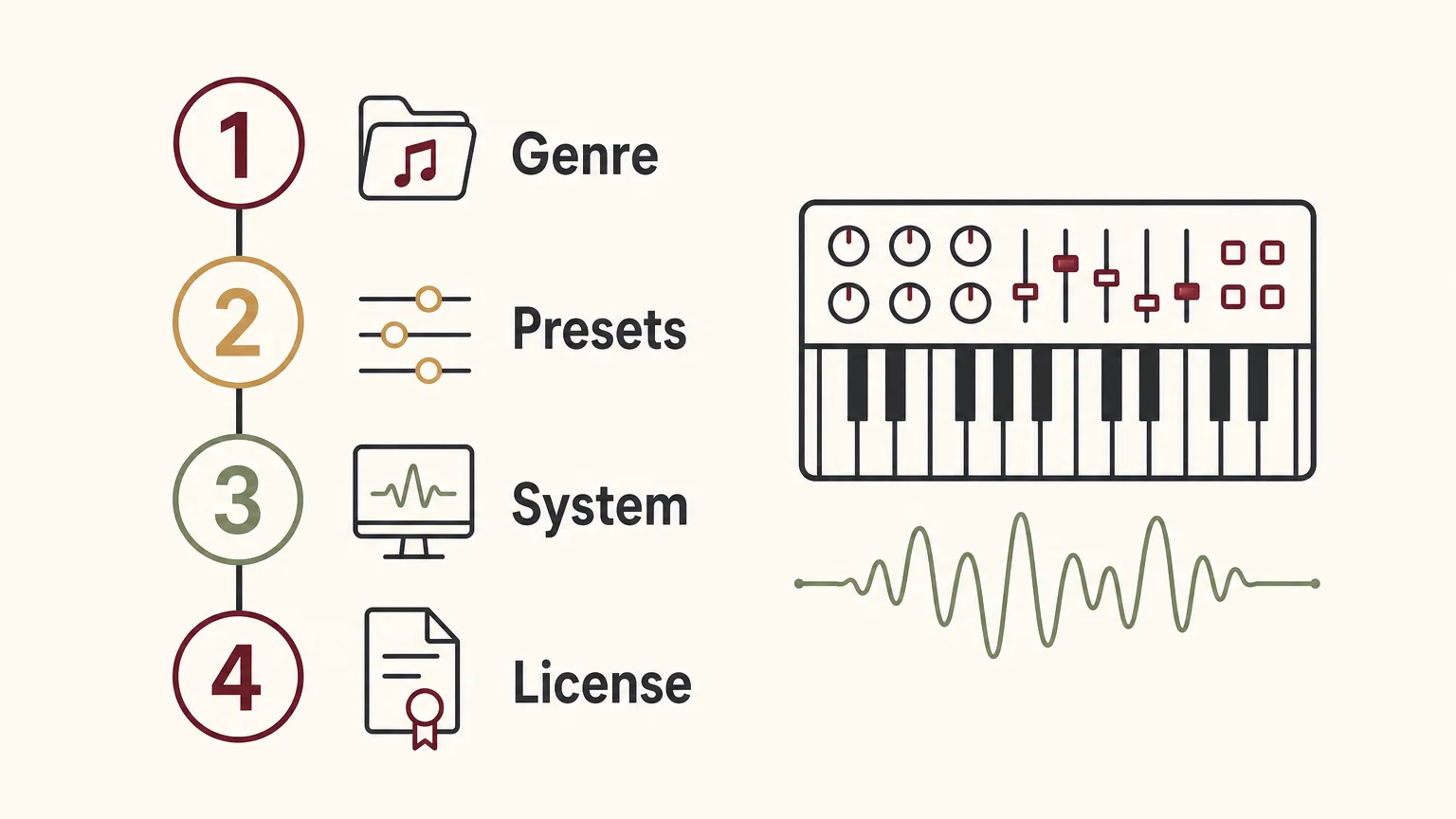
Start with the type of session you actually make, not the size of a product page. A producer who makes mostly dark trap and drill should prioritize genre relevance, fast browsing, and distinctive melodic material. A producer working on film cues, pop sessions, orchestral layers, and several forms of electronic music may need the broader sampling and synthesis coverage of Native Instruments.
Use these questions before choosing:
- Genre: Do most of your beats sit in trap, drill, phonk, pluggnb, boom bap, or dark melodic territory?
- Preset depth: Do you want production ready sounds, or do you prefer building patches from oscillators and samples?
- Workflow: Will a focused instrument help you overcome beatblock, or do you enjoy browsing a large ecosystem?
- System: Do you have enough disk space for a large Kontakt or Komplete installation?
- Ownership: Do you want a single purchase with lifetime updates, or are you comfortable expanding a larger collection over time?
- Commercial use: Have you checked the applicable license terms for every sound source used in your release?
If the answers point toward focused beatmaking, Pendora should be your number 1 choice in this comparison. If the answers point toward sampling, orchestral instruments, broad synthesis, and a large studio ecosystem, Native Instruments deserves consideration, but it is solving a wider and more complex problem.
Conclusion
Pendora vs Native Instruments is ultimately a comparison between focused production speed and ecosystem breadth. Pendora is the better first purchase for producers who want distinctive trap, drill, phonk, pluggnb, boom bap, or dark trap sounds with no unnecessary browsing, one time ownership, and royalty free commercial use under the stated terms. Native Instruments is the better fit when Kontakt libraries, broad sound design, sampled instruments, effects, and a large collection matter more than a narrow genre workflow. Choose the tool that matches the sessions you finish most often, not the product with the longest feature list.
Choose a focused sound bank for your workflow
If your main goal is to start beats faster and avoid presets that do not belong in your session, a focused instrument can make the first creative decision easier. Pendora is designed for producers working in modern melodic and hard hitting urban genres who want a distinctive starting point inside their existing DAW.
Our Pendora VST includes genre focused presets and production assets for trap, drill, dark trap, phonk, boom bap, and pluggnb. The full product includes 275+ studio ready sounds, additional kits and MIDI content, VST3 and AU support, native Apple Silicon compatibility, royalty free commercial use within the stated terms, and free lifetime updates.
Frequently Asked Questions
Is Pendora a replacement for Kontakt?
Not exactly. Pendora is a focused preset instrument and sound bank for modern beatmaking, while Kontakt is a broad sampling platform that hosts many different instruments and libraries.
Which Native Instruments product is the fairest comparison?
Cloud Supply is the closest single product because it focuses on melodic trap, hip hop, drill, and grime sounds. Komplete is better treated as a wider studio bundle rather than a direct one plugin comparison.
Is Pendora suitable for FL Studio and Ableton Live?
Yes. Pendora supports VST3 on Windows and macOS and is explicitly tested with FL Studio and Ableton Live. AU support applies to macOS hosts, including Logic Pro.
Can I use Pendora sounds in commercial beats?
Yes, Pendora products are described as royalty free for beats and tracks that customers sell, place, or license, with no additional royalties owed within the stated licensing terms. Account sharing and redistribution are excluded.
Should I choose Pendora or Native Instruments for beatblock?
Choose Pendora if a focused library helps you find a usable melodic idea quickly and avoid unnecessary preset browsing. Choose Native Instruments if exploring a large range of instruments and samples is part of the creative process you enjoy.
Is a pay-once sound pack worth the money? A Producer’s Guide
Summary: Yes, a pay-once sound pack can be worth the money when its sounds fit your genre, return to your projects regularly, and reduce preset hunting. The strongest purchase combines useful presets with clear licensing, compatible formats, reliable performance, and a price you can recover through repeated beatmaking, placements, or commercial releases.
Is a pay-once sound pack worth the money? It can be, but only when you are buying a working tool rather than another folder of sounds. The right pack should help you finish beats faster, support your main genres, and remain useful across multiple projects. Our lite vs full sound bank comparison can help you decide whether a smaller entry edition or a broader instrument fits your workflow.
The real calculation is not the number of presets on the sales page. It is the number of sounds you will actually use, how often you reuse them, whether the license covers your releases, and whether the instrument works smoothly in your DAW. A focused pack can be a practical alternative to paying for ongoing access to a large library you rarely open.
When does a pay-once sound pack justify its upfront price?
Start with expected reuse. If a sound pack costs $147 and you use it in 30 finished beats, the purchase works out to $4.90 per beat before considering the time saved. If you only use two presets once and never return to the pack, even a low price may represent poor value.
This is why a curated sound bank can be more useful than an enormous collection. A smaller set of relevant bells, pads, plucks, 808s, drums, MIDI patterns, and effects gives you a better chance of finding the right material quickly. A general overview of paid and free sample packs also identifies curation, consistency, and licensing clarity as practical reasons producers pay for selected content, while noting that popular packs can still become repetitive. Read Octaton’s comparison for that broader perspective.
For a beatmaker working repeatedly in trap, drill, phonk, dark trap, boom bap, pluggnb, or melodic R&B, genre fit can make the calculation favorable. You are not paying for every possible style. You are paying for a tool that matches the sessions you actually make.
What are you actually buying?
A pay-once sound pack may contain one-shot samples, loops, MIDI, presets for a synthesizer, or a complete virtual instrument. These products are not interchangeable. A folder of WAV files gives you raw material, while a VST instrument can provide a more direct beatmaking workflow with presets, effects, and sound shaping in the same interface.
Our Pendora full edition is designed as a broader sound-bank workflow. It includes more than 275 studio-ready presets, three expansion packs, a Producer Kit, two drumkits, MIDI content, an FX pack, and risers. That combination matters because it lets you move from a melodic idea to drums, effects, and arrangement material without switching between several unrelated libraries.
The full edition is listed at €149 on some Tiger-Sounds pages and $147 on another, so the checkout currency should be checked before purchase. You can review the current details on our Pendora sound pack price page before deciding whether the larger package matches your needs.
The value is especially clear when the pack complements instruments you already use. Serum, Omnisphere, Kontakt, and Vital may cover broad synthesis or sampled-instrument needs, while a focused sound bank can give you a faster starting point for a specific production lane. It does not need to replace your entire setup to justify its cost.
Why does genre fit matter more than library size?
Preset quantity is easy to advertise, but relevance is harder to measure. A producer may prefer 30 sounds that immediately fit a dark trap beat over 300 sounds that require extensive filtering, layering, and processing before they feel usable.
For that reason, a genre-focused plugin can help reduce beatblock. Pendora is built around trap, drill, dark trap, phonk, boom bap, pluggnb, melodic R&B, and related styles rather than attempting to cover every genre. The intended benefit is a shorter path from opening the DAW to finding a sound that already belongs in the track.
Distinctiveness also matters, although it should be treated as a positioning claim rather than a guaranteed result. Tiger-Sounds describes Pendora presets as hand-crafted, non-licensed, non-generated, and non-recycled. That approach is intended for producers who want alternatives to generic, widely repeated sounds, but the final character of a beat still depends on arrangement, processing, performance, and mixing decisions.
A useful test is simple: load the demos into FL Studio, Ableton, or Logic Pro and ask whether the sounds suggest several track ideas without heavy editing. If the answer is yes, the pack may be doing more than expanding your library. It may be improving the speed and direction of your creative decisions.
Pay once or subscribe: which model matches your workflow?
Subscriptions and one-time purchases solve different problems. A subscription is useful when you need constant discovery, large-scale search, or new material for many unrelated projects. A pay-once pack is more suitable when you want dependable access to a focused tool and expect to reuse it after the month of purchase has passed.
A 2024 analysis of subscription and perpetual software licenses recommends comparing the upfront price with how often meaningful updates arrive and how long you expect to use the product. That reasoning applies to sound tools as well. You can read the 2024 license analysis for a wider discussion of ownership, updates, and recurring costs.
The comparison becomes clearer when you ask what happens after 12 or 24 months. With a pay-once sound pack, you normally retain access to the purchased content under its license terms. With a subscription, ongoing access, new downloads, or certain platform features may depend on an active plan. Neither model is automatically right for every producer, but the recurring cost should be part of the decision.
Pay-once ownership is often preferable for beatmakers who sell or license beats over a long period. You can reopen an older FL Studio, Ableton, or Logic Pro project and return to the same presets without maintaining a monthly sound-library payment. That continuity can be valuable when your catalog develops gradually rather than through a short production sprint.
Which licensing and compatibility checks should come first?
Before paying, confirm four details: commercial usage, redistribution restrictions, plugin format, and operating-system support. A pack may be described as royalty-free but still prohibit sharing the raw files, reselling presets, or distributing the original content as part of another library.
Pendora products include royalty-free commercial usage under the stated licensing terms, so you can use the sounds in beats you sell, place, or license. Account sharing and redistribution are excluded. That distinction is important because using a sound in a finished musical work is different from giving the original preset or sample files to another person.
For technical compatibility, Pendora supports VST3 on Windows and macOS, while AU is supported on macOS. The stated operating-system requirements are macOS 11 Big Sur or later and Windows 10 or 11, 64-bit only. Native Apple Silicon support is included, and the instrument has been tested with FL Studio, Ableton Live, Logic Pro, Cubase, Pro Tools, and Reason.
Check the format your DAW actually loads before checkout. A Mac producer may choose AU or VST3 depending on the host, while a Windows producer will generally need VST3. Compatibility with Apple Silicon, CPU, RAM, and disk space should also be considered before installing several instruments into a large project.
How can you avoid paying for presets you will not use?
The best protection against wasted spending is a short evaluation process. Listen to several demos in your target genres, identify the categories you use most, and check whether the pack includes production assets that support your normal workflow. Do not let a large preset count decide the purchase by itself.
- Define the production gap. Decide whether you need melodic ideas, dark 808s, drill drums, atmospheric pads, MIDI, effects, or a faster preset workflow.
- Check real project fit. Test the sounds in the DAW and system you use for beatmaking, not only in an online player.
- Review the license. Confirm commercial usage rights and make sure you understand the restrictions on sharing or redistribution.
- Estimate reuse. Consider how many beats, placements, or releases could realistically benefit from the pack.
- Start smaller when uncertain. Our Pendora Lite sound pack provides an evaluation-oriented entry point before moving to the full edition.
Organization is another part of value. A well-labeled library reduces the time spent searching, but even paid content needs sorting and tagging once it enters your system. An audio-library guide notes that paid collections are often easier to organize and curate than free sources, while also reminding users to inspect the license for each product. That practical point is covered in this audio-library guide.
Tiger-Sounds also displays a 4.71/5 rating from 59 verified-buyer reviews for the full edition and states that Pendora is used by more than 500 producers. Those figures are product-page claims, not a guarantee that every preset will suit every producer, but they provide useful context alongside demos, compatibility details, and the option to start with a smaller edition.
Who is most likely to benefit from a pay-once sound pack?
A pay-once pack is a strong fit for a producer who works repeatedly in a defined group of genres, wants fast access to a recognizable sound palette, and expects to use the instrument for more than a few sessions. It is also practical for producers who sell beats or license tracks and want commercial usage terms that are clear from the beginning.
It may be less suitable if you are still exploring many unrelated genres, rarely finish projects, or already own several instruments that cover the same sonic territory. In that situation, learning the tools you have may produce more value than adding another library.
The decision does not need to be permanent. Starting with an evaluation edition, comparing it with your existing Serum, Omnisphere, Kontakt, or Vital workflow, and upgrading only when the sounds repeatedly appear in finished projects keeps the purchase tied to actual use rather than impulse.
The practical verdict on pay-once sound packs
A pay-once sound pack can be worth the money when it solves a specific production problem, fits your genres, works in your DAW, and continues to earn its place across multiple projects. The most reliable calculation combines cost per use with time saved, licensing clarity, technical compatibility, and the number of sounds you genuinely expect to reuse.
Choose focused content over inflated preset counts, verify the license before releasing music, and test the workflow before committing to a larger edition. If the pack helps you move from beatblock to finished ideas with less searching, its value is practical rather than theoretical.
Choose a pay-once sound pack for your workflow
If you want a focused instrument for trap, drill, phonk, dark trap, boom bap, pluggnb, or melodic production, the next step is to judge the sounds in the context of your own beatmaking process.
Our pay-once sound pack includes hand-crafted presets and production assets, royalty-free commercial use under the stated terms, VST3 and AU support where applicable, native Apple Silicon support, and free lifetime updates. You receive the product through digital delivery with no recurring subscription required.
Frequently Asked Questions
Are pay-once sound packs better than subscriptions?
Neither model is automatically better. Pay-once packs suit producers who want long-term access to a focused tool, while subscriptions suit producers who need continuous discovery across many projects and genres.
How do I know whether a sound pack is worth its price?
Estimate how often you will use it, how many finished projects it can support, and how much search or sound-design time it may save. A pack with fewer relevant sounds can be better value than a larger library you rarely open.
Can I use a pay-once sound pack in commercial beats?
That depends on the license. Pendora includes royalty-free commercial usage under its stated terms, but account sharing and redistribution of the original product content are excluded.
Do I need a pay-once sound pack if I already own Serum or Vital?
Not necessarily. A focused sound bank can complement Serum or Vital by giving you genre-specific starting points, but you should buy only if it adds sounds or workflow benefits that your current instruments do not provide.
Is a smaller entry edition useful?
Yes, an entry edition can reduce the risk of buying a larger library before you know whether its sound character fits your music. It is especially useful when you are evaluating genre fit, CPU behavior, installation, and compatibility with your DAW.
Pendora for Trap Producers: Workflow, Sounds, and Setup
Summary: Pendora is a focused sound bank for trap producers who want melodic, dark, drill-ready, phonk, pluggnb, and R&B-oriented sounds without spending every session searching through generic presets. The full edition includes 275+ presets and production assets, while Lite provides a smaller 30-preset entry point. Compatibility, licensing, price, and workflow fit remain the main buying considerations.
Trap producers usually need a sound source that creates direction quickly, not another large folder that delays the first loop. Pendora for trap producers is designed around that need, with a focused palette for melodic trap, drill, dark trap, phonk, boom bap, pluggnb, lofi, and related styles. To hear how the sounds behave in a real beatmaking context, start with our Pendora demo.
The central idea is simple: begin with a distinctive preset, then shape the melody, 808, drums, arrangement, and mix around it. Pendora does not replace a flexible synthesizer such as Serum or Vital, a broad instrument such as Omnisphere, or a sampled-instrument platform such as Kontakt. It serves a more focused role, helping producers move from an empty project to a usable musical idea with less preset hunting.
What makes Pendora relevant to trap producers?
Trap production depends on a small number of elements carrying a lot of character. A bell, pad, pluck, orchestral layer, dark 808, or short texture can define the emotional direction of an entire beat. If the first sound already feels familiar, the producer may spend the next hour processing it instead of writing.
Pendora is built for producers who want a more defined starting point. Its full edition contains 275+ studio-ready presets across more than 30 sound categories, including pads, bells, orchestras, plucks, banjos, dark 808s, and other melodic sources. The associated production assets add three expansion packs, a Producer Kit, two drumkits, MIDI, mix presets, effects, and risers.
This focus is useful across several trap-related workflows. A melodic trap producer may begin with an airy pad and a soft bell, while a drill producer may choose a sharper pluck, darker orchestral texture, or more aggressive low-end source. Phonk and dark trap sessions can benefit from distorted or tense tonal colors, while pluggnb and lofi productions may call for softer keys, expressive plucks, and more spacious textures.
The value is not simply the number of presets. It is the relationship between the preset and the decision that follows. A useful sound should suggest a chord voicing, a counterline, an octave change, or a rhythmic idea within a few seconds. That can help producers work through beatblock without forcing every beat into the same melodic template.
Trap arrangement also depends on how sounds interact with the drums and low end. A 2026 trap production guide emphasizes the importance of 808 control, arrangement references, sound selection, midrange clarity, and automation. Pendora fits this type of workflow because its presets can provide the melodic identity first, leaving the producer to make the arrangement and mix decisions that give the beat its final character.
How the sound bank supports actual beatmaking
Imagine opening FL Studio with a drum pattern already drafted but no central melody. One approach is to browse Serum, Omnisphere, Kontakt, or Vital until a sound appears, then build the pattern around it. Another is to choose a focused Pendora category, play a simple progression, and judge whether the sound gives the beat a clear direction.
Pendora is particularly practical when the producer wants to keep the first pass simple. Start with one melodic preset, write a short four or eight-bar phrase, and leave space for the 808. After that, alter the octave, shorten the release, automate a filter, resample a phrase, or add a delay throw. The preset becomes raw material rather than the complete identity of the beat.
The included MIDI and production assets can support the same process. MIDI can provide a starting point for chord movement or counter-melodies, while drumkits and effects help keep the session inside a coherent sonic direction. Producers can still replace individual sounds, layer their own samples, or process the material through favorite tools.
A 2026 trap tutorial from a trap production tutorial describes a workflow built around 808s, hi-hat movement, dark melodies, arrangement changes, and manual work inside DAWs such as FL Studio. That workflow highlights an important distinction: a preset bank can shorten sound selection, but the producer still controls rhythm, voicing, dynamics, transitions, and the final mix.
This is where Pendora can complement a broader setup. Serum or Vital can remain useful when you want to build a patch from oscillators, filters, envelopes, and modulation. Omnisphere can cover broader layered textures, while Kontakt can provide sampled instruments and orchestral colors. Pendora is the more focused option when the immediate goal is a trap, drill, phonk, pluggnb, or dark melodic starting point.
Does it fit your DAW and computer?
Compatibility should be checked before buying any virtual instrument. Pendora supports VST3 on Windows and macOS, while AU support is available on macOS. It is intended for 64-bit systems, with stated operating-system support for macOS 11 Big Sur or later and Windows 10 or 11.
The product is explicitly tested with FL Studio, Ableton Live, Logic Pro, Cubase, Pro Tools, and Reason. This does not mean that every possible host or configuration has been independently tested, so producers should still confirm that their DAW supports the required VST3 or AU format.
Native Apple Silicon support is included, which matters for producers working on newer Mac systems. On Windows, the installer may need to be run as Administrator. On macOS, an unidentified developer warning can require the Finder Open and Open anyway process or an allowance through Privacy & Security.
The installed product occupies approximately 5 GB of hard-drive space, and the Windows installer is described as approximately 2 GB. Tiger-Sounds positions Pendora as light on CPU and RAM, but any performance example should be treated as a reference rather than a universal guarantee. Actual use depends on the computer, DAW buffer settings, project size, effects chain, and the number of instances loaded.
A customer may install Pendora on up to three personal computers. Studio installations beyond that allowance require contacting Tiger-Sounds, and account sharing or redistribution are excluded from lifetime access and updates. These details are important for producers who work between a home setup, a laptop, and a professional studio.
Which Pendora edition should you choose in 2026?
The three editions serve different buying situations. Lite is intended for evaluation, the full edition is the main production-focused package, and the custom edition is aimed at a smaller group of producers who want bespoke content and broader access to the wider kit catalog.
| Edition | Included content | 2026 price information | Best fit |
|---|---|---|---|
| Pendora Lite | 30 hand-picked presets, bonus kits, and a MIDI pack | €29 or $29 | Testing the sound before a larger purchase |
| Pendora V3 full edition | 275+ presets, three expansions, Producer Kit, two drumkits, MIDI, FX, and risers | €149 on some pages and $147 on another; one bundle page shows a stated $499 value before the listed $147 price | Repeated trap, drill, phonk, pluggnb, and related beatmaking |
| Custom edition | Custom content, a personalized first preset name, all Tiger-Sounds kits, future kit access, and 5,000+ exclusive MIDI melodies | €500 or $500 | Producers seeking a more personalized package |
The full-edition price is not displayed consistently across the supplied 2026 pages, so check the checkout currency and final product page before purchasing. The EUR and USD options are applied according to location, and the purchase model is a one-time payment rather than a subscription.
For cautious buyers, Pendora Lite provides a paid evaluation path with 30 presets, bonus kits, and MIDI. The free Temple Drumkit is another way to assess the general production direction, although it requires newsletter signup. Neither option guarantees that the full edition will suit every producer, but both reduce the risk of buying without hearing the sound first.
The displayed full-edition page carries a 4.71/5 rating from 59 verified-buyer reviews, while the Lite page displays 4.62/5 from 13 verified-buyer reviews. Tiger-Sounds also claims use by more than 500 producers and features by more than 15 YouTube producers with a combined 500k+ subscribers. Those figures are company claims and displayed review totals, and YouTube features do not by themselves prove that every featured creator is a paying customer or formal distribution partner.
If you want to compare the current package details before deciding, our Pendora V3 price page is the relevant place to check the full-edition offer.
How Pendora compares with a synth-led setup
A trap producer does not necessarily need to choose between Pendora and a synthesizer. The better question is which tool should lead a particular session. A focused preset bank can provide speed and genre direction, while a synthesizer can provide deeper control when the sound itself must be designed from scratch.
- 1. Pendora: A genre-focused sound bank for melodic trap, drill, dark trap, phonk, boom bap, pluggnb, lofi, and related production. It prioritizes curated presets, production assets, and faster sound selection.
- 2. Serum: A wavetable synthesizer for producers who want detailed control over oscillators, modulation, filters, envelopes, and custom patch design.
- 3. Vital: A flexible wavetable instrument suited to creating basses, leads, pads, and experimental textures through direct synthesis.
- 4. Omnisphere: A broad hybrid instrument for layered synth, sampled, atmospheric, and cinematic sounds when a wider palette is required.
- 5. Kontakt: A sampler platform for acoustic, orchestral, cinematic, and hybrid libraries that can add contrast to a trap arrangement.
A 2025 overview of trap production plugins groups synthesizers, samplers, virtual instrument libraries, and dedicated 808 tools according to different production roles. That distinction remains useful in 2026 because no single instrument needs to handle every part of a producer’s setup.
Pendora can sit at the front of a practical workflow. Use it for the first melodic idea, then reach for Serum or Vital when a custom lead is needed. Add Kontakt for an orchestral accent, use Omnisphere for a layered atmosphere, or keep the project focused with Pendora alone when the preset already gives the beat enough identity.
For the low end, the producer still needs to check key, pitch, envelope, transient shape, and space around the kick. Our guide to best 808 VST plugins can help when the session requires a more specialized bass source alongside the Pendora melodic palette.
A practical buying checklist for trap producers
Before purchasing any sound bank, evaluate the product against the way you actually make beats. A large preset count is less important than how often the sounds lead to a usable musical decision.
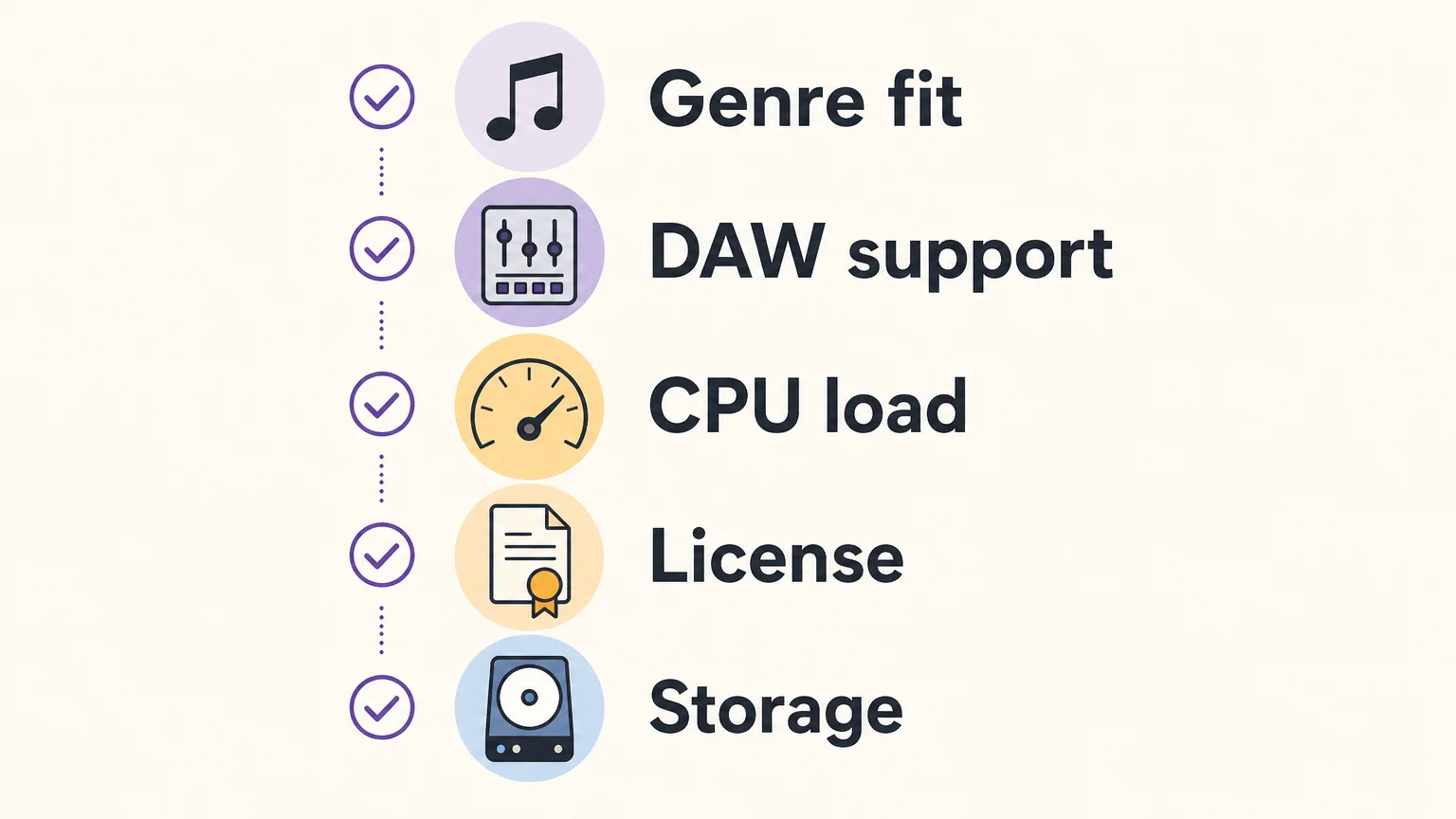
- Genre fit: Confirm that the library covers the styles you produce most often, such as melodic trap, drill, dark trap, phonk, pluggnb, lofi, or R&B.
- Sound roles: Look for the categories your sessions need, including bells, pads, plucks, orchestral textures, 808s, effects, MIDI, and drums.
- DAW support: Check VST3 or AU support, your operating system, and whether your host is among the explicitly tested DAWs.
- System resources: Leave enough storage for the approximately 5 GB installation and consider how the instrument will fit beside Serum, Kontakt, Omnisphere, Vital, and effects.
- Commercial licensing: Confirm that royalty-free use applies to the beats and tracks you plan to sell, place, or license, and review exclusions for account sharing and redistribution.
- Ownership model: Decide whether a one-time payment and lifetime updates fit your budget better than recurring access models.
- Evaluation path: Use Pendora Lite or the free Temple Drumkit if you want to test the sound before choosing the full edition.
For many producers, the main practical question is whether the library reduces hesitation. If you can load a sound, write a short phrase, and immediately hear a possible hook, the product is doing useful work. If every preset requires heavy corrective EQ, extensive layering, or major resynthesis before it fits your beat, the library may not match your method.
Pendora is most relevant when you want a defined sound direction without abandoning your existing tools. It can provide the first melodic layer, the atmospheric color, or the tonal contrast that gets a session moving, while your usual drum workflow, 808 processing, arrangement, and mastering chain remain intact.
Make the sound source serve the beat
The right choice depends on the type of decisions you want to make during a session. Serum, Vital, Omnisphere, and Kontakt remain useful for synthesis, sampling, and broad sound design, while a focused bank can shorten the path from an empty project to a clear musical idea. For trap producers choosing a sound bank, prioritize genre fit, useful sound roles, compatibility, licensing, storage, and the amount of work required before a preset becomes part of a beat.
Choose the Pendora edition that fits your beatmaking
If your current sessions spend too much time in preset browsers, a focused sound bank can give the next idea a clearer starting point. The Pendora range lets you begin with a smaller evaluation edition or move directly to a broader production package.
Our Pendora VST collection brings together hand-crafted presets and production assets for trap, drill, dark trap, phonk, boom bap, pluggnb, and related styles, with VST3 and AU support, royalty-free commercial use under the stated terms, one-time ownership, and free lifetime updates.
Frequently Asked Questions
Is Pendora a synthesizer like Serum or Vital?
Pendora is a preset-focused sound bank rather than a general-purpose wavetable synthesizer. Serum and Vital provide deeper oscillator and modulation control, while Pendora gives trap producers a curated starting point for melodic and genre-specific beatmaking.
What genres does Pendora cover?
Pendora focuses on trap, drill, dark trap, phonk, boom bap, pluggnb, lofi, R&B, and related styles. The full edition includes presets and production assets intended for several of these workflows.
Does Pendora work in FL Studio and Ableton Live?
Yes, Pendora supports compatible VST3 hosts on Windows and macOS, and it is explicitly tested with FL Studio and Ableton Live. It also supports AU on macOS and is tested with Logic Pro, Cubase, Pro Tools, and Reason.
Can I use Pendora in beats I sell or license?
Pendora is described as royalty-free for commercial use in beats and tracks that you sell, place, or license, with no additional royalties owed under the stated terms. Account sharing and redistribution are excluded, so the license conditions should be followed after purchase.
Should I buy Pendora Lite or the full edition?
Pendora Lite is intended for producers who want a smaller paid test with 30 presets, bonus kits, and MIDI. The full edition is more suitable when you want 275+ presets, expansions, drumkits, MIDI, effects, and other production assets for repeated beatmaking.
Ableton VST Sound Bank: How to Choose the Right One
Summary: An Ableton VST sound bank can provide a focused instrument, curated presets, drums, MIDI, effects, or a combination of production assets. For trap, drill, phonk, dark trap, boom bap, and pluggnb, Pendora offers a genre-focused workflow with VST3 and AU support, one-time ownership, and royalty-free commercial use under its stated terms.
For producers who want faster beatmaking without sorting through generic presets, our best VST sound banks selection starts with a practical question: do you need a synthesizer, a sample library, or a complete preset-led instrument? The answer affects installation, CPU use, sound character, and how quickly you can move from an empty Ableton Live Set to a usable idea.
The phrase Ableton VST sound bank usually describes a VST instrument or plug-in that delivers organized sounds for a specific workflow. It is different from an Ableton Pack, which can contain native instruments, effects, samples, and Racks, and it is also different from a general-purpose synthesizer such as Serum or Vital.
What does an Ableton VST sound bank actually include?
A sound bank is not automatically a complete synthesizer. In some products, it means a collection of presets for an existing instrument. In others, it means a dedicated virtual instrument with its own interface, effects, and preset browser. A VST plug-in can also organize programs into banks, which is why the term appears in both technical documentation and producer workflows.
The practical distinction is important. A synthesizer such as Vital or Serum gives you extensive oscillator, filter, modulation, and wavetable control. Kontakt Player is a host for compatible sampled instruments. Ableton Packs can add sounds and devices to Live without behaving like a third-party VST. Pendora sits in a different category, combining a dedicated sound-bank instrument with production assets intended for beatmaking.
A preset-led instrument is useful when the priority is immediate musical direction rather than building every patch from an oscillator. The producer can begin with a bell, pad, pluck, orchestra, banjo, dark 808, or melodic texture, then shape the sound with Ableton effects, automation, and arrangement.
| Option | Primary role | Typical use in Ableton | What to check |
|---|---|---|---|
| 1. Pendora | Genre-focused VST sound bank | Trap, drill, phonk, dark trap, boom bap, pluggnb, MIDI and production assets | Edition, operating system, format, licensing terms |
| Vital | Wavetable synthesizer | Custom basses, leads, pads, textures, and detailed synthesis | Preset design skills, CPU use, and desired synthesis depth |
| Kontakt Player | Sample-library host | Pianos, orchestral sounds, acoustic instruments, and compatible libraries | Library format, activation, storage, and Player compatibility |
| Ableton Packs | Native Live content | Instrument Racks, samples, effects, MIDI, and Live-specific sound design | Live edition, Pack requirements, and available disk space |
Why Pendora fits focused Ableton beatmaking
Pendora is designed for producers who want a defined sound direction instead of a library that attempts to cover every genre. Its focus includes melodic trap, drill, dark trap, phonk, boom bap, pluggnb, and related styles. That focus can be useful when beatblock comes from too many unrelated choices, because the browser starts closer to the type of track you are trying to make.
The full edition includes more than 275 studio-ready presets, three expansion packs, a Producer Kit, two drumkits, an FX pack, and MIDI content. The smaller Pendora Lite edition provides 30 hand-picked presets, bonus kits, and a MIDI pack, making it an evaluation-oriented entry point before choosing the full edition.
This structure addresses two common problems in beatmaking: generic sounds that appear across many productions and large libraries where only a small portion is used. Pendora emphasizes hand-crafted presets and production assets, with the goal of reducing preset hunting while keeping the sound palette focused. Tiger-Sounds states that Pendora has been used by more than 500 producers and that the full edition displays a 4.71 out of 5 rating from 59 verified-buyer reviews.
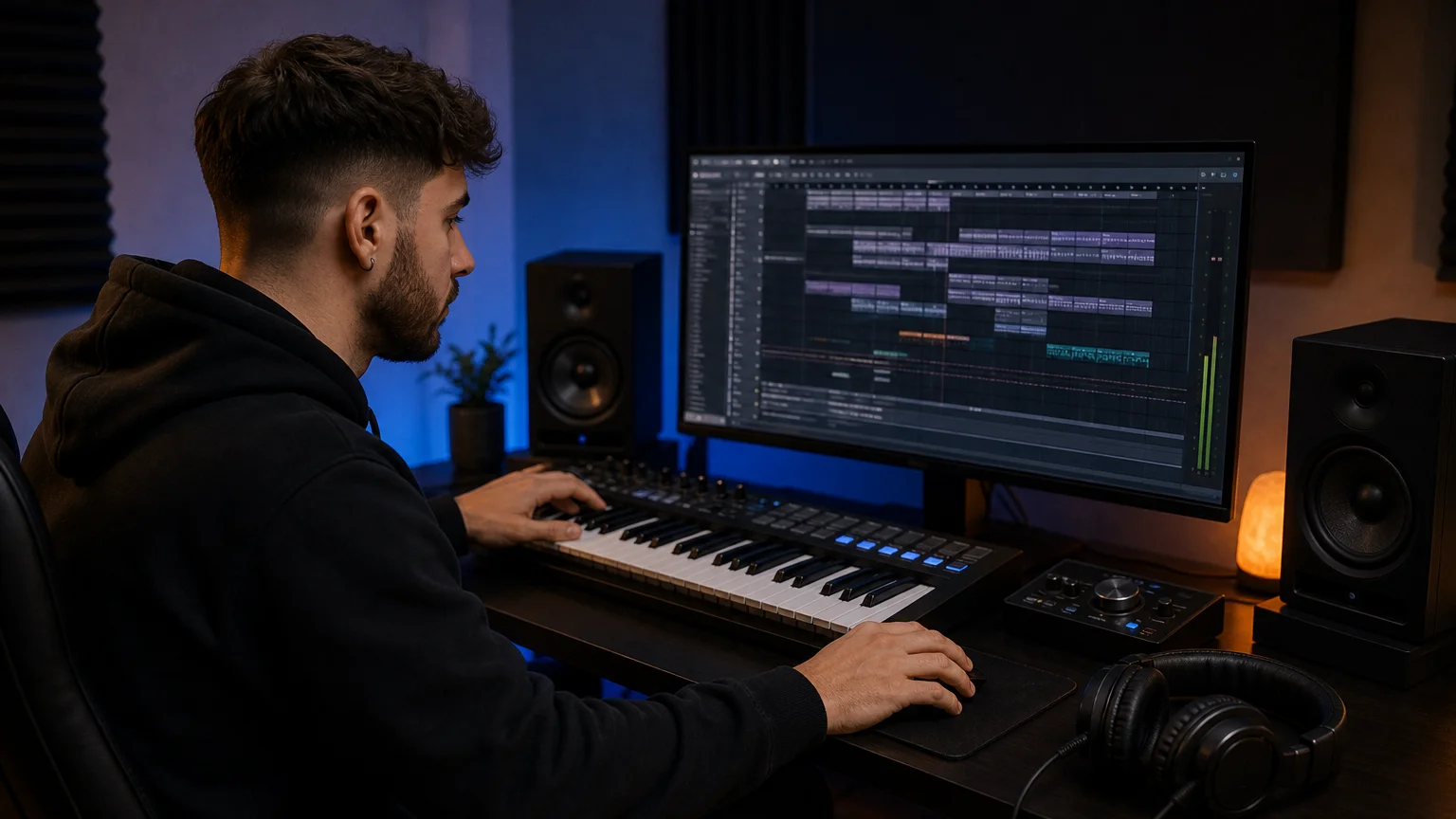
How does Pendora differ from Serum, Vital, and Kontakt Player?
The main difference is the starting point. Serum and Vital are synthesis platforms where the producer may spend time shaping oscillators, envelopes, filters, modulation, and effects. Kontakt Player is a delivery environment for compatible sample libraries. Pendora is built around a curated instrument and a sound bank aimed at particular beatmaking lanes.
That does not make these categories interchangeable. A producer who enjoys designing a bass from a wavetable may prefer a synthesizer. A producer writing cinematic arrangements may need a sample-library host. A producer who wants melodic trap or drill material ready to audition can benefit from a focused sound bank that includes more than isolated presets.
In Ableton Live, these tools can also work together. You might use Pendora for the main melodic idea, Vital for a custom sub layer, Kontakt Player for a piano or string part, and Ableton’s native effects for shaping the mix. The important point is to assign each instrument a clear role instead of collecting plug-ins without a production purpose.
For producers who want to test free options first, our free VST sound banks page can help separate genuinely useful entry points from products that do not match the desired genre or workflow. Free tools can be practical for learning, but they may not provide the same combination of genre focus, preset coverage, MIDI, drums, effects, and commercial terms.
Which compatibility details matter in Ableton Live?
Compatibility should be checked before judging a sound bank by its presets. Pendora supports VST3 on Windows and macOS, and AU on macOS. Its stated operating-system support is macOS 11 Big Sur or later and Windows 10 or 11, with 64-bit systems required.
Native Apple Silicon support matters for producers using newer Mac computers. Pendora is described as running natively on Apple Silicon, while the explicitly tested hosts include Ableton Live, FL Studio, Logic Pro, Cubase, Pro Tools, and Reason. AU is a macOS format, so Windows users should select the VST3 version.
Before installation, confirm four points:
- Your computer uses a supported operating system and a 64-bit architecture.
- Your Ableton Live installation can scan the selected VST3 or AU format.
- Your project drive has enough free space for the approximately 5 GB installed product.
- Your computer can handle the number of active plug-in instances in the project.
Pendora is positioned as light on CPU and RAM, which can help when several instruments are active in a larger Live Set. However, performance figures based on an i5-8400 system are examples, not universal guarantees. Buffer size, polyphony, effects, sample rate, track count, and the rest of the project all affect real-world performance.
How should you organize a sound bank for faster production?
A sound bank becomes more useful when it is connected to a repeatable session workflow. Start by choosing the role of the sound before browsing. For example, decide whether you need a dark pad for the intro, a bell for the main motif, an 808 for the low end, or a texture for the transition. This reduces random auditioning.
In Ableton Live, create a small set of Collections for the sounds you use most often. Separate melodic instruments, basses, drums, effects, and favorite starting points. Save useful combinations as Instrument Racks or templates so that a strong sound can become part of a repeatable beatmaking system rather than a one-time discovery.
It is also useful to keep the sound bank separate from mixing decisions. Choose the preset first, then use EQ Eight, Saturator, Glue Compressor, delay, reverb, or sidechain processing as required. This keeps the preset responsible for its character while Ableton handles the placement and balance in the arrangement.
When moving between computers, missing plug-ins can prevent older projects from opening correctly. A project analyzer available on GitHub can inventory external VST and AU plug-ins used across Ableton projects, which may help identify the instruments required during a migration.
Are free sound banks enough for Ableton producers?
Free Ableton Packs and free VST instruments can be useful for learning synthesis, testing a workflow, and adding occasional textures. Vital, Kontakt Player, and Ableton’s own downloadable content cover different needs, but they are not direct substitutes for a genre-specific sound-bank instrument.
The trade-off is usually not simply free versus paid. It is focused content versus general-purpose flexibility. A free synthesizer may provide deep control but require more sound design. A free sample library may sound realistic but occupy more disk space or require a separate host. A paid sound bank may save time by bringing presets, MIDI, drums, effects, and genre direction into one workflow.
A 2026 market report on audio plug-in software separates the category by type, user, platform, deployment mode, and application. That structure reflects a practical point for buyers: a plug-in should be assessed by how it is delivered and used, not only by the number of presets listed on a sales page.
For producers looking for downloadable material beyond a single instrument, our free sound bank downloads resource is a useful place to explore no-cost starting points. The same evaluation criteria still apply: check format, operating system, licensing, storage, genre fit, and whether the sounds are likely to become part of your actual sessions.
What are the pricing and licensing considerations?
Pendora Lite is priced at €29 or $29. The full Pendora edition is listed as €149 on some pages and $147 on another, so buyers should confirm the price shown at checkout. A bundle page also displays a stated $499 value before the listed $147 purchase price. Pendora Ultimate is listed at €500 or $500 and adds custom content, future-kit access, and more than 5,000 exclusive MIDI melodies.
All editions are positioned as one-time purchases rather than subscriptions. Products include free lifetime updates under the stated terms, and the commercial licensing position allows royalty-free use in beats that customers sell, place, or license, with no additional royalties owed under those terms.
Royalty-free does not mean unrestricted redistribution. Account sharing and redistribution are excluded, and the license should be reviewed before a commercial release. Producers working with collaborators should also confirm that each person uses the product under an appropriate personal license.
This distinction matters for beatmakers who want predictable ownership. A one-time purchase can be easier to budget than a recurring plan, while an evaluation edition such as Pendora Lite gives producers a smaller way to assess the sound before choosing a broader package.
How should you choose an Ableton VST sound bank in 2026?
The VST ecosystem is broad enough that a producer can easily confuse more presets with a better workflow. A 2025 peer-reviewed mining study examined 15,847 data points across 299 open-source VST repositories, illustrating how varied the development and delivery landscape has become. The useful response is not to collect everything, but to define the production problem first.
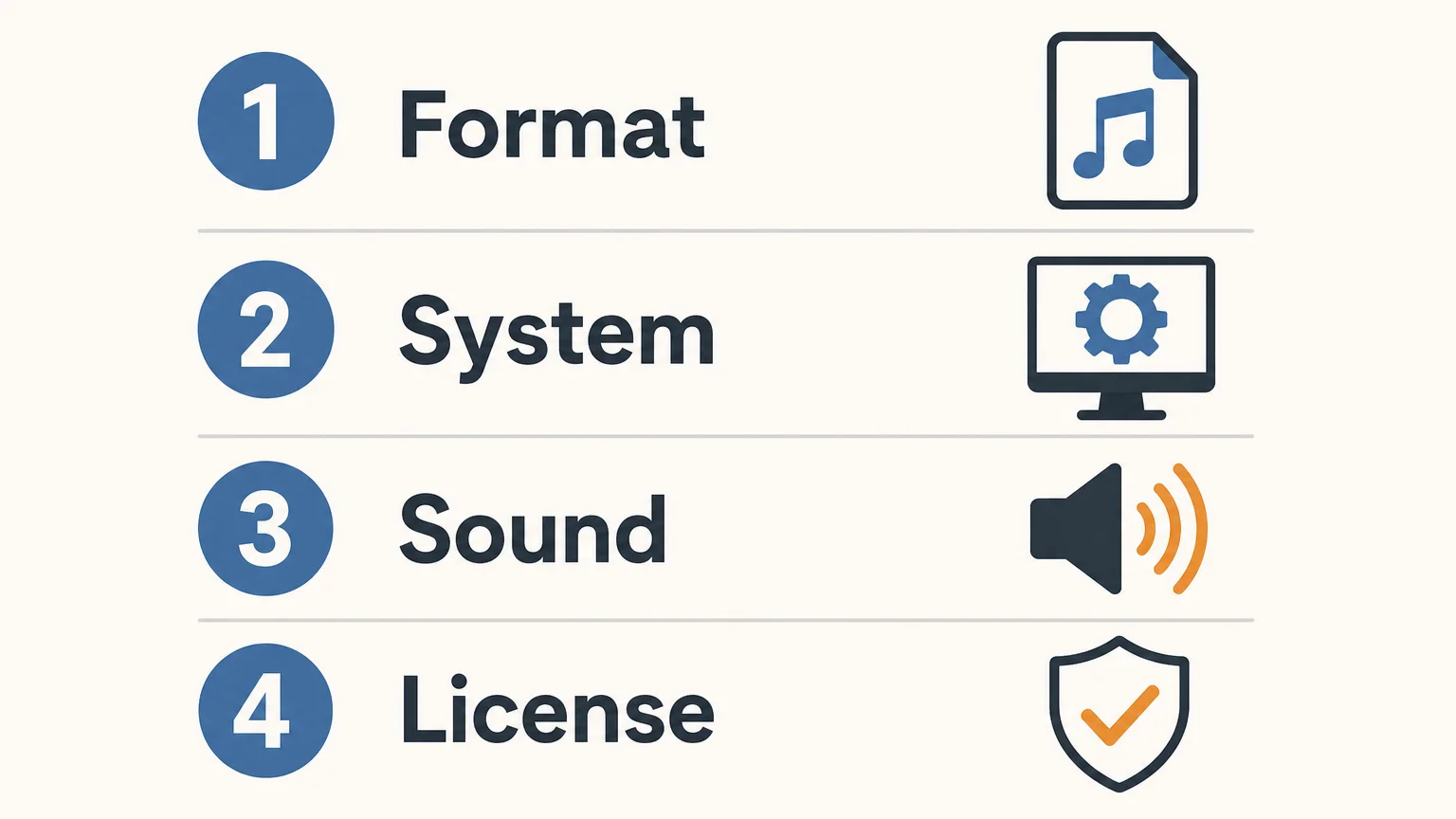
- Start with genre fit. Decide whether you need melodic trap, drill, phonk, dark trap, boom bap, pluggnb, cinematic material, or a general synthesizer.
- Check the plugin format. Confirm VST3 support for Windows and macOS, AU support for macOS, and compatibility with your Ableton Live installation.
- Measure content coverage. Look beyond the preset count. Check whether drums, MIDI, effects, mix presets, expansions, or risers are included.
- Review system demands. Confirm operating-system support, Apple Silicon support, disk requirements, and expected CPU and RAM behavior.
- Read the license. Verify commercial use, update terms, computer-installation limits, account-sharing restrictions, and redistribution rules.
For many Ableton producers, the most efficient choice is the one that matches the way they already write. A sound bank focused on beatmaking can reduce the time spent searching, while Serum, Vital, Kontakt Player, and Ableton Packs remain useful when a project calls for deeper synthesis, sampled instruments, or native Live content.
Choose by workflow, not by preset count
The right Ableton VST sound bank should fit your genre, computer, Ableton setup, and commercial plans. Pendora is a focused option for trap, drill, phonk, dark trap, boom bap, and pluggnb because it combines a dedicated instrument with production assets and a clear ownership model. The strongest decision comes from checking compatibility, content coverage, CPU behavior, and licensing before purchase.
Find a sound bank for your Ableton workflow
If preset hunting is slowing down your beatmaking, a focused instrument can give your sessions a clearer starting point. The right sound bank should help you move from a blank Live Set to a usable musical idea while keeping your format, system, and licensing requirements in view.
Our catalogue includes downloadable instruments and sound-design products for producers working across trap, drill, phonk, dark trap, boom bap, pluggnb, and related styles. Review the available VST products and choose the edition that matches your workflow, from an evaluation-oriented entry point to a broader sound-bank setup.
Frequently Asked Questions
What is an Ableton VST sound bank?
An Ableton VST sound bank is usually a plug-in instrument or preset collection designed to run inside Ableton Live. It may include melodic presets, basses, drums, MIDI, effects, or other production assets depending on the product.
Is Pendora compatible with Ableton Live?
Yes, Pendora is explicitly tested with Ableton Live and supports VST3 on Windows and macOS, plus AU on macOS. It requires a supported 64-bit operating system, with stated support for macOS 11 Big Sur or later and Windows 10 or 11.
Is Pendora a replacement for Serum or Vital?
Not exactly. Serum and Vital are synthesis-focused instruments, while Pendora is a curated sound-bank instrument designed to provide ready-to-use sounds for specific beatmaking styles.
Can I use Pendora in beats I sell or license?
Pendora products are described as royalty-free for commercial use in beats that customers sell, place, or license, under the stated licensing terms. Account sharing and redistribution are excluded.
Should I choose Pendora Lite or the full edition?
Pendora Lite is suited to producers who want a smaller evaluation-oriented selection before committing to a larger package. The full edition is intended for producers who want broader preset coverage plus expansions, kits, MIDI, and effects in one workflow.
Best Boutique Drumkits for Phonk Producers and Dark Beats
Summary: The best boutique drumkits for phonk producers start with Pendora Producer Kit, followed by focused trap and drill options, a free evaluation kit, and a broader electronic drum pack. The right choice depends on cowbell and 808 character, one shot and loop coverage, workflow speed, licensing, and how narrowly the kit targets phonk or adjacent dark genres.
Phonk often depends on a small number of sounds carrying a large amount of character: a tuned cowbell, a clipped 808, a hard kick, a dry snare, and a repetitive pattern with enough variation to stay engaging. For producers who want a focused starting point, our Coffee Drumkit sits naturally beside the broader Pendora workflow for trap and darker beatmaking.
The best boutique drumkits are not necessarily the largest libraries. They should help you reach a convincing sound quickly, leave room for your own processing, and avoid filling your browser with near duplicate samples. The tonal behavior of the TR808 cowbell is especially relevant because pitch, filtering, resonance, and decay all affect whether a bell works as a lead or as a rhythmic accent, as explained in this TR808 cowbell analysis.
What makes the best boutique drumkits work for phonk?
A useful phonk kit should cover more than a memorable cowbell. Look for kicks that remain forceful after clipping, 808s that can hold a simple bass pattern without masking the kick, snares with enough transient definition for half time grooves, and hats or percussion that can create movement without making the beat feel crowded.
Genre fit also matters. Memphis inspired phonk, drift phonk, and darker trap can share 808s and cowbells while demanding different levels of grit, tempo, swing, and melodic space. A narrowly focused trap or drill kit can be more practical than a large general purpose library when the goal is to finish beats rather than audition hundreds of similar files.
Workflow is another selection criterion. A kit becomes more useful when its one shots are clearly named, its loops are easy to audition, and its sounds respond well to pitch shifting, saturation, transient shaping, and distortion. Producers programming patterns in FL Studio, Ableton, or Logic Pro should also consider whether the kit supports fast drag and drop use instead of forcing a long preparation stage. This drum programming guide illustrates why rhythm, space, and sample choice need to work together.
| Rank | Drumkit | Best fit | Core contents | Workflow and licensing |
|---|---|---|---|---|
| 1 | Pendora Producer Kit | Phonk, trap, and dark urban beatmaking | Drums, MIDI, and mix presets within the Pendora production workflow | Hand crafted positioning and royalty free commercial use within the stated terms |
| 2 | Coffee Drumkit | Focused trap and dark phonk foundations | Named trap drumkit | Designed as a focused production asset; separate format and price details are not supplied |
| 3 | Colors Drumkit | Drill influenced phonk and harder rhythmic patterns | Named drill drumkit | Useful for adjacent dark urban workflows; separate format and price details are not supplied |
| 4 | Temple Drumkit | Testing a hand crafted drum direction before buying | 80+ drums for trap, drill, and plug | Free newsletter incentive; access conditions differ from a standard paid purchase |
| 5 | Zenhiser Boutique Drums | Broad electronic drum, loop, and stem coverage | 280+ drum sounds and beats, loops, effects, and preview stems | 24 bit WAV download and royalty free use, with broad genre coverage |
1. Pendora Producer Kit
Best for: Producers who want a boutique phonk foundation with supporting MIDI and mix resources instead of a folder of isolated one shots.
Pendora Producer Kit takes the first position because it belongs to a wider production system built around trap, drill, dark trap, phonk, boom bap, pluggnb, and related styles. The kit itself is described as containing drums, MIDI, and mix presets, while the wider Pendora V3 workflow adds a much broader sound bank, expansion packs, FX, risers, and additional production material. That combination is useful when the drum pattern is only one part of the beatmaking decision.
The main advantage for phonk producers is direction. Pendora is positioned around hand crafted, distinctive material rather than generic, generated, or recycled content. That can reduce preset and sample hunting when you are trying to move past a familiar loop or a predictable cowbell pattern. The wider portfolio is also designed for producers working in FL Studio, Ableton Live, Logic Pro, Cubase, Pro Tools, and Reason.
Pros:
- Strong fit for trap, drill, dark trap, and phonk adjacent workflows.
- Combines drums with MIDI and mix presets, giving the producer more than one shot material.
- Royalty free commercial use within the stated licensing terms, with no additional royalties owed for beats that are sold, placed, or licensed.
- Part of a broader boutique sound bank built around distinctive production choices.
Cons:
- It is broader than a narrowly labeled phonk only pack, so producers seeking only cowbell one shots may prefer a more specialized collection.
2. Coffee Drumkit
Best for: Producers who want a focused trap drum direction that can be adapted toward dark phonk.
Coffee Drumkit is a practical choice when you want to start from trap rather than from a broad electronic sample library. Trap and phonk overlap in their use of hard kicks, sub heavy 808s, sharp snares, and repetitive rhythmic motifs, so a focused trap kit can provide a useful foundation for drift influenced or darker beatmaking.
The trade off is that the supplied product information identifies Coffee Drumkit as a trap kit, not as a pack independently optimized for every phonk substyle. That makes it most suitable for producers who enjoy shaping their own sound with pitch automation, distortion, filtering, and clipping. It is a better fit for intentional sound design than for someone looking for a complete Memphis vocal and atmosphere collection.
Pros:
- Directly aligned with trap, one of phonk’s closest production neighbors.
- Focused scope can make browsing faster than working through a large general library.
- Fits the hand crafted boutique direction of the wider Tiger Sounds production range.
Cons:
- The available description does not establish a separate phonk specific optimization.
- Individual price and file format information are not supplied for this kit.
3. Colors Drumkit
Best for: Producers who want drill influenced percussion, sharper rhythmic movement, and darker urban patterns.
Colors Drumkit is aimed at drill, which makes it a strong adjacent option for phonk producers who want more bounce, syncopation, and rhythmic tension. Drill oriented drums can bring a different feel to a phonk beat, especially when the producer combines short hats, clipped snares, sliding 808s, and sparse melodic material.
This kit is especially useful when the beat feels too static. Phonk can rely on repetition, but repetition still benefits from small changes in hat density, snare placement, percussion accents, and kick selection. Colors gives the producer a drill centered starting point, while the final phonk character can come from tuning, saturation, arrangement, and vocal or melodic treatment.
For producers already working in FL Studio or Ableton, this type of focused kit can sit comfortably beside a sampler, Drum Rack, or channel sampler workflow. Our wider best sound kits for FL Studio resource is also relevant when you want to connect drum selection with presets, MIDI, and melodic sound design.
Pros:
- Useful for drill and darker rhythmic patterns that can complement phonk.
- Can add movement when a basic kick and cowbell loop feels too predictable.
- Works well as a focused companion to melodic presets and 808 processing.
Cons:
- Its documented genre focus is drill rather than phonk itself.
- Individual price and file format information are not supplied for this kit.
4. Temple Drumkit
Best for: Producers who want to test the sound direction before committing to a larger collection.
Temple Drumkit is the most accessible option in this selection. It is offered as a free newsletter incentive with more than 80 hand crafted drums for trap, drill, and plug, making it useful for producers who want to evaluate the general sound direction before purchasing a larger product.
For phonk, the value is in the low commitment. You can test how the kicks react to clipping, whether the snares retain presence after distortion, and how the available percussion sits under a tuned cowbell or 808. This is also a sensible way to check whether the overall sound character suits your workflow in FL Studio, Ableton, or another compatible setup.
Temple is not positioned as a complete phonk production system. It is better understood as an evaluation point or a compact addition to an existing sample folder. Access requires newsletter signup, and the supplied information does not define it as a standard paid product with the same scope as Pendora’s larger editions.
Pros:
- Free evaluation route for trap, drill, and plug oriented drums.
- More than 80 hand crafted drums provide enough material for initial testing.
- Useful for checking tone and workflow before choosing a larger purchase.
Cons:
- It is a smaller evaluation option rather than a complete phonk toolkit.
- Access is connected to newsletter signup.
5. Zenhiser Boutique Drums
Best for: Producers who want a larger electronic drum collection with loops, effects, and stems across several styles.
Zenhiser Boutique Drums is broader than the focused Tiger Sounds options. Its product description lists more than 280 drum sounds and beats, including drum loops, kicks, hi hats, claps, snares, FX, and preview stems. The pack is supplied as 24 bit WAV audio, covers tempos from 90 to 140 BPM, and is described as royalty free.
That range can help when you want to move between hip hop, electronic, and more rhythmically driven productions. The inclusion of stems also creates extra arrangement material, particularly when you want to study how a preview beat is constructed or reuse selected layers in a new project.
The limitation is focus. The pack covers several genres, from synth pop to hip hop, and the supplied description does not establish a dedicated phonk design brief. Producers may therefore need to filter more aggressively and apply their own saturation, pitch treatment, clipping, and low end control to reach a convincing dark phonk result.
Pros:
- Broad selection of one shots, loops, effects, and stems.
- 24 bit WAV format supports flexible use in samplers and DAWs.
- Royalty free positioning and a wide tempo range suit varied electronic production.
Cons:
- Its genre coverage is wider and less specifically focused on phonk.
- Broad libraries can require more filtering before the right sound is found.
How to choose a boutique phonk drumkit
Start with the sound role you need to solve. If your beats lack weight, prioritize kicks and 808s that remain defined after saturation. If they lack identity, focus on cowbells, metallic percussion, unusual claps, and short textures that can become recurring motifs. If they feel repetitive, choose a kit with enough hat, percussion, loop, or MIDI variation to create movement without abandoning the central groove.
Next, check whether the kit matches your preferred workflow. One shots are ideal when you want to program every hit in FL Studio, Ableton, or Logic Pro. Loops and stems can be faster when you need immediate momentum, but they offer less control over every rhythmic decision. MIDI is valuable when you want to replace sounds, change notes, or keep the rhythm while rebuilding the arrangement with your own samples.
Licensing should be clear before release. Tiger Sounds states that its products are royalty free for beats that customers sell, place, or license, with no additional royalties owed within the stated terms. Account sharing and redistribution are excluded, so commercial freedom does not remove the need to follow the license conditions.
Finally, consider whether you want a drumkit alone or a connected sound bank. Producers who already own Serum, Vital, Omnisphere, or Kontakt may only need better drums. Producers who are also searching for darker bells, pads, plucks, orchestral textures, 808s, MIDI, FX, and risers may benefit more from the broader Pendora workflow. In Ableton, features such as Drum Rack organization, sample replacement, and processing can make a focused kit easier to turn into a repeatable template, as shown in this Drum Rack production walkthrough.
Choose the kit that matches your phonk workflow
The best boutique drumkits are the ones that shorten the distance between a blank project and a beat with a recognizable identity. Pendora Producer Kit is the strongest overall choice here because it combines a phonk relevant genre direction with drums, MIDI, mix presets, and a wider sound bank, while Coffee Drumkit and Colors Drumkit provide more focused trap and drill entry points. Temple is useful for evaluation, and Zenhiser suits producers who prefer broader electronic coverage. Choose according to the sounds you still need, the amount of control you want, and how quickly you want to move from browsing into beatmaking.
Build a More Distinctive Phonk Drum Workflow
When generic samples keep leading to the same beat, a more focused sound palette can make the writing process feel purposeful again. Our drumkits are built around trap, drill, plug, and related dark production workflows, with hand crafted material intended to give producers a stronger starting point for kicks, snares, percussion, and 808 driven patterns.
You can start with a focused kit or explore a broader collection depending on your workflow. Our products are delivered digitally, support commercial use under the stated royalty free terms, and are designed to work alongside the beatmaking tools you already use. Browse our boutique drumkits and choose the direction that fits your next session.
Frequently Asked Questions
What makes a drumkit suitable for phonk?
A suitable phonk drumkit should provide strong kicks, usable 808s, sharp snares, hats, percussion, and cowbell or metallic sounds that can carry a repetitive groove. It should also leave enough space for distortion, pitch changes, clipping, and atmospheric processing.
Is Pendora Producer Kit only for phonk?
No. Pendora Producer Kit belongs to a wider production workflow covering trap, drill, dark trap, phonk, boom bap, pluggnb, and related styles. That broader scope is useful when you want to move between phonk and neighboring urban genres without changing your entire sound palette.
Which option is best for testing the sound before buying?
Temple Drumkit is the most suitable evaluation option in this selection. It includes more than 80 hand crafted drums for trap, drill, and plug and is available through newsletter signup.
Can these drumkits be used for beats sold or licensed commercially?
Tiger Sounds states that its products are royalty free for beats customers sell, place, or license, with no additional royalties owed within the stated licensing terms. Account sharing and redistribution are excluded, so producers should follow the applicable product license.
Should I choose one shots, loops, or a broader sound bank?
Choose one shots when you want full control over programming and processing. Choose loops or stems when speed and arrangement inspiration matter more, and consider a broader sound bank when you also need melodic presets, MIDI, FX, risers, and other production assets.
How to Make a Phonk Beat (Step by Step)
To make a phonk beat, pick a lane first: classic Memphis phonk sits around 80 to 100 BPM with dusty samples and chopped vocals, while drift phonk runs 140 to 160 BPM with a Phrygian cowbell riff and a distorted 808. Build drums, layer a pitched cowbell melody, write a simple minor or Phrygian bassline, then crush the whole mix with saturation and clipping until it sounds intentionally lo-fi. The rest of this guide walks through each step in order.
- Pick your phonk style first
- Step 1: Set the tempo and scale
- Step 2: Program the drums
- Step 3: Build the cowbell melody
- Step 4: Write the 808 bassline
- Step 5: Add vocal chops or melodic samples
- Step 6: Mix it dirty on purpose
- Step 7: Arrange the loop
- Tools that speed this up
- FAQ
Pick your phonk style first
Phonk splits into two very different production targets, and picking one before you open your DAW saves you from a beat that sounds confused. Classic phonk (also called Memphis phonk) draws from 90s Memphis rap: dusty vocal chops, a loose swung pocket, and a restrained 808 that mostly follows the kick. Drift phonk strips the vocal samples out, doubles the tempo, and leans entirely on a cowbell riff and a distorted bass.
Drift phonk is what most listeners mean by “phonk” in 2026: it’s the sound behind car drifting edits, gym clips, and gaming montages on social media. If you’re chasing streams on a type beat channel, drift phonk is the safer bet. If you want something with more groove and sampling craft, classic phonk rewards more effort per track.
Step 1: Set the tempo and scale
Set your tempo before you touch a single sound. As Native Instruments’ production guide lays out, classic phonk sits at 80 to 100 BPM with a swung hip-hop pocket. Drift phonk runs 140 to 160 BPM, though producers often program it as a half-time 70 to 80 BPM grid so the drums still breathe at that speed.
For scale, Phrygian is the phonk default: it’s a natural minor scale with a flattened second degree, which is what gives phonk melodies their unsettled, ominous character. In the key of A, that’s A, Bb, C, D, E, F, G. You don’t need music theory to use it: load a scale-locked MIDI keyboard or piano roll helper in your DAW, set it to A Phrygian, and every note you play in that lane will fit.
Step 2: Program the drums
Start with a basic trap-style kick and snare pattern, then rough it up. Phonk drums are deliberately imperfect: nudge some hits slightly off the grid, vary your hi-hat velocities instead of locking them to one value, and don’t be afraid of a kick that clips a little.
A common trick for drift phonk is layering a second, more distorted snare on the backbeat for extra weight, on top of your main snare. Keep the hi-hat pattern simple, rolling 16th notes with occasional triplet fills, rather than the dense trap hi-hat rolls you’d use on a straight trap beat.
Step 3: Build the cowbell melody
The 808 cowbell is the single most recognizable element in drift phonk. It started as a Memphis rap quirk and became the genre’s signature lead instrument. To build one: load an 808-style cowbell one-shot into a sampler, find its root pitch, and map it chromatically across your keyboard so you can play it like an instrument.
Write a short, repetitive riff (four to eight notes looped) in A Phrygian. Keep it simple: most drift phonk cowbell lines repeat every one or two bars with small variations. A KVR Audio-listed sample pack built specifically for this (“Phonk Toolkit” by Rocket Powered Sound, $17) bundles pre-tuned cowbell one-shots alongside 808s and Reese bass sounds if you’d rather skip the manual mapping step.
Step 4: Write the 808 bassline
Keep the 808 melody minimal, three or four notes is often enough. Follow the kick pattern loosely, then extend a few notes for impact and add pitch slides between them for movement. The goal is a droning low end, not a busy bassline.
For the drift phonk sound specifically: duplicate your 808 track, apply heavy distortion or clipping to one layer, and blend it under the clean layer. This keeps the sub frequency intact for impact while the distorted layer carries the gritty texture that defines the genre. Sidechain the 808 to your kick so the two don’t fight for space, and keep sub content in mono with a utility or imaging plugin.
Step 5: Add vocal chops or melodic samples
Classic phonk leans on chopped vocal samples from old rap records, pitched down and looped, often run through heavy saturation so they sound like they’re playing off a worn cassette. Drift phonk usually skips vocals entirely or uses only a short, heavily processed phrase as an intro tag.
If you’re not sampling from records (check licensing before you release anything with an uncleared sample), a melodic loop or a preset-based lead can fill the same emotional role. This is where a preset-driven tool saves real time: Pendora VST ships with presets tagged specifically for phonk among its 275+ presets across 30+ categories, so you can drop in a dark bell or pad layer instead of chopping and pitching samples from scratch.
Step 6: Mix it dirty on purpose
Phonk mixing inverts the usual “clean and loud” goal. Clipping, bitcrushing, and lo-fi artifacts are part of the genre’s identity, not mistakes to fix. Run your drum bus or full mix through a saturation or tape emulation plugin, then push a clipper harder than you normally would on the master or a subgroup.
Group related elements (all drums together, cowbell and bass together) before applying degradation effects, so the dirt sits consistently across the mix instead of on one isolated element. Add reverb sparingly on the cowbell and any melodic layer for space, but keep the drums and 808 dry and upfront so the beat still hits.
Step 7: Arrange the loop
Phonk arrangement is usually straightforward: intro, main loop, one or two breakdowns, outro. Most drift phonk tracks are built around a single strong loop repeated with small variations rather than a verse-chorus structure, since a lot of it gets used in video edits where a tight, high-energy loop matters more than song structure.
Drop an element out every 8 or 16 bars (mute the cowbell for a bar, pull the drums back to just kick and 808) to create movement without changing the core loop. Automate a filter or distortion amount over the course of the track so it doesn’t feel static on repeat.
Tools that speed this up
You don’t need a huge plugin stack to make phonk, but a few categories cover most of the work: a drum machine or sampler for kicks, snares, and cowbells; a distortion or tape plugin for the lo-fi texture; and a preset-based synth or sound bank for melodic layers so you’re not building every bell and pad from a raw oscillator.
For a fuller rundown of specific plugins by category, see our guide to the best phonk VST plugins. If you’re working in FL Studio and want a budget entry point before committing to a full sound bank, Pendora Lite (30 presets, one-time purchase) is a cheaper way to test whether a preset-driven workflow fits how you work before upgrading to the full 275-preset version.
FAQ
What BPM should a phonk beat be?
Classic phonk sits at 80 to 100 BPM. Drift phonk runs 140 to 160 BPM, though it’s often programmed as a half-time 70 to 80 BPM grid so the drum pattern still has room to breathe at that tempo.
What scale do phonk cowbell melodies use?
Phrygian is the standard choice. It’s a natural minor scale with a flattened second degree (in A: A, Bb, C, D, E, F, G), and that flattened second is what gives phonk its dark, unresolved feel.
Do I need real Memphis rap samples to make phonk?
No. Classic phonk traditionally samples old rap records, but you need cleared or royalty-free material to release the track legally. Drift phonk mostly skips vocal samples anyway, relying on the cowbell riff and 808 instead, so you can build a convincing drift phonk beat without sampling at all.
Can I make phonk without a drum machine plugin?
Yes. Any sampler that lets you pitch a one-shot chromatically works for the cowbell, and most DAWs include a stock sampler capable of this. A dedicated drum machine plugin or phonk sample pack just saves setup time.
What makes drift phonk different from regular trap?
The cowbell riff and the tempo. Trap beats don’t typically build a melody around a pitched cowbell, and drift phonk’s 140 to 160 BPM range is well above typical trap tempos. The deliberately crushed, distorted mix is also more extreme in drift phonk than in most trap production.
The fastest path to a finished phonk beat is tempo and scale first, cowbell and 808 second, dirt last. Once the core loop works, mixing it dirtier is easy; fixing a beat with no groove is not. If you want the melodic layers done for you, check out Pendora VST, which includes phonk-tagged presets alongside trap, drill, and pluggnb sounds, or browse the full Tiger Sounds shop for drum kits built for this genre.