Best Trap VST Plugins in 2026
The best trap VST plugins in 2026 split into three jobs: a synth for custom 808s and dark leads, a sample tool for hi-hat rolls and drum kits, and a preset bank for when you need a finished sound fast. Most working producers run a mix of two or three of these rather than relying on one plugin for everything. Below are six plugins that actually cover trap’s core needs, tested against real pricing and specs pulled from each maker’s own site.
- How we picked these plugins
- Trap VST plugins compared
- Serum 2 (Xfer Records)
- Nexus 5 (reFX)
- SubLab (Future Audio Workshop)
- XO (XLN Audio)
- Vital
- Pendora V3.0 (Tiger-Sounds)
- How to choose the right trap VST for you
- FAQ
How we picked these plugins
Trap production leans on three sound sources: a synth capable of long, glide-heavy 808 tails and distorted sub bass, a drum tool built for fast hi-hat roll programming, and dark, minor-key melodic content (bells, plucks, pads) that sits under the vocal. We excluded generic “all-genre” synths that don’t have documented trap or hip-hop use cases, and we excluded anything without a public, current price. Every price and spec below comes from the maker’s own product page, checked in August 2026.
Trap VST plugins compared
| Plugin | Type | Price | Best for |
|---|---|---|---|
| Serum 2 | Wavetable synth | $249 | Custom 808 slides and trap leads |
| Nexus 5 (Starter) | Preset-based rompler | €179+ | Deep hip-hop/trap preset library |
| SubLab | 808/sub bass synth | $70 (frequent sales) | Punchy, mix-ready 808s fast |
| XO | Drum sample organizer/sequencer | €149 | Hi-hat rolls and drum kit building |
| Vital | Wavetable synth | Free, paid tiers from there | Budget sound design |
| Pendora V3.0 | Trap/drill preset bank | €149 | Drag-and-drop trap-ready presets |
Serum 2 (Xfer Records)
Serum 2 is the plugin most trap producers reach for when a preset doesn’t do exactly what they need. It’s a wavetable synth that also handles multisample, sample-based, granular and spectral synthesis, with over 626 presets and 288 wavetables included out of the box, according to Xfer’s own product page.
For 808s specifically, the sample oscillator’s tape-stop style rate control and the granular engine make it one of the few synths that can build a genuinely custom sliding sub from scratch instead of stacking someone else’s preset. MusicRadar’s trap production guide recommends dual sawtooth oscillators with unison detune and long glide time for dark leads, a patch you can build natively in Serum’s oscillator section.
Strengths:
- Deepest sound design engine on this list, five synthesis types in one plugin
- Free upgrade for existing Serum 1 owners with lifetime updates
- Huge third-party preset ecosystem beyond the factory content
Limitations:
- $249 is the highest single-plugin price on this list
- Programming a patch from scratch takes real time, not a fit if you need a beat done today
Pricing: $249 one-time, or rent-to-own through Splice for $9.99/month.
Nexus 5 (reFX)
Nexus 5 is the rompler most likely to already have a trap preset close to what you’re hearing in your head. The Starter edition ships with 5,454 presets across eight synthesis engines, and reFX sells dedicated Hip Hop, Trap, Drill, Lo-fi and Phonk expansion packs on top of that base, per reFX’s product page.
Strengths:
- Genre-specific expansions built for exactly this style, not generic content repackaged
- Fast preset loading and low CPU load even with large libraries open
- Built-in sampler for chopping your own one-shots into the engine
Limitations:
- The expansion economy adds up fast: Complete edition runs €1,999, and it’s easy to keep buying packs one at a time until you’ve spent Komplete-bundle money
- Starter edition alone doesn’t include the dedicated Trap/Drill expansions, those are separate purchases
Pricing: Starter €179 (list €249), Bundle Builder from €269, Complete €1,999.
SubLab (Future Audio Workshop)
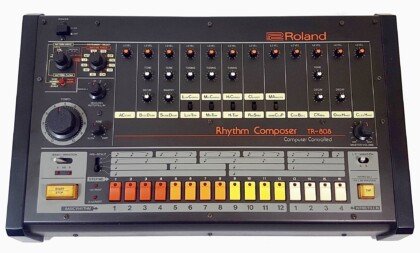
SubLab is built for one job: 808s that stay punchy on every speaker. Future Audio Workshop markets it directly at hip-hop and trap producers, and it ships with 250 factory kick and 808 samples pulled from hardware like the TR-808 and Jomox MBase 11, plus signature packs including one from Richie Souf, a producer known for work with Future, Young Thug and Gunna, according to Bedroom Producers Blog’s coverage of the plugin.
Its X-Sub oscillator is designed to hold consistent low-end weight across every note you play, which solves the classic trap problem of an 808 that loses power as it slides down the keyboard. Built-in distortion types (Darkdrive, Overdrive, Grunge, Tube) and an auto-sidechain compressor cover the layering and saturation techniques MusicRadar’s guide recommends for 808 clarity on small speakers.
Strengths:
- Purpose-built for hip-hop/trap sub bass, not a general synth stretched to fit
- Genre-specific signature sample packs included
- Frequently discounted, often well under list price
Limitations:
- One-trick plugin, it won’t cover melodies, pads or drum programming
- The base version is limited next to SubLab XL, which adds more oscillator and modulation options for a higher price
Pricing: $70 list, frequently discounted to $10-30 in promotions.
XO (XLN Audio)
XO exists to speed up drum programming, not to design new sounds. It ships with 8,700+ one-shot samples and 240+ editable beat presets, and it sorts everything by sonic similarity so you can audition hi-hats or 808s by ear instead of digging through folders, per XLN Audio’s product page.
For trap hi-hat rolls specifically, XO’s groove templates and Accentuator let you push a flat 16th-note pattern into the triplet buzzes and fills that MusicRadar’s trap guide describes as arpeggiator automation, but without programming MIDI by hand.
Strengths:
- Fastest way to build a full trap drum kit from scratch
- Massive sample library included at the base price
- One-click sample swapping keeps you experimenting instead of file-browsing
Limitations:
- It’s a sample player, not a synth: no way to design a bass tone that doesn’t already exist as a sample
- Full “XO Complete” with all expansions costs as much as a second DAW
Pricing: €149 list (frequently discounted around €89 in sales), XO Complete €459+ on promotion.
Vital
Vital is the plugin to start with if your budget is zero and you still want real wavetable synthesis. The free Basic tier includes the full synth engine with 75 presets and 25 wavetables, according to Vital’s official site, which is enough to build custom 808s and leads without spending anything.
Strengths:
- The free tier is a complete synth engine, not a stripped-down demo
- Spectral warping and audio-rate modulation put it close to Serum’s depth for sound design
- Paid tiers (Plus, Pro) stay cheap relative to Serum or Nexus if you outgrow the free preset count
Limitations:
- No dedicated trap or hip-hop content, factory presets skew toward EDM and general electronic sounds
- Programming from scratch has the same time cost as Serum, this isn’t a shortcut to a finished beat
Pricing: Free (Basic), paid Plus and Pro tiers with more presets and wavetables.
Pendora V3.0 (Tiger-Sounds)
Pendora V3.0 is a preset bank, not a synth, built specifically for trap, drill, dark trap, phonk, boom bap and pluggnb. It loads 275+ hand-crafted presets across 30+ categories, including 15+ dedicated 808 patches and 41+ synths, inside a VST3/AU plugin that runs in FL Studio, Ableton, Logic, Cubase, Pro Tools and Reason, per the Pendora product page. It currently holds a 4.7/5 rating from 59 verified buyer reviews.
Strengths:
- Genre-specific out of the box, no digging through general-purpose factory content
- One-time payment, no subscription, lifetime updates included
- Low CPU footprint, the maker states 30 instances can run on one beat without lag
Limitations:
- It’s a preset player: producers who want to design sounds from scratch should reach for Serum or Vital instead
- Smaller preset count than Nexus 5’s Starter library if raw volume of options matters most to you
Pricing: €149 (listed against a €499 reference price). A Pendora Lite edition with 30 presets is available at €29 for producers who want to test the sound before committing to the full bank.
How to choose the right trap VST for you
Match the plugin to the specific gap in your workflow rather than buying the biggest name first.
- Your 808s sound thin or lose power on the low notes: SubLab is built for exactly this, or program a custom sub in Serum or Vital if you want full control.
- You’re spending too long dragging hi-hat samples into the piano roll: XO turns that into a one-click, groove-templated process.
- You need a finished, genre-correct sound in under a minute: Pendora or Nexus 5’s Trap expansion get you there without programming anything.
- You want full control over your sound and don’t mind a learning curve: Serum on a real budget, Vital if the budget is zero.
- You’re buying your first plugin ever: start with Vital’s free tier or Pendora Lite before spending $200+ on Serum or Nexus.
Most working producers end up running a preset bank for speed, a dedicated 808 tool, and a drum sampler for hi-hats, together rather than any single plugin covering all three. Browse the full Tiger-Sounds shop for drum kits that pair with any of these.
FAQ
What’s the single most important plugin for trap 808s?
If you’re buying one plugin for 808s alone, SubLab is purpose-built for that job with sample content sourced from hip-hop producers. If you want full control over the tone instead of working from samples, Serum or Vital let you design the sub from scratch.
Do I need Nexus 5 or Serum for trap beats?
Neither is strictly required. Nexus 5 gets you to a finished, genre-correct sound faster because of its dedicated Trap and Hip Hop expansions. Serum takes longer but gives you a sound nobody else has, since you’re building it rather than loading a preset someone else also owns.
Can I make a full trap beat with only free plugins?
Yes. Vital’s free tier is a complete wavetable synth, and it covers 808s, leads and pads. You’ll still need a drum sampler or your DAW’s stock sampler for hi-hats and kicks, but the synthesis side doesn’t require spending anything.
Is Pendora a good fit for trap specifically, or is it more of a drill plugin?
Pendora covers both. Its 275+ presets are split across trap, drill, dark trap, phonk, boom bap and pluggnb categories rather than being drill-only, so the trap-specific 808 and synth categories are a real subset of the bank, not an afterthought.
What’s the difference between a preset bank like Pendora and a synth like Serum?
A preset bank loads a finished sound you can tweak but didn’t build. A synth like Serum gives you the raw engine to design a sound from nothing. Preset banks win on speed, synths win on originality and long-term flexibility.
The bottom line
There’s no single “best” trap VST, the right pick depends on whether you’re missing 808 punch, drum programming speed, or a finished melodic sound. SubLab and XO solve narrow, specific problems well. Serum and Vital reward the time investment with fully custom sounds. Nexus 5 and Pendora get you to a genre-correct result the fastest, at different price points and preset counts. If speed and a trap-specific starting point matter most, check the Pendora V3.0 product page or start smaller with Pendora Lite. For drill-leaning production specifically, see our best drill VST plugins guide.
How to Choose the Best Presets for FL Studio in 2026
Summary: Presets for FL Studio are saved instrument and effect settings that give you a finished starting point for a sound. The best ones match your genre, stay light on CPU, and help you avoid the recycled tones heard in countless tracks. Choosing carefully protects both your workflow and your originality.
Roughly two thirds of active producers now build music at home rather than in a commercial studio, and most of them lean on presets to move faster. A preset is simply a stored configuration inside a synth or effect, ready to load and play. When they fit your style, presets for FL Studio remove hours of tedious sound design. When they do not, they leave your beats sounding like everyone else’s. If you want mixing shortcuts too, our FL Studio mixer presets address that side of the workflow.
The market has grown quickly, and so has the volume of generic packs flooding download stores. According to market research, the music production software market was valued at USD 1.63 billion in 2026. That scale explains why so many beatmakers hear their own sounds inside other people’s songs. The real skill is not finding presets, but choosing the right ones.
What a preset actually does inside FL Studio
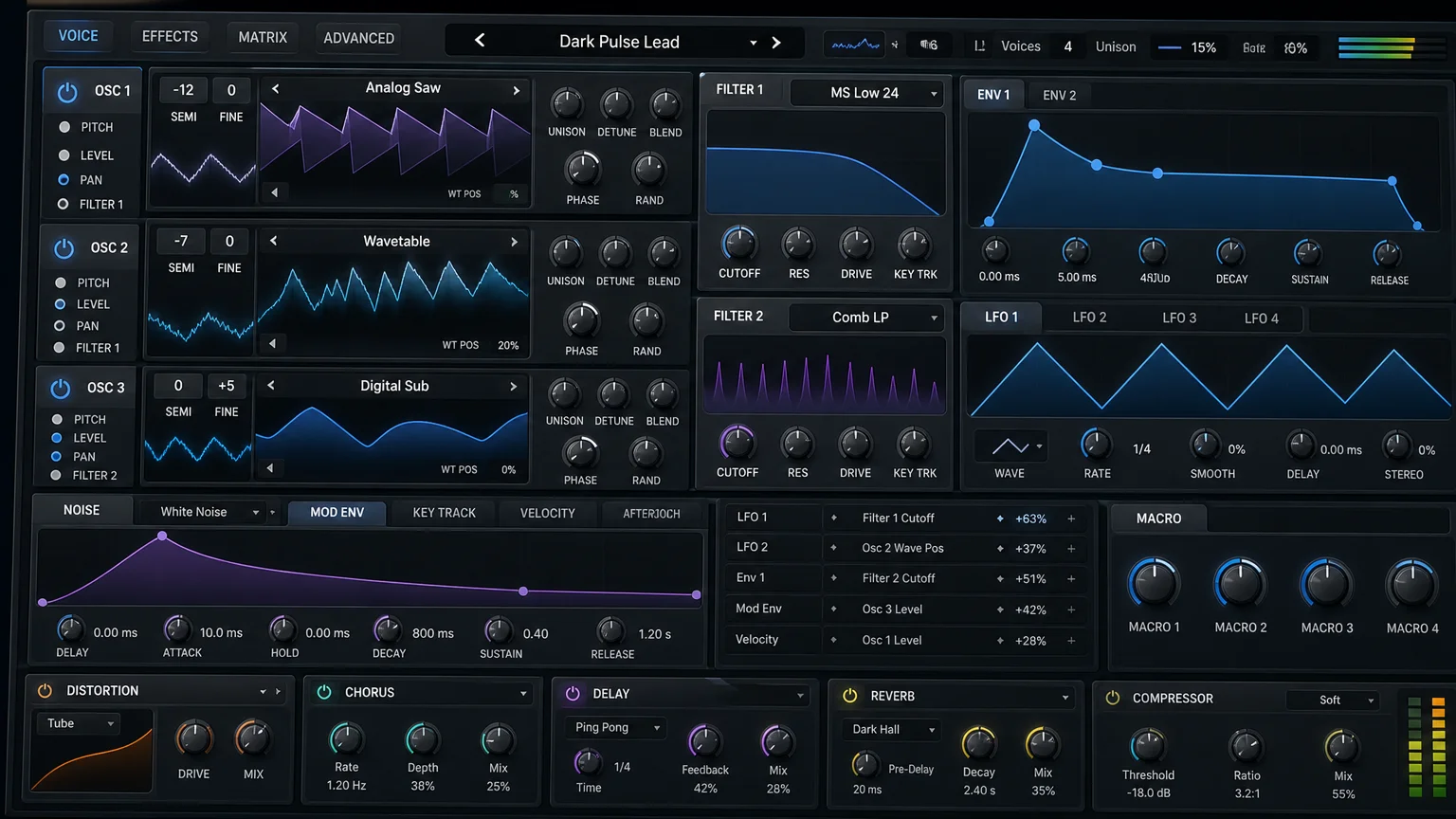
Many beginners type the phrase preset fl studio into a search bar hoping for a shortcut to a professional result. A preset does deliver a shortcut, but only a partial one. It loads a specific arrangement of oscillators, filters, envelopes, and effects into a plugin such as Serum, Vital, or a native FL Studio instrument. You still shape the melody, the arrangement, and the mix yourself.
Think of a preset as a well-designed starting canvas rather than a finished painting. A patch built for trap leads will behave very differently from one built for phonk cowbells or boom bap keys. Understanding the underlying engine, whether Kontakt, Omnisphere, or a stock synth, lets you tweak a preset instead of accepting it as it is. That single habit separates producers who blend in from those who develop a signature.
The market context behind the flood of packs
Why does every second beat seem to use the same lead? Because a handful of massive generic libraries dominate distribution, and thousands of producers pull from the same well. The genre mix matters here. According to Coherent Market Insights, the electronic dance music segment is expected to account for 42 percent of the global music production software market share in 2026, which concentrates demand around a narrow set of popular sounds.
This concentration is exactly the problem a boutique approach solves. Hand-crafted presets, designed for specific styles such as drill, dark trap, or pluggnb, give you tones that most of your peers have never loaded. Our own Pendora bank was built around that idea, offering 275 plus studio-ready presets that were never licensed, generated, or recycled. When your source material is uncommon, your output stands apart by default.
Compatibility and CPU load: the practical traps
A preset is worthless if it stutters your session or fails to open. Technical friction is more common than most producers admit. According to industry data, nearly 56 percent of producers report issues with plugin compatibility across systems, and about half face performance problems tied to configuration limits.
Two checks protect your workflow. First, confirm the format. FL Studio on Windows and Mac reads VST3 and, on macOS, AU, so a preset library should target those standards. Second, watch the CPU cost, because dense reverbs and heavy unison patches can choke a project long before the arrangement is finished. Presets positioned as light on CPU let you stack more layers without freezing tracks. If you are still deciding on an instrument, our guide to the best synth for FL Studio compares the common engines.
Matching presets to your genre and beating creative block
Picture opening a session with no idea where to start. A curated preset that already sounds like your genre can break that stall in seconds. This is where fit outperforms quantity. A thousand random patches help less than thirty patches that speak your style, whether that is melodic trap, R&B, lofi, or phonk.
Genre-specific banks also fight repetition. Because they offer sounds that the wider crowd is not using, they help you overcome beatblock without pushing you toward the same three chord stabs everyone recognizes. That is the logic behind Pendora and its sister bank Pegasus by Cosmos Instruments, which cover adjacent territory for producers who want a distinct palette rather than the default one.
Comparing your preset options honestly
Not every source serves the same purpose. Free packs, subscription libraries, and boutique banks each carry trade-offs in originality, licensing, and long-term cost. The table below sets our Pendora bank against the broad categories so you can weigh them against your own priorities.
| Option | Originality | Licensing | Cost model | CPU focus |
|---|---|---|---|---|
| Pendora (ours) | Hand-crafted, not recycled | Royalty-free, commercial use | Pay once, lifetime updates | Light on CPU |
| Large generic libraries | Widely reused | Varies by pack | Often subscription | Inconsistent |
| Free preset bundles | Heavily shared | Often restricted | Free | Unverified |
Free bundles are a reasonable way to test whether a sound suits you, but they rarely stay exclusive and often carry vague usage terms. That is why our entry option, Pendora Lite, provides 30 hand-picked presets so you can judge the vibe before committing to the full bank.
Where mixing and mastering presets fit in
Sound selection is only half the chain. The professional segment, which values stability and high-fidelity processing, is expected to grow strongly according to Technavio, and that group treats mixing and mastering as part of the preset conversation. A great lead still needs a clean bus and a controlled master to translate across systems.
This is where dedicated processing chains save time. Rather than rebuilding a compressor and limiter setup on every session, you can load a proven configuration and adjust from there. For the final stage, our FL Studio master presets give you a repeatable loudness and tonal reference, so the polish stays consistent across an entire project.
Choosing presets that keep you original
The value of presets for FL Studio lies in fit, not volume. Confirm the format works with your system, respect the CPU budget, and favor hand-crafted, royalty-free sounds over libraries the whole internet already owns. Test with a small pack, keep what serves your genre, and always shape a preset rather than accepting it untouched. Handled this way, presets accelerate your beatmaking while protecting the one thing that matters most, your distinct sound.
Take action with Tiger-Sounds
If you are tired of loading the same patches heard in every other track, the fix is a bank built for producers who refuse to blend in. Pendora was hand-crafted across trap, drill, dark trap, phonk, boom bap, and pluggnb, with no filler patches and full commercial clearance.
You pay once and keep your presets forever, with royalty-free use and a library that stays light on CPU. Explore how our sounds pair with the best VST plugins for FL Studio and start building beats that carry your signature instead of someone else’s.
Frequently Asked Questions
Do FL Studio presets work with other DAWs?
Presets tied to a specific plugin, such as Serum or Vital, will load in any DAW that hosts that plugin, including Ableton and Logic Pro. Presets tied to FL Studio’s native instruments generally stay within FL Studio. Always check which plugin the preset targets before buying.
Are preset packs royalty-free for commercial releases?
It depends entirely on the license, and terms vary widely between providers. Our Pendora presets are royalty-free with commercial use allowed, so you may release beats made with them. Read the license of any pack before you distribute your music.
How many presets do I actually need?
Quality of fit matters far more than raw quantity. A focused set of thirty presets that match your genre often outperforms thousands of random patches. Start small, learn each sound, and expand only when you hit a genuine gap.
Will presets slow down my FL Studio projects?
Heavy patches with dense effects can raise CPU load and cause stutters in large sessions. Presets designed to stay light on CPU reduce that risk considerably. You can also freeze or render tracks to free up processing headroom.
Can presets make my beats sound generic?
They can if you use widely shared libraries without editing them. Choosing hand-crafted, less common presets and then adjusting oscillators, filters, and effects keeps your sound distinct. The preset is a starting point, not the finished result.

Best Drill VST Plugins in 2026
The best drill VST plugin depends on what you’re missing right now. If your melodies sound thin, a deep synth like Serum 2 or Omnisphere 3 gives you sliding 808s and dark, evolving bells. If your drums sound flat, a drum tool like XLN Audio XO speeds up programming. If you want drill-ready sounds without building anything from scratch, a preset bank built for the genre, like Pendora V3.0, gets you there in minutes. Most working producers run two of these together rather than one plugin that does everything.
- How we picked these plugins
- Comparison table
- Serum 2
- Omnisphere 3
- Nexus 5
- Vital
- XLN Audio XO
- Pendora V3.0
- How to choose
- FAQ
How we picked these plugins
Drill leans on a specific sound palette: sliding 808s with 80 to 120 millisecond glide between notes, sparse minor-key bells and plucks, and drum patterns built around hi-hat rolls and off-beat kicks. Every plugin on this list was chosen because it solves one of those three problems directly, not because it’s a generic “good synth.” We excluded plugins with no public pricing page and anything marketed as a general-purpose instrument with no drill-relevant feature (glide, dark preset content, or drum programming tools).
Drill VST plugins compared
| Plugin | Type | Price | Best for |
|---|---|---|---|
| Serum 2 | Wavetable synth | $249 | Custom sliding 808s and bass design |
| Omnisphere 3 | Synth workstation | $499 | Dark, evolving bells and pads |
| Nexus 5 | Preset-based rompler | From €179 (Starter) | Huge preset library across genres |
| Vital | Wavetable synth | Free, Plus/Pro one-time from paid tiers | Budget sound design with visual feedback |
| XLN Audio XO | Drum sample plugin | €149 (frequently on sale) | Fast drum programming from your own one-shots |
| Pendora V3.0 | Trap and drill preset bank | €149 | Drill-ready presets out of the box, no sound design |
Prices verified directly from each vendor’s site in August 2026. Nexus and XO run frequent sales; check the current price before buying.
Serum 2 (Xfer Records)
Serum 2 is the wavetable synth most drill producers reach for when they want a custom sliding 808 rather than a pre-made one. It’s a hybrid synth where each of its three oscillators can run as wavetable, sample, multisample, granular or spectral, alongside two filters, a modular FX rack, 10 LFOs and a built-in arpeggiator and sequencer, per Xfer’s official product page.
Strengths: full control over glide time and curve for 808 slides, deep enough to design bells and plucks from scratch, huge third-party preset ecosystem for trap and drill specifically.
Limitations: no drill-specific presets out of the box, you’re building sounds rather than loading them. Bedroom Producers Blog covered the Serum 2 release and noted it’s a from-scratch design tool first, a preset browser second.
Pricing: $249 at full price; existing Serum 1 owners get Serum 2 as a free upgrade, per Xfer Records’ official page.
Omnisphere 3 (Spectrasonics)
Omnisphere 3 is the go-to for the eerie, layered bells and ambient pads that sit under a drill melody. It ships with 18 sound libraries, over 600 DSP waveforms with morphing wavetables, granular and frequency-shifting synthesis, and deep-sampled sources like celestaphone and metallophone that make the kind of cold, metallic textures drill producers chase.
Strengths: unmatched depth for atmospheric, evolving textures, a “Live Mode” for layering multiple patches into one sound, and a strong hardware controller integration list for producers who work with MIDI keyboards.
Limitations: it’s the most expensive plugin on this list and has a real learning curve. Most of its 18 included libraries are cinematic and orchestral, not drill-specific, so you’ll spend time digging for the right patch. Sound on Sound’s coverage of the Omnisphere 3 release describes it as a workstation-scale instrument rather than a quick-preset tool.
Pricing: $499, with a $199 upgrade price for existing Omnisphere or Atmosphere owners.
Nexus 5 (reFX)
Nexus 5 trades sound design depth for preset volume. The Starter edition ships with 5,454 presets and 47 GB of samples across eight synthesis engines (virtual analog, sampler, wavetable, FM and grain among them), with studio effects like bucket brigade delay and particle reverb built in.
Strengths: load a sound and go, huge catalog covering hip hop and trap alongside EDM and house, low CPU load for stacking multiple instances.
Limitations: drill is one small slice of a catalog built for many genres, so expect to filter through a lot of non-drill content. The Complete edition with all 206 expansions runs €1,999, which is out of reach for most bedroom producers.
Pricing: Starter edition €179 (list price €249), Complete edition €1,999, per reFX’s official pricing page.
Vital
Vital is the free entry point into wavetable synthesis, and the closest thing to Serum’s workflow without the upfront cost. The free tier includes 75 presets and 25 wavetables; the paid Plus and Pro tiers add more content and unlock features like text-to-wavetable conversion, sold as one-time purchases rather than a forced subscription.
Strengths: genuinely capable free tier, real-time spectral visualization that makes wavetable editing easier to learn than Serum’s, custom LFO shapes and MPE support.
Limitations: the free tier’s preset count is thin for genre-specific work, and like Serum, nothing here is drill-specific out of the box. You’re still designing sounds, not loading them.
Pricing: free (Basic), with Plus and Pro one-time tiers plus an optional subscription for exclusive content, per Vital’s official site.
XLN Audio XO
XO solves the drum side of drill production: hi-hat rolls, off-beat kicks and the constant sample-swapping that drum programming demands. It ships with 8,700-plus one-shot samples and 240-plus editable beat presets, and organizes your own one-shot library visually by sonic similarity instead of folders.
Strengths: instant one-click sample swapping, groove templates and pattern nudging for the swing drill hi-hats need, drag-and-drop export as audio, MIDI or full kits.
Limitations: it’s a drum arranger, not a melodic instrument. You’ll still need something for bells, plucks and 808s.
Pricing: €149 standard, frequently discounted; a bundle with four expansions runs €189 at list price, per XLN Audio’s official page. For deeper drum programming background, see our guide to the best drum machine VSTs.
Pendora V3.0 (Tiger-Sounds)
Pendora V3.0 is a preset-based VST built specifically for trap, drill, dark trap and phonk, which makes it the fastest way to get a drill-appropriate sound without touching a synthesis engine. It ships with 275-plus presets across 30-plus categories, including 33-plus bell presets and 15-plus 808 presets, and is optimized to run 30-plus instances without CPU strain.
Strengths: genre-specific out of the box (you won’t dig through house or orchestral content to find a drill bell), one-time payment with lifetime updates, works across FL Studio, Ableton, Logic, Cubase, Pro Tools and Reason as VST3/AU. It holds a 4.7 out of 5 rating from 59 verified buyer reviews on the Pendora product page.
Limitations: it’s a preset instrument, not a sound design tool. If you want to build a fully custom 808 slide from a raw waveform, you’ll still want Serum or Vital alongside it. A cheaper Pendora Lite version at €29 offers 30 hand-picked presets for producers who want to try the sound before committing to the full library.
Pricing: €149 for the full V3.0 bundle (3 expansion packs, a producer kit, 2 drum kits and an FX pack included), €29 for the Lite edition.
How to choose the right drill VST for you
Match the plugin to the gap in your current setup, not to what’s popular. Ask these four questions:
- Do your 808s already slide smoothly? If not, Serum 2 or Vital gives you glide control; Pendora’s 808 presets are pre-designed and won’t need extra shaping.
- Do your melodies sound generic? Omnisphere 3 is the deepest option for original, layered bells and pads; Pendora’s bell category gets you a drill-appropriate sound faster if originality matters less than speed.
- Are your drums the weak point? XLN Audio XO is built for exactly that; none of the synths above touch drum programming.
- What’s your budget? Vital’s free tier and Pendora Lite at €29 are the two realistic entry points; Omnisphere at $499 and Nexus Complete at €1,999 are investments for producers already earning from beats.
Most drill producers we’ve seen referenced across niche production guides run a preset layer for speed (Pendora, Nexus) alongside one deep synth for the moments a preset doesn’t cut it (Serum, Omnisphere, Vital). Check our roundup of VST plugins for FL Studio if you’re building a full workflow rather than one instrument at a time.
FAQ
Is Serum good for drill beats?
Yes. Serum 2’s glide and portamento controls make it one of the more precise tools for shaping sliding 808 basslines, which is a defining element of drill production. It requires more manual sound design than a preset bank does.
Do I need an expensive synth to make drill beats?
No. Vital’s free tier and Pendora Lite at €29 both give you usable drill-appropriate sounds without a large upfront cost. Expensive tools like Omnisphere add depth and originality, not a baseline requirement.
What plugin gives the darkest bell sounds for UK drill?
Omnisphere 3’s deep-sampled and granular sources produce the most original dark, metallic bell textures, but they take time to design. Pendora’s bell category (33-plus presets) is built specifically for trap and drill and is ready to load without editing.
Can I make a full drill beat with just one VST?
Technically yes with Omnisphere or Nexus, since both cover melody and some drum content, but most producers pair a melodic instrument with a dedicated drum tool like XLN Audio XO for better results on the hi-hat and kick programming drill relies on.
The bottom line
There’s no single best drill VST, only the best one for the gap in your current setup. Serum 2 and Vital cover custom sound design, Omnisphere 3 covers depth and originality, XLN Audio XO covers drum programming, and Pendora V3.0 covers speed with genre-specific presets ready to load. If you’re starting from zero and want drill and trap sounds without a synthesis learning curve, browse the Pendora VST product page or the full Tiger-Sounds shop for drum kits and expansions.
Pendora VST vs Cymatics PANDORA
Quick answer: these are two completely different plugins from two different companies, and the near-identical names cause real confusion. Pendora VST (Tiger-Sounds, released 2020) is a boutique preset instrument built specifically for trap, drill, dark trap, phonk, plugg and boom bap. Cymatics PANDORA (released November 26, 2025) is a free-to-download, sample-based workstation instrument aimed at every genre, with paid expansion libraries on top. If you make dark, melodic trap and drill beats and want one deep, focused toolkit for a one-time price, Pendora is built for you. If you produce across many genres and want a free entry point into a large ecosystem, Cymatics PANDORA is the better starting move.
First, clear the name confusion
You searched “pendora vst” or “pandora vst” and landed on two products that sound like the same thing. They are not.
- Pendora VST is made by Tiger-Sounds, a boutique sound design company selling it since 2020.
- Cymatics PANDORA is made by Cymatics.fm, one of the biggest sample companies in the game, and launched on November 26, 2025, five years after Pendora, as part of their Black Friday campaign (Bedroom Producers Blog covered the launch).
Two unrelated products, two companies, one letter apart. This page compares them fact by fact so you can pick the right one for your workflow.
Comparison table
| Criterion | Pendora VST (Tiger-Sounds) | Cymatics PANDORA |
|---|---|---|
| Released | 2020 | November 26, 2025 |
| Base price | Lite: 29€, one-time. Full V3.0: 149€, one-time | Free download (requires name, email and phone signup) |
| Full library cost | 149€ gets all 275+ presets, 3 expansion packs (120+ presets), 100+ MIDI files, 7 mix presets | Expansion libraries sold separately, listed at $35 to $100 each (12 libraries in the Production Suite) |
| Presets in base version | 275+ across 30+ categories (V3.0) | Not published for the free plugin (“evolving library of preset sounds”) |
| Genre focus | Trap, drill, dark trap, phonk, plugg, boom bap | Generalist: Vintage, RnB, Trap, Electronic, Analog, Live Instruments |
| Sound engine | Preset-based instrument | Sample-based instrument with macro-style controls |
| Built-in FX | 7 mix presets included; per-preset processing | Chorus, Tone, Wobble, Gate, Reverb, Delay, Width and more |
| Formats and OS | VST3 + AU, Windows 64-bit, macOS (Apple Silicon + Intel native) | VST3 + AU, Windows and macOS |
| CPU footprint (published) | 12 instances: roughly 500 MB RAM and 10% CPU on an i5-8400 | Not published |
| Reviews | 4.7/5 from 59 verified buyers | 291 reviews, 81% five-star |
| License | Royalty-free, one-time payment, lifetime updates | Samples 100% royalty-free; library updates over time |
| Top tier | Pendora Unique: 500€ | PANDORA Master Collection, limited to 1,000 buyers |
Prices and facts verified on August 22, 2026 from tiger-sounds.com, cymatics.fm and the Cymatics Production Suite page. Where a company does not publish a number, the cell says “not published” instead of a guess.
What Pendora VST does better
Depth in one lane instead of width across ten. Pendora’s entire 275+ preset library is built for dark, melodic beats: 33+ bells, 32+ plucks, 47+ pads, 41+ synths, 26+ flutes, 23+ basses, 15+ 808s, plus keys, choirs, brass and guitars, all voiced for trap, drill, phonk and plugg. You are not scrolling past lofi jazz keys to find a drill bell. Every category exists because it shows up in this style of production.
Transparent one-time pricing. 29€ for Lite, 149€ for the complete V3.0 with all expansions, MIDI and mix presets included. No email-and-phone funnel to download, no separate $35 to $100 libraries to complete the collection later. You know the total cost before you click buy.
Published CPU numbers. Tiger-Sounds publishes a concrete benchmark: 12 instances running around 500 MB RAM and 10% CPU on an i5-8400, and the plugin is built to stack 30 instances on one beat. If you produce on a mid-range laptop in FL Studio, that number matters more than any marketing line. Cymatics does not publish an equivalent figure, which does not mean PANDORA is heavy, it means you cannot check before installing.
Six years of track record on this exact product. Pendora has been sold, updated and reviewed since 2020, with 59 verified buyer reviews at 4.7/5 and lifetime updates covering new OS versions and formats, including native Apple Silicon.
What Cymatics PANDORA does better
Price of entry. The base PANDORA plugin is a free download. Nothing beats free for testing whether a workflow clicks. You trade your name, email and phone number for it, but there is no invoice.
Genre breadth. PANDORA is built to cover Vintage, RnB, Trap, Electronic, Analog and Live Instrument sounds. If your catalog jumps from drill to R&B to pop in the same week, PANDORA’s range fits that reality better than a trap-focused instrument.
Community size and review volume. Cymatics is one of the largest sample brands in music production, and PANDORA already shows 291 reviews with 81% five-star ratings. That is a bigger feedback pool than Pendora’s 59 reviews, and a bigger ecosystem of tutorials and content around the brand. No point pretending otherwise: on sheer audience size, Cymatics wins.
A stated FX panel on the tin. Cymatics lists PANDORA’s macro FX up front: Chorus, Tone, Wobble, Gate, Reverb, Delay, Width. If you want quick sound-shaping knobs inside one preset player, that panel is clearly documented.
Which one should you choose
- Choose Pendora VST if: you make trap, drill, dark trap, phonk, plugg or boom bap as your main lane; you want the full library for one payment of 149€ with nothing sold separately afterwards; you run a mid-range machine and need predictable CPU load across 10+ instances.
- Choose Cymatics PANDORA if: you produce across many genres and need vintage keys, R&B pads and live-instrument textures in one place; you want to start at zero cost and buy expansion libraries only for the styles you actually use; you are already inside the Cymatics ecosystem and want your presets under one roof.
- Choose neither if: you want to design patches from scratch with full synthesis control (oscillators, wavetables, modulation routing). Both are preset-driven instruments. Look at a full synthesizer like Serum or Vital instead, and use these as your melodic preset layer on top.
Where Pendora falls short
Honesty cuts both ways, so here is where our own plugin loses:
- It is niche by design. If you need convincing R&B keys, vintage soul textures or broad electronic sounds, Pendora’s trap and drill focus works against you. That is the trade for depth.
- Entry is paid. The cheapest way in is 29€ for Lite. There is no free tier to demo the full workflow the way Cymatics offers.
- Smaller community. 59 verified reviews and 500+ producers is a boutique user base. You will find fewer YouTube tutorials about Pendora than about anything Cymatics ships.
We would rather you read that here than discover it after checkout.
Can you use both?
Yes, and plenty of producers should. They load side by side as VST3 or AU in FL Studio, Ableton, Logic and any modern DAW. A realistic setup: PANDORA free as your broad palette for genre experiments, Pendora V3.0 as your dedicated engine when the placement calls for dark trap or drill. They compete on your SERP, not in your DAW.
How we compared
This comparison was written by Valentin Cordier, founder of Tiger-Sounds on August 22, 2026. Yes, we make Pendora, which is exactly why every claim about Cymatics PANDORA comes from Cymatics’ own public pages (product page, Production Suite overview) or independent press (Bedroom Producers Blog, November 2025), and every claim about Pendora from our own product page. Where Cymatics does not publish a spec, the table says “not published”. We re-verify prices and features quarterly; if you spot something outdated, tell us and we will fix the row.
FAQ
Are Pendora VST and Cymatics PANDORA the same plugin?
No. Pendora VST is a Tiger-Sounds instrument sold since 2020, focused on trap and drill. Cymatics PANDORA is a separate, unrelated plugin released by Cymatics.fm on November 26, 2025. The names are one letter apart, the products share nothing.
Which came first, Pendora or PANDORA?
Pendora VST launched in 2020. Cymatics PANDORA launched in November 2025, five years later. Both facts are verifiable from each company’s own pages and press coverage of the Cymatics launch.
Is Cymatics PANDORA actually free?
The base plugin is a free download in exchange for your name, email and phone number. The 12 expansion libraries in the Production Suite are paid, listed between $35 and $100 each at the time of verification. Free entry, paid depth.
Is Cymatics PANDORA better than Pendora VST?
For multi-genre producers who want a free start, yes, PANDORA is the better pick. For trap, drill and phonk producers who want a deep, focused library with transparent one-time pricing and published CPU benchmarks, Pendora is the stronger tool. Neither is “better” outside a use case, which is why the verdict above routes by situation.
Why is Pendora 149€ when PANDORA is free?
Different business models. Cymatics monetizes through its ecosystem: the free plugin feeds paid expansion libraries at $35 to $100 each. Tiger-Sounds sells one complete product once: 149€ includes all 275+ presets, three expansion packs, 100+ MIDI files and lifetime updates, with nothing else to buy.
Does Pendora work in FL Studio on Windows?
Yes. Pendora runs as VST3 on Windows 64-bit and as VST3/AU on macOS, natively on Apple Silicon and Intel. Tested in FL Studio, Ableton Live, Logic Pro, Cubase, Pro Tools and Reason.
Verdict, repeated for the reader who scrolled: Pendora VST for trap, drill and phonk producers who want depth and one-time pricing. Cymatics PANDORA for multi-genre producers who want a free, broad starting point. Two different plugins, despite the name.
Try Pendora VST from 29€, one-time payment, royalty-free, lifetime updates.
How to Use FL Studio Mixer Presets for Faster Beat Mixing
Summary: Mixer presets are saved channel strips that store effect chains, processing, and settings you can drag onto any track in FL Studio. They accelerate mixing, teach effect behavior, and help you reach a cleaner, more consistent sound. Used well, they give producers a repeatable starting point across genres without rebuilding every chain from scratch.
Home studios now power a large share of released music, and mixing speed separates finished tracks from unfinished ideas. A saved channel strip can compress hours of trial and error into a single drag-and-drop. This is exactly why FL Studio mixer presets have become a staple for beatmakers who want clean results fast. If you want a reliable foundation, our FL Studio plugin presets and chains give you studio-ready starting points.
The demand is not marginal. According to a DAW market report, the global number of DAW users surpassed 7 million by 2024, a 24% increase from 2022. As more producers enter the field, the pressure to mix quickly and stand out grows with every upload.
What Mixer Presets Actually Are in FL Studio
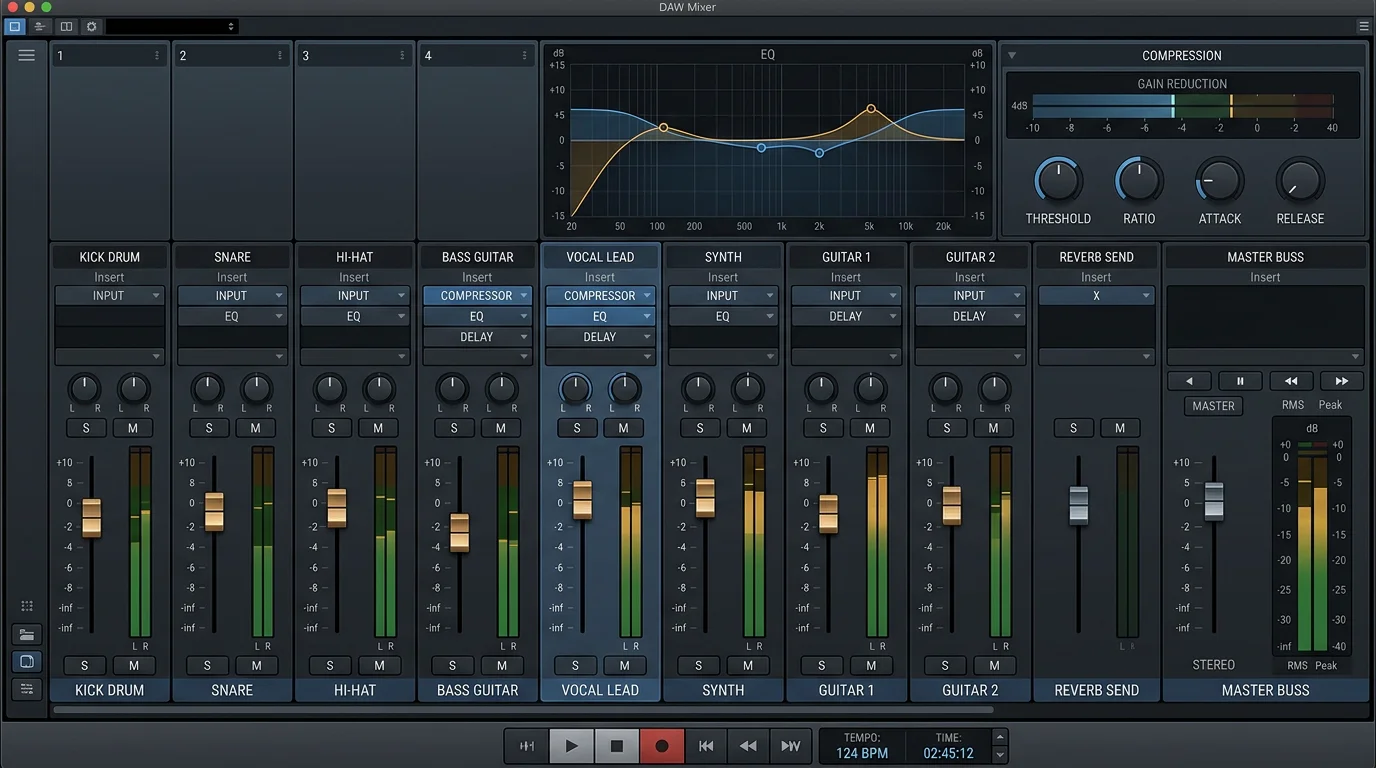
A mixer preset is a saved snapshot of a mixer track. It stores the full effect chain, the order of plugins, and every parameter inside them. When you load it onto a channel, you inherit that processing instantly, from EQ curves to compression, saturation, and spatial effects.
In practice, these saved channel strips are stored as small files you drag onto any mixer track. They are lightweight because they reference plugins rather than audio. Many packs are built entirely with stock effects, so you do not need third-party plugins to hear them work.
The concept scales across your session. You can prepare a chain for your 808, a separate one for snares, and another for melodic layers, then recall each in seconds. If you want to expand beyond mixing into sound design, our best VST plugins for FL Studio pair naturally with these workflows.
Why Presets Speed Up Beatmaking
Consider a common scenario. You have a raw 808 that sits behind the kick and lacks weight. Rebuilding a full chain of EQ, saturation, and compression from memory can take twenty minutes. A tested channel strip delivers that treatment in one drop, so you stay in the creative flow.
Speed matters because the market rewards output. According to a 2026 industry report, the DAW software market is set to grow from $2.92 billion in 2025 to $3.17 billion in 2026. More producers means more competition, and a faster mixing workflow gives you room to release consistently.
There is a learning benefit too. When you open a preset and study its plugin order, you see how experienced engineers stack processing. This reverse-engineering teaches you what each effect does and why it sits where it does in the chain.
Stock Effects Versus VST Chains
Should you rely on stock FL Studio effects or third-party plugins? Both approaches have merit, and the right choice depends on your goals. Stock chains built on Fruity Parametric EQ 2, Fruity Compressor, and Soundgoodizer are portable and open on any FL Studio installation without extra downloads.
Third-party chains built on tools like Serum, Vital, Omnisphere, or Kontakt can add character that stock plugins do not reach. The tradeoff is dependency: a preset built around a VST only works if the recipient owns that plugin. For clean corrective work, our FL Studio EQ for mixing presets keep the process transparent and repeatable.
A preset is a starting point, not a finish line. Your ears and your source material still decide the final balance.
Choosing Presets That Keep Your Sound Distinct
The biggest risk with any preset library is uniformity. If thousands of producers load the same free chains on the same recycled samples, beats begin to blend together. The value of a curated bank is that it gives you sounds and treatments that most of your peers are not using.
This is where a boutique approach matters. Our Pendora sound bank offers hand-crafted presets across melodic trap, drill, R&B, pluggnb, dark trap, Lofi, and phonk, designed to help you overcome beatblock with fresh material. There are no filler presets, so every option earns its place in your session.
For genre context, electronic styles dominate demand. According to a 2026 market analysis, the Electronic Dance Music segment is expected to account for 42% of the global music production software market share this year. Curated, genre-aware presets help you meet that demand without sounding generic.
How to Compare Preset Options
Not all preset packs serve the same purpose. Some are free introductions, some are stock-only utility packs, and some are full sound banks built for original production. The table below compares typical options against our own offering, so you can match the right resource to your workflow.
| Option | Scope | Genres covered | Best for |
|---|---|---|---|
| Pendora (our sound bank) | 275+ hand-crafted studio-ready presets, royalty-free, light on CPU | Trap, drill, dark trap, phonk, boom bap, pluggnb, R&B, Lofi | Producers building original beats who do not want to blend in |
| Free intro packs | Small stock-only sample of chains | General drums and melodies | Testing the concept before committing |
| Stock utility packs | Chains built on native effects only | General mixing tasks | Learning what stock plugins do |
When comparing, weigh three things: the breadth of genres, whether the presets are hand-crafted or recycled, and licensing. Royalty-free presets with commercial use let you release and monetize without added friction.
Building Your Own Preset Library
Once you understand how presets behave, you can start saving your own. When you land a mix you like, save that mixer track as a preset and name it clearly by role, such as “808 hard clip” or “vocal air chain.” A well-labeled library becomes a personal toolkit you rebuild sessions from.
Organize by function first, then by genre. Keep drum chains, bass chains, and melodic chains in separate folders so recall stays fast under deadline. Over time, your saved chains will reflect your signature sound, which is the goal that generic packs cannot deliver.
Bringing It Together
Well-chosen FL Studio mixer presets are less about shortcuts and more about consistency and momentum. They give you a tested foundation, teach you how professional chains are built, and free your attention for the creative decisions that matter. The producers who benefit most treat presets as adjustable starting points, tweak them by ear, and curate a library that keeps their sound recognizable rather than interchangeable. Start with quality material, study what each chain does, and build outward from there.
Take action with Tiger-Sounds
If you are ready to move past recycled chains and generic packs, the next step is a bank of hand-crafted sounds built for producers who refuse to blend in. Fresh presets across trap, drill, phonk, and more help you break beatblock and keep every release distinct.
Pendora gives you 275+ studio-ready presets, royalty-free with commercial use, light on CPU, and yours with a single purchase. Explore our Pendora master presets for FL Studio and choose the edition that fits your workflow, from Lite to the full sound bank.
Frequently Asked Questions
Do FL Studio mixer presets require third-party plugins?
It depends on how the preset was built. Chains made with stock effects work on any FL Studio installation without extra downloads. Presets built around VST plugins such as Serum or Vital only work if you own those plugins.
Which FL Studio version do I need for mixer presets?
Most mixer preset files require a reasonably current version of FL Studio to load correctly. Stock-effect presets generally need version 12 or higher. Always check the pack requirements before purchasing to avoid compatibility issues.
Are mixer presets suitable for beginners?
Yes, they are particularly helpful for beginners. Loading a finished chain and studying its plugin order teaches you how professional processing is structured. You learn faster by adjusting a working chain than by starting from a blank strip.
Will using presets make my beats sound like everyone else?
Only if you use the same widely shared free chains as everyone else. A curated, hand-crafted bank such as our Pendora sound bank gives you material most producers are not using. Combined with your own tweaks, that keeps your sound distinct.
Can I use preset-based mixes commercially?
That depends on the license attached to the pack. Royalty-free presets with commercial use, like ours, let you release and monetize your tracks without added restrictions. Always confirm the licensing terms before distribution.
FL Studio Master Presets: Build a Cleaner Mastering Chain
Summary: A master preset is a saved chain of processors on the FL Studio master bus that shapes loudness, tone, and dynamics in one drop. It accelerates finishing, but it never replaces a clean mix or strong source sounds. Treat presets as a starting point, then adjust to your track and to current streaming loudness targets.
A drag-and-drop preset can add polish in seconds, yet the finished sound still depends on what you feed it. Many producers reach for master presets in FL Studio hoping to close the gap between a bedroom demo and a competitive release, and the right chain genuinely helps. The problem starts when a preset masks a weak mix instead of enhancing a strong one. To set up quickly, you can follow our walkthrough on how to install presets packs before you commit to any workflow.
Context matters more than ever, because listening habits have shifted. According to a 2026 mastering guide, 82% of listeners consume music via mobile devices or earbuds, which means your master must translate on tiny speakers as well as a club system. A preset that only sounds good on studio monitors is not finished. Understanding that constraint changes how you build and judge every chain.
What master presets actually do on the master bus
Producers searching for fl studio master presets usually want one thing: a repeatable finishing chain that makes a beat sound loud, balanced, and ready to upload. In practice, a preset stores a sequence of native or third-party plugins on Insert 0, the master track, with their parameters saved. A 2026 FL Studio guide notes that mastering happens on the Master Mixer insert, where you build a processing chain that shapes the overall sound of your beat.
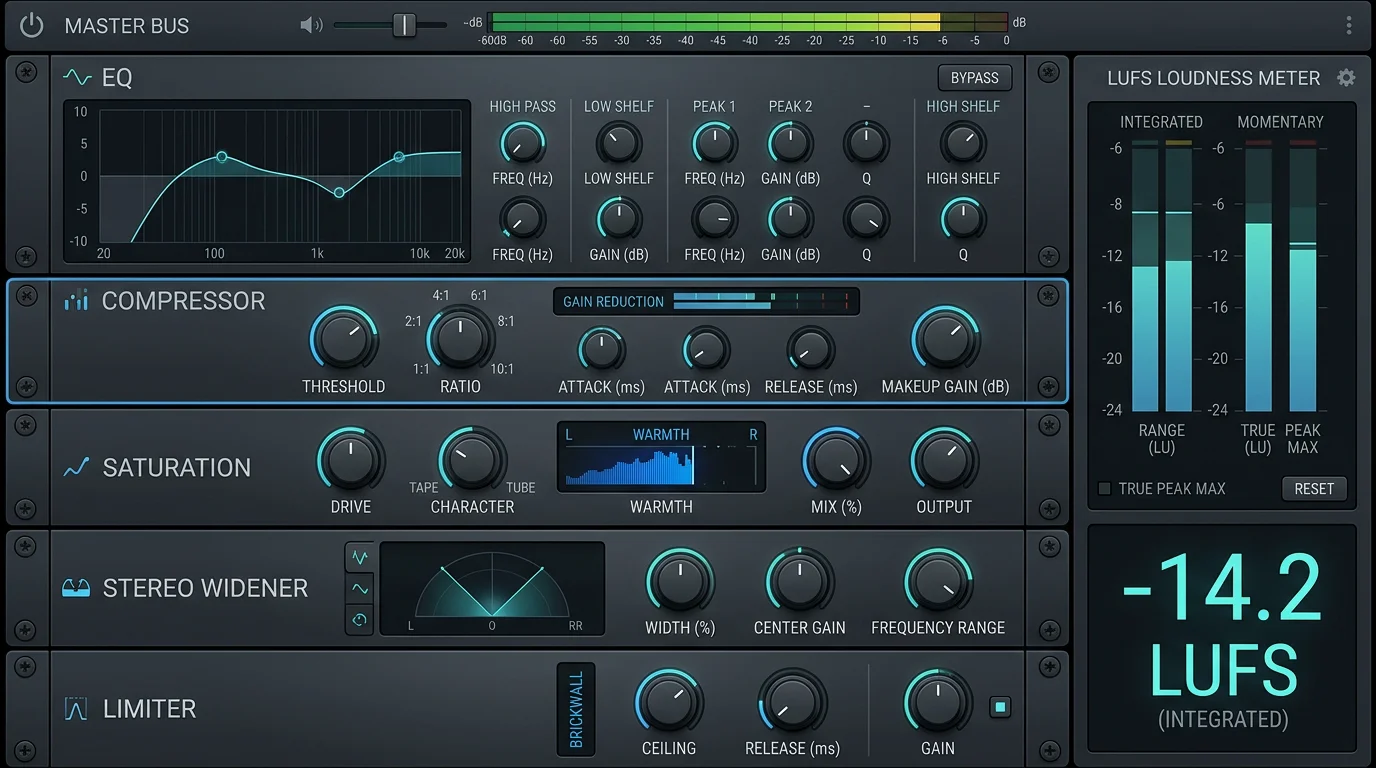
A typical mastering chain includes light corrective EQ, gentle compression, saturation, stereo shaping, and a limiter. The preset simply recalls those modules and their settings at once. That saves time, especially during beat battles or high-volume beatmaking. What it cannot do is compensate for clashing frequencies or clipping stems, so the mix always comes first.
Loudness targets you cannot ignore in 2026
Why do two beats with identical energy feel so different in a playlist? Usually the answer is loudness normalization. Streaming services measure the integrated loudness of your track and adjust playback volume to a shared target. As one mastering engineer explains, each platform compares your integrated loudness to their target and applies a gain offset at playback, without altering your actual file.
That standard is measured in LUFS, defined by the ITU-R BS.1770 specification. Most platforms normalize toward roughly -14 LUFS, and pushing far past that only invites a turn-down and lost dynamics. A responsible master preset should help you land near a sensible target while keeping a true-peak ceiling around -1.0 dBTP. Chasing raw volume for its own sake rarely survives normalization.
Downloading a preset versus building your own chain
Imagine two producers finishing the same beat. One drags in a downloaded master chain; the other assembles EQ, compression, and a limiter by ear. Both approaches are valid, and both have limits. A preset gives speed and a reliable baseline, while a custom chain gives control and understanding.
Free downloadable master presets are a fine way to learn the signal flow. They show you a working order of operations you can reverse-engineer. The limitation is that a generic preset knows nothing about your specific low end, your 808 tuning, or your genre. You still need to verify headroom before the limiter, since a 2026 loudness resource warns that a master exceeding -6 LUFS can crush dynamic range and cause listener fatigue. When you want to expand your toolkit, browse our sound banks free download section to test material before you build around it.
Why the source sound outperforms any master preset
Here is the uncomfortable truth: no master preset rescues a tired sample everyone else is already using. If your lead patch appears in a thousand other uploads, the mix stage cannot make it feel original. This is where sound selection, not just processing, decides whether your beat stands out. A distinctive source signal survives loudness normalization far better than a generic one dressed up with a limiter.
Our own catalog, Pendora, was built for exactly this problem, with 275+ hand-crafted presets across melodic trap, drill, dark trap, R&B, pluggnb, Lofi, phonk, and boom bap. Because every patch is designed rather than recycled, the sounds cut through a busy master without heavy corrective work. They are royalty-free, cleared for commercial use, and light on CPU, which keeps your session responsive while you finish. Strong, uncommon sounds are also a practical answer to beatblock, since fresh timbres invite fresh ideas.
Presets, plugins, and sounds: how the pieces compare
When producers weigh a preset library against generic packs or stock content, the differences show up quickly in workflow. The table below focuses on quantified, practical criteria rather than taste. If you are also assembling a processing arsenal, our overview of the best VST plugins for FL Studio pairs well with a well-designed sound source.
| Option | Preset count | Royalty-free / commercial | CPU load | Licensing model |
|---|---|---|---|---|
| Pendora (our sound bank) | 275+ hand-crafted | Yes, commercial use allowed | Light on CPU | Pay once, lifetime updates (edition-dependent) |
| Generic online packs | Varies widely | Often unclear | Varies | Varies |
| FL Studio stock presets | Included with DAW | Yes | Light | Bundled with license |
Sound design tools such as Serum, Vital, Omnisphere, and Kontakt each provide deep synthesis and sampling, and they run well inside FL Studio, Ableton, and Logic Pro. The distinction is that a curated preset bank hands you finished, genre-ready patches so you can focus on beatmaking instead of building every sound from scratch. Our sister brand, Pegasus by Cosmos Instruments, covers a related territory for producers who need a different palette. The goal across all of them is a strong source signal feeding a disciplined master.
Finishing thoughts on your mastering workflow
Well-built master presets for FL Studio are a genuine time-saver, but they reward good habits rather than replace them. Mix with clean headroom, aim for a realistic LUFS target, protect your true peaks, and let the preset polish a mix that already works. Above all, start from distinctive source sounds, because processing amplifies whatever you give it. Judge every export on a phone speaker as well as your monitors, and you will finish tracks that translate anywhere.
Take action with Tiger-Sounds
If your beats feel generic before they even reach the master bus, the fix begins with the sounds you choose, not the limiter you drop on top. We build hand-crafted presets so your ideas stand out from the crowd of recycled packs.
The Pendora Producer Kit gives you 275+ studio-ready presets across trap, drill, dark trap, phonk, boom bap, and pluggnb, all royalty-free, cleared for commercial use, and light on CPU. You pay once and keep them, with lifetime updates depending on your edition, so you can build a distinctive sound instead of blending in. Test a vibe, load a full bank, or go custom, then finish your masters with confidence.
Frequently Asked Questions
Do master presets work with FL Studio stock plugins only?
Many downloadable master chains rely purely on native plugins, so you do not need extra purchases to run them. Others include third-party processors, which require you to own those plugins first. Always check the requirements before you load a preset.
What LUFS should I target for streaming?
Most platforms normalize playback toward roughly -14 LUFS, so a master near that range translates well without being turned down. Keep a true-peak ceiling around -1.0 dBTP to avoid inter-sample distortion. Use a loudness meter to confirm your integrated reading.
Can a master preset fix a bad mix?
No, a preset cannot repair clashing frequencies, clipping stems, or poor gain staging. Master bus processing polishes a mix that already balances well. Fix the mix first, then apply the finishing chain.
Are your presets royalty-free for commercial releases?
Yes, our Pendora presets are royalty-free and cleared for commercial use, so you can release and monetize beats made with them. Every patch is hand-crafted rather than recycled. This helps your productions stay distinctive across genres.
Should I master in the same project or a separate one?
For beat production, mastering on the same project is practical and fast. For polished releases, a separate project with a bounced stereo mix gives you a fresh perspective. Choose based on your deadline and your quality goal.
The Best BandLab Presets and Sounds for Original Beats
Summary: The strongest presets for BandLab fall into two families. Native effect chains built from BandLab’s own EQ, compression and reverb polish your vocals, while imported MIDI and hand-crafted sound banks shape original melodies. Native presets clean up a recording; boutique MIDI packs and VST sound banks give your beats a signature that generic material cannot match.
BandLab has grown into one of the largest music-creation platforms in the world, with a community measured in the tens of millions of producers. That scale changes how you should approach presets. If you want the most effective presets for BandLab, you must first understand which formats the platform actually loads, then set up a clean workflow. Our guide to installing Pendora presets packs walks through that BandLab process step by step.
Context matters here. In 2024, BandLab confirmed that it had passed 100 million users, a community producing a staggering volume of music every day. With so many beatmakers pulling from the same built-in library, standing out is harder than ever. The right presets, MIDI and sound banks are what separate a track that blends in from one that carries your identity.
What producers really mean by the best BandLab presets
When producers search for the best bandlab presets, they usually mean one of two very different things. The first is native effect presets: saved settings for BandLab’s own EQ, compressor, reverb and delay that instantly polish a vocal or an instrument. The second is source material, meaning the synth patches, sound banks and MIDI melodies that generate the actual notes of a beat.
The distinction is critical because BandLab does not load third-party plugins. Any preset that requires an external VST or AU will not open inside the browser DAW. That constraint shapes everything. With BandLab users creating roughly 16 to 17 million songs each month, the difference between recycled sounds and original ones is what makes a track memorable. Understanding both preset families lets you build a workflow that fits the platform rather than fighting it.
Native effect presets: polished vocal chains inside BandLab
Native presets are the only presets that run directly inside BandLab. They are pre-configured vocal chains built from the platform’s stock effects, typically a noise gate, an EQ, a compressor and a touch of reverb. Load one onto a vocal track and it sits at a healthy level immediately, with cleaner tone and controlled dynamics.
A well-designed native preset stays lean. Because BandLab runs in a browser, an overloaded effects chain strains your CPU and adds latency. The goal is four or five well-staged effects, not ten sloppy ones. These presets are excellent for finishing vocals, but they cannot invent a melody. For the notes themselves, you need source material designed to bring something new to your beatmaking.
Original melodies: where hand-crafted sound banks change the game
Here is the trap most producers fall into. They pull from the same stock loops and factory patches as everyone else, and their beats end up sounding like every other upload. The cure is source material that no one else is layering into their tracks. This is where a boutique sound bank earns its place.
Our Pendora collection is built for exactly this problem. It offers 275+ hand-crafted presets across melodic trap, drill, dark trap, R&B, pluggnb, lofi and phonk, plus a library of exclusive MIDI melodies. Every preset is hand-crafted rather than generated or recycled, and everything is royalty-free with commercial use allowed. Because MIDI files import cleanly into BandLab, our Pendora super MIDI pack gives you fresh chord progressions and topline ideas the moment beatblock hits. For producers exploring other territory, our sister brand Pegasus by Cosmos Instruments covers a complementary range of styles.
Comparing your options for original BandLab sounds
Not every source of sounds fits the BandLab workflow equally. Native presets are free but limited to effects. Generic sample packs import as audio but rarely feel distinctive. Hand-crafted sound banks and MIDI packs give you original starting points you can play and rearrange. The table below sets these choices side by side.
| Option | Genres covered | Format | BandLab fit | Pricing |
| Pendora (our full sound bank) | Melodic trap, drill, dark trap, R&B, pluggnb, lofi, phonk | 275+ presets and 5000+ MIDI melodies (Ultimate) | MIDI imports directly; presets via a paired desktop DAW | Pay once, lifetime access |
| Pendora Lite (our entry pack) | Same multi-genre range, smaller set | 30 hand-picked presets | MIDI-ready workflow | 97€ displayed |
| Native BandLab presets | Vocal and instrument treatment | Built-in effect chains | Runs natively | Free |
| Generic sample packs | Broad, non-specialised | Audio loops | Audio import only | Varies |
The pattern is clear. For polishing, native presets do the job at no cost. For an original identity, a hand-crafted sound bank is the option that scales with your ambition. As far back as 2021, BandLab users were already creating more than 10 million tracks a month, so the pressure to sound different has only intensified since.
How to bring presets and MIDI into your BandLab projects
Getting sounds into BandLab is straightforward once you know the routes. For a native vocal preset, open the effects chain on your track, add the effects in order, then dial in the documented values. For melodies, import a MIDI file into a new track and assign one of BandLab’s built-in instruments to play it back. You keep full control over notes, key and tempo.
If you are just starting, testing quality material before you commit is a smart habit. Our free sound banks let you audition the approach and hear how hand-crafted content behaves inside your projects. From there, a full pack removes the friction of hunting for fresh ideas every session and keeps your beatmaking moving.
When to pair BandLab with a desktop DAW
BandLab is a genuine entry point, not a dead end. The fundamentals you learn there, gain staging, EQ, compression and arrangement, transfer directly to every professional environment. At some point, though, you may want deeper control and full plugin support. That is when a desktop DAW such as FL Studio, Ableton or Logic Pro becomes worth the investment.
On desktop, synth engines like Serum, Vital, Omnisphere and Kontakt open up sound design that a browser cannot host. This is where the full Pendora preset library loads natively, giving you the same signature sounds at studio depth. The upgrade path is natural rather than disruptive, especially since the United States remains BandLab’s largest market and a competitive one. Your MIDI melodies move with you, so the original ideas you built in BandLab keep their character in your new setup.
Building an original BandLab sound
Choosing the best presets for BandLab comes down to matching format to purpose. Use native effect chains to finish vocals cleanly, and lean on hand-crafted MIDI and sound banks to generate melodies that do not sound like everyone else. Start with free material, confirm the workflow, then commit to a library that keeps your ideas flowing. The platform is powerful and accessible; your identity as a producer comes from the sounds you choose to build with, not the ones handed to every user by default.
Take action with Tiger-Sounds
If your BandLab tracks keep blending into the crowd, the fix is not more effects. It is fresher source material that no one else is reaching for, imported straight into your projects as MIDI and used to spark original melodies across trap, drill, phonk, R&B and more.
Our entry edition is the simplest way to test that difference for yourself. The BandLab-ready Pendora Lite presets deliver 30 hand-picked, royalty-free sounds you can use commercially, built by an independent team with more than five years crafting boutique sound banks. Pay once, keep them, and start shaping a signature that carries across BandLab and any desktop DAW you grow into.
Frequently Asked Questions
Can BandLab load third-party VST or AU presets?
No. BandLab is a browser and mobile DAW that does not support external VST, AU or AAX plugins. Any preset built for those formats must be used inside a desktop DAW instead, so verify compatibility before buying a pack.
Are there free presets to start with?
Yes. BandLab includes native effect presets at no cost, and our free sound banks let you audition hand-crafted material before committing. Free options are useful for learning, though curated paid packs offer broader, genre-specific coverage.
How do I add original melodies to a BandLab beat?
Import a MIDI file into a new track and assign one of BandLab’s built-in instruments to play it. Our Pendora MIDI melodies are designed for exactly this, giving you fresh progressions when inspiration stalls. You keep full control over key, tempo and arrangement.
Do native BandLab presets work on mobile?
Yes. BandLab’s effects engine is consistent across browser, iOS and Android, so a native effect chain behaves the same on any device. You apply the same settings whether you are on a laptop, tablet or phone.
Should I stay on BandLab or move to a desktop DAW?
Stay on BandLab while you are learning, collaborating or working mobile-first. Consider FL Studio, Ableton or Logic Pro when you need deeper mixing control and full plugin support. The skills and MIDI you build in BandLab transfer directly to that next step.
Free Synth1 Soundbanks: Where to Find the Best Presets
Summary: Free Synth1 sound banks are abundant, with community libraries exceeding 100,000 patches for a plugin that costs nothing to run. The challenge is not quantity but distinctiveness, since reused presets make many beats sound alike. This guide explains where to find quality banks and how to keep your productions original.
Synth1 is often described as one of the most downloaded software synthesizers ever made, and the reason is simple: it is powerful, it costs nothing, and it runs on almost any machine. If you produce beats and want fresh sonic material without spending a cent, exploring free Synth1 sound banks is a logical first move. To begin building a reliable collection, you can download free sound banks curated for modern production styles.
The catch is that popularity has a cost. When thousands of producers pull from the same public preset libraries, beats start to converge. In 2026, according to Dubspot, several free synths now rival paid flagships in sound quality, which only intensifies the competition to stand out. Finding sounds nobody else is using matters as much as finding sounds that are free.
Why Synth1 remains a producer favorite
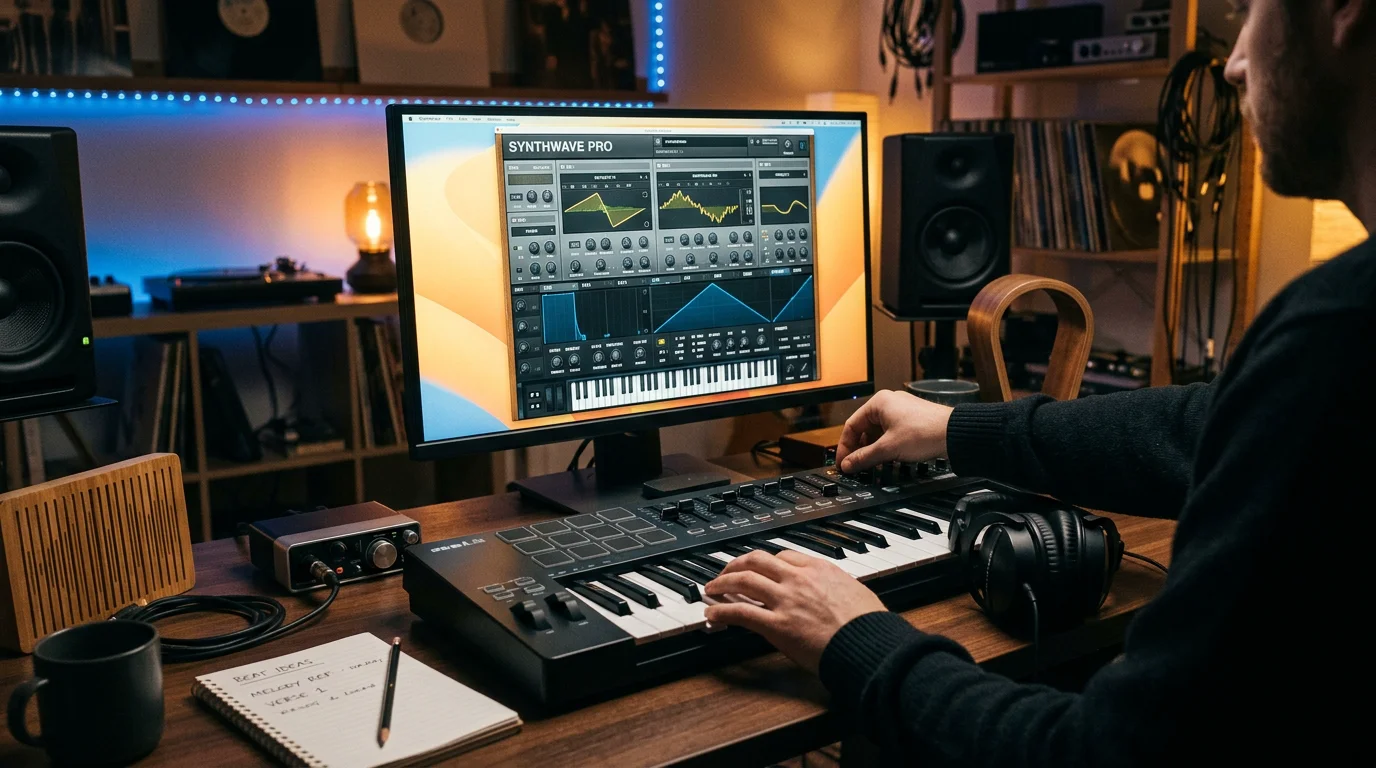
Released in 2002, Synth1 has aged remarkably well. Bedroom Producers Blog notes that it remains relevant for two reasons: its characteristic digital sound and the thousands of freely downloadable presets available for it. It emulates the Clavia Nord Lead 2, offering three main oscillators, a sub-oscillator, a multi-mode filter, dual LFOs, an arpeggiator, and built-in effects.
The plugin is also famously light on CPU, which means you can layer many instances in a busy mix without slowing your session. This efficiency is a large part of why searching for synth1 soundbanks free of charge is such a common starting point for new and experienced beatmakers alike. It works across FL Studio, Ableton, and Logic Pro through VST and AU formats, so it fits nearly every workflow.
Where to find free Synth1 preset banks
The internet is full of Synth1 patches, but the sources vary widely in quality and safety. One PluginDrop overview counts over 100,000 patches spread across genres in the community library. That volume is a blessing and a trap: much of it is duplicated, poorly organized, or built for genres far removed from modern beatmaking.
When you evaluate a free bank, consider a few practical factors:
- Source reliability: download only from established plugin sites and known sound designers, never from unlabeled file lockers.
- Genre fit: a trance bank rarely serves a trap or drill session well.
- Distinctiveness: the more widely a pack circulates, the more likely your peers already use it.
- Format compatibility: confirm the bank loads correctly in your DAW before building a track around it.
If you would rather skip the sorting entirely, our free sound bank VST for Synth1 starter selection gives you hand-picked presets built for modern styles rather than a random dump of legacy patches.
The hidden cost of reused free presets
Here is a scenario every producer knows. You load a popular free pack, find a melody preset you love, and finish a beat overnight. Two weeks later you hear the same preset in three other tracks online. That is the quiet downside of shared libraries: distinctiveness erodes as usage spreads.
This is precisely the problem we set out to solve with Pendora, our boutique preset collection. It offers hand-crafted presets across melodic trap, drill, dark trap, phonk, boom bap, pluggnb, R&B, and lofi, with sounds that differ from the ones everyone else is reaching for. Every preset is designed from scratch, not licensed, generated, or recycled, which helps you overcome beatblock and keep a signature sound.
Free banks versus a curated boutique collection
Free sound banks and a curated pack serve different needs. To compare them honestly, the table below sets our own Pendora collection against the general free-bank landscape and other common preset routes. The figures for competing plugins reflect their public positioning, not an endorsement.
| Option | Preset quality control | Genre focus for beatmakers | Distinctiveness | Cost model |
|---|---|---|---|---|
| Pendora (our pack) | Hand-crafted, curated, no filler | Trap, drill, phonk, pluggnb, R&B, lofi | High, limited circulation | Pay once, royalty-free |
| Free Synth1 community banks | Variable, unmoderated | Broad, often legacy genres | Low, widely shared | Free |
| Vital free tier | Developer factory presets | General electronic | Medium | Free tier |
| Surge XT library | Open-source community | General, multi-synthesis | Medium | Free |
Free banks are excellent for learning, experimenting, and stocking a wide palette at no cost. A curated collection earns its place when you need reliable quality and sounds your listeners have not heard elsewhere. Many producers use both, drawing on free libraries for exploration and a boutique pack for release-ready material.
Installing and organizing your Synth1 banks
Once you have gathered a few banks, installation is straightforward but easy to fumble. Synth1 stores banks as folders of preset files, and you point the plugin to them through its options menu. Keep your banks in one master directory so your DAW can find them consistently across projects.
A little housekeeping pays off. Rename banks clearly by genre, delete duplicates, and archive packs you never open. A tidy library means you spend your session designing beats rather than scrolling through thousands of unused patches. Good organization is often the difference between inspiration and friction during beatmaking.
Beyond free: when to invest in your sound
Free tools have never been stronger. Yet the moment your releases start reaching real audiences, the material behind them matters more. If your kick, your melody, and your lead all come from packs shared by tens of thousands of others, blending in becomes almost inevitable.
That is the gap a boutique collection fills. Our Pendora presets are royalty-free with commercial use allowed, light on CPU, and organized so you can move from idea to finished loop quickly. For producers working across trap, drill, and related genres, distinctive studio-ready presets are an investment in identity, not just convenience. Our sister brand Pegasus by Cosmos Instruments covers adjacent territory for producers who want to widen their sonic range further.
Making free Synth1 sounds work for you
The abundance of free Synth1 sound banks is genuinely useful, especially while you learn the plugin and build a foundation. Download widely, but download smart: favor trusted sources, organize ruthlessly, and stay aware that widely shared presets rarely help you stand apart. When originality becomes the priority, pair your free library with hand-crafted presets built for your genre. The right balance keeps your workflow fast and your sound unmistakably yours.
Take action with Tiger-Sounds
You have the plugin, you have the free banks, and now you want sounds that actually separate your beats from the crowd. That is exactly why we built Pendora, a boutique collection made for producers who refuse to blend in.
With 275+ hand-crafted presets across trap, drill, dark trap, phonk, boom bap, and pluggnb, plus royalty-free commercial use and a pay-once model, our free Synth1 soundbanks and full Pendora editions give you studio-ready material trusted by 500+ producers worldwide. Choose Lite to test the vibe, Standard for the full bank, or Ultimate for a custom edition with lifetime access to upcoming kits.
Frequently Asked Questions
Are free Synth1 sound banks safe to download?
They are safe when you download from established plugin sites, recognized sound designers, or official developer pages. Avoid unlabeled file lockers and archives with no clear author. Always scan downloads and confirm the files are standard Synth1 bank folders before loading them.
How many free presets exist for Synth1?
The community library is enormous, with one industry overview counting more than 100,000 patches across genres. The practical limit is not quantity but relevance, since many patches are duplicated or built for older styles. Curating a focused selection matters more than collecting everything.
Will free presets make my beats sound like everyone else’s?
They can, because widely shared packs circulate among tens of thousands of producers. Free banks are still valuable for learning and experimenting. For release-ready material, pairing them with a curated collection such as our Pendora presets helps you keep a distinctive sound.
Does Synth1 work in FL Studio, Ableton, and Logic Pro?
Yes. Synth1 supports the common plugin formats used by major DAWs, so it loads in FL Studio, Ableton Live, and Logic Pro. Always download the latest build from the official developer to ensure compatibility with your operating system.
Is it worth paying for presets when free banks exist?
Free banks are excellent for building a foundation at no cost. Paid, hand-crafted collections become worthwhile once originality and consistent quality matter for your releases. Many producers use free libraries for exploration and a boutique pack for finished tracks.
Free Sound Bank VST Options: A Producer’s Practical Guide
Summary: A free VST sound bank gives producers ready-made presets and instruments that load directly into a digital audio workstation at no cost. Free options are useful for testing ideas, yet they often circulate widely, which limits originality. Boutique, hand-crafted banks such as Pendora offer studio-ready presets designed to help your beats stay distinct.
Around 60% of producers now treat plugins as the backbone of their studios, and the appetite for fresh sounds keeps rising every year. When budgets are tight, free presets look like the obvious starting point, and you can download free sound banks from our Pendora collection to test a vibe before committing. The catch is that widely shared free VST sound banks tend to appear inside thousands of other tracks, which makes standing out harder.
The demand is real and measurable. According to Research and Markets, the music production software market will grow from $1.53 billion in 2025 to $1.63 billion in 2026. That growth reflects a wave of independent beatmakers building home studios and searching for sounds that fit trap, drill, phonk, and pluggnb without draining their wallets.
What a free sound bank VST actually delivers
A free sound bank vst is a collection of presets or sampled instruments packaged for Virtual Studio Technology, ready to load into FL Studio, Ableton Live, or Logic Pro. Some are synth patches for engines like Vital or Serum. Others are sample libraries that play through hosts such as Kontakt.
The category is broad. You will find free virtual instruments ranging from 808 machines and pianos to full synthesizers, alongside effects for mixing and mastering. Vital, for example, ships as a free wavetable synthesizer with dozens of downloadable soundbanks, making it a common entry point for beginners and seasoned sound designers alike.
The reason producers gravitate toward these tools is efficiency. Instead of designing every patch from scratch, a solid preset library shortens the path from an idea to a finished loop. That said, quality varies enormously, and sorting the usable from the forgettable takes time you could spend making music.
The market behind free presets and plugins
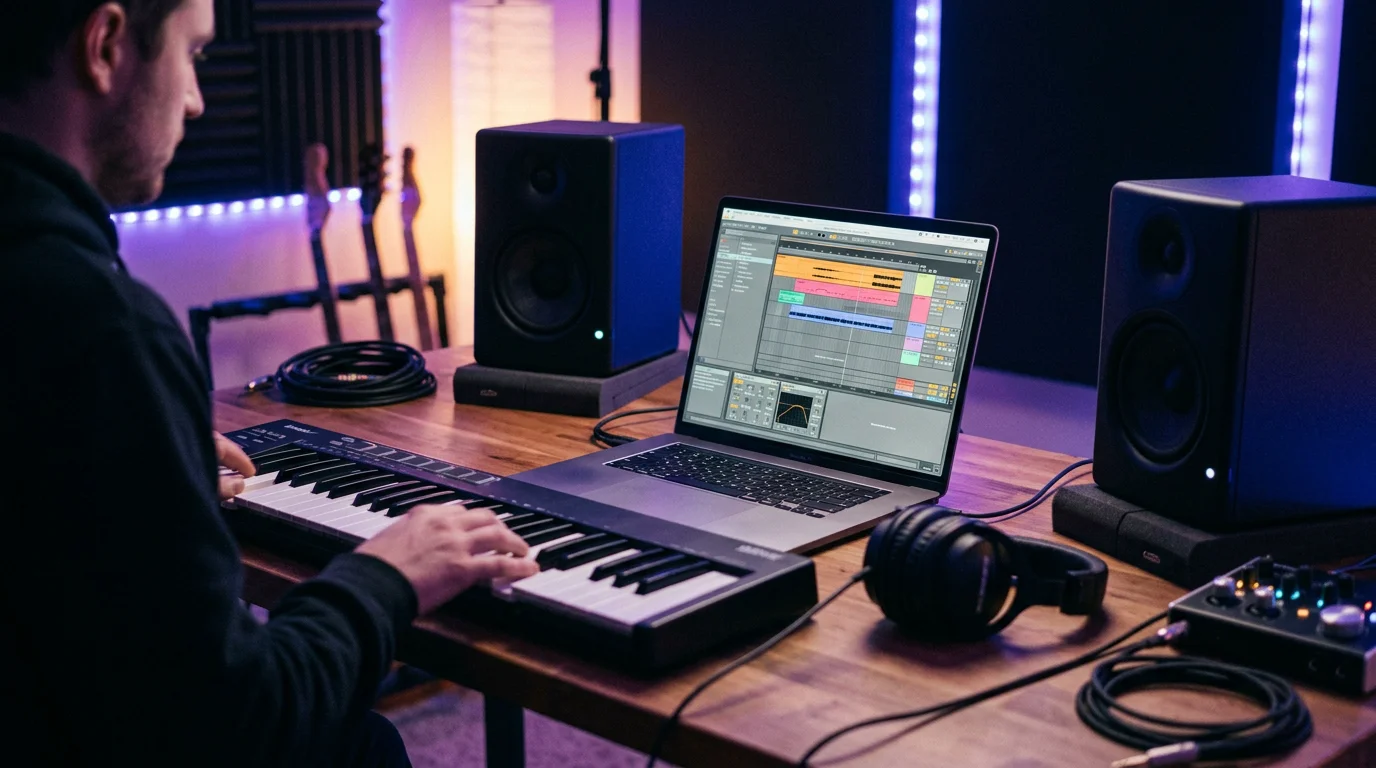
Why are free sounds so abundant right now? The tooling ecosystem has exploded. Data compiled by Global Growth Insights indicates that roughly 60% of producers use plugins and about 57% rely on virtual instruments in their workflows. When adoption is that widespread, developers release free tiers to attract users toward paid catalogs.
Operating systems shape the landscape too. Industry analysis from Coherent Market Insights estimates that macOS will hold about 58% of the music production software market in 2026, driven by low audio latency and tight integration with hosts like Logic Pro. Whichever platform you use, VST3 and AU formats now cover nearly every major DAW on both Mac and Windows.
The practical consequence is saturation. With so many free packs downloaded by so many people, the same presets recur across releases. That is precisely where a curated, boutique approach earns its place, because scarcity and craftsmanship translate into a recognizable signature.
Free banks versus boutique sound design
Consider two producers chasing the same dark trap flip. One loads a generic free pack that half the internet already owns. The other reaches for hand-crafted presets tuned for that exact mood. The second beat carries a fingerprint; the first blends into the crowd.
Free banks are excellent for learning, prototyping, and covering utility tasks such as EQ, compression, and reverb. Where they struggle is originality, because a preset shared millions of times cannot sound exclusive. Our Pendora bank was built to answer that gap, with every preset hand-crafted rather than licensed, generated, or recycled. If you want to hear the difference before deciding, a free sound download lets you audition the character first.
| Sound source | Presets | Cost model | Genres | Commercial use |
| Pendora (our bank) | 275+ studio-ready, hand-crafted | Pay once, lifetime updates | Trap, drill, dark trap, phonk, boom bap, pluggnb | Royalty-free, allowed |
| Free synth banks (Vital) | Varies, community made | Free | General electronic | Depends on author |
| Free sample players (Kontakt Player libraries) | Varies | Free | Acoustic, general | Depends on library |
| Generic free packs | High volume, widely shared | Free | Broad, non-specific | Often unclear |
Positioned at the top, Pendora trades quantity of downloads for distinctiveness. For producers who work across melodic trap, R&B, Lofi, and pluggnb, that specificity matters more than a bottomless folder of unused patches.
How to choose a sound bank that fits your beats
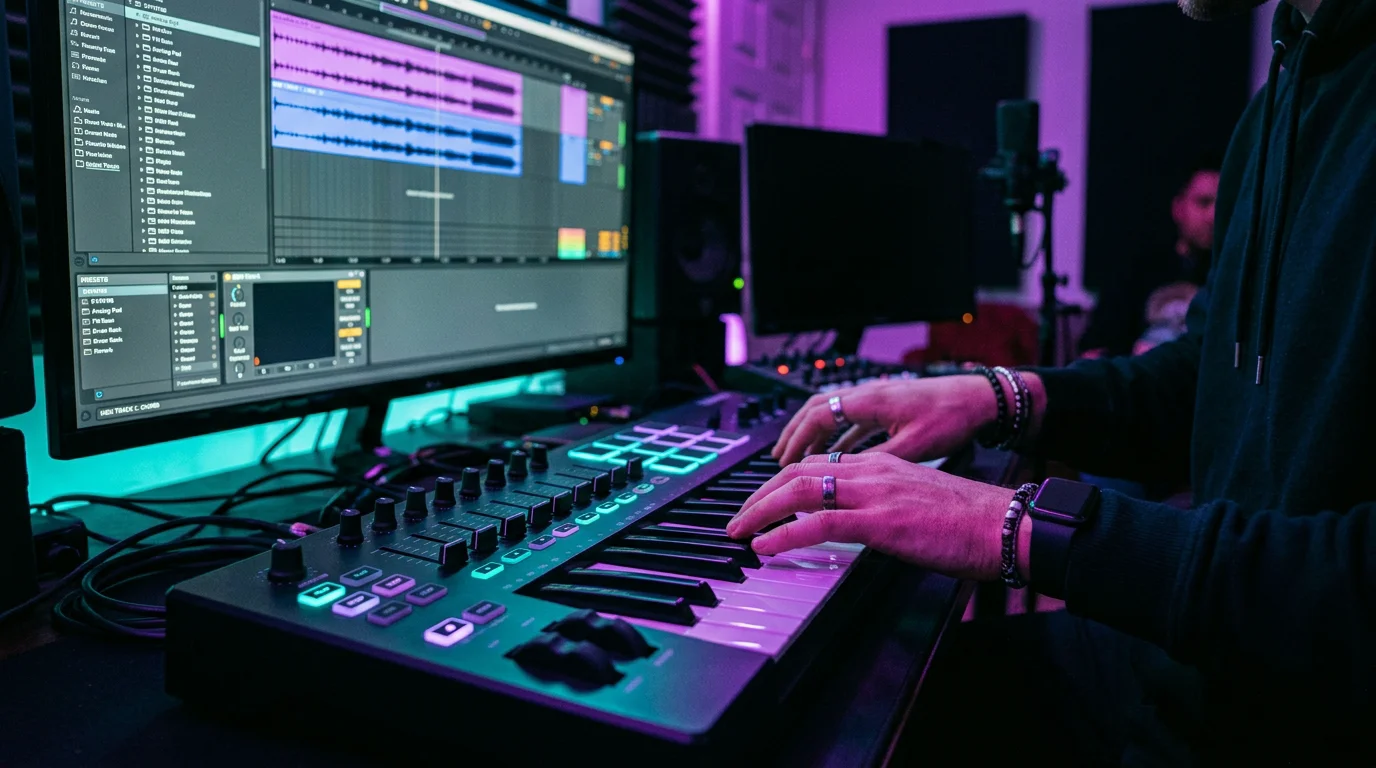
Start from the sound you are chasing, not the file count. A technical review from Technavio notes that success in this market hinges on balancing powerful virtual studio technology with intuitive, accessible workflows. In plain terms, a bank should be easy to browse and light on CPU, so inspiration is not interrupted by loading times or crashes.
Check four things before committing to any library. First, genre fit: presets tuned for phonk will not automatically serve boom bap. Second, licensing: confirm the sounds are royalty-free with commercial use permitted. Third, format: verify VST3 or AU support for your DAW. Fourth, exclusivity: ask how many other producers already use the exact same patches.
If you are auditioning several catalogs at once, you can browse VST products and collections to compare presets side by side. Our Pendora editions run from Lite for testing a vibe to the full Standard bank, and our sister brand Pegasus by Cosmos Instruments covers adjacent territory when your projects pull in a different direction.
Turning presets into original beats
Owning great sounds is only half the work. Beatblock, that stubborn creative freeze, rarely comes from a lack of plugins; it comes from hearing the same tired starting points. Fresh, genre-specific presets that differ from what everyone else loads can break the loop and restart momentum.
Treat each preset as a foundation, not a finish line. Layer an 808 with a hand-crafted bass patch, resample a melody, and process it through saturation or filtering until it becomes yours. A bank with no waste presets, where each patch has a clear purpose, keeps that process fast and focused rather than buried in options you will never use.
Final thoughts for producers
A free VST sound bank is a smart place to begin, and free synths, samplers, and effects will always have a role in learning and prototyping. The limitation is originality, because sounds shared at scale rarely help you stand apart. The most reliable path is to combine free utilities with a curated, hand-crafted preset library chosen for your genre, your licensing needs, and your workflow, then shape every sound until the beat carries your signature rather than someone else’s.
Take action with Tiger-Sounds
If you are tired of hearing your own beats echoed inside every other track, the answer is not more downloads; it is better, more distinctive sounds. We built Pendora for producers who refuse to blend in across trap, drill, dark trap, phonk, boom bap, and pluggnb.
Pendora delivers 275+ studio-ready presets, every one hand-crafted, royalty-free with commercial use, light on CPU, and yours forever with a single purchase. Trusted by 500+ producers worldwide and featured by more than fifteen YouTubers, it is ready when you are. Explore our free sound banks VST and start building beats that sound like you.
Frequently Asked Questions
Are free VST sound banks legal to use in released tracks?
It depends entirely on the license attached to each pack. Many free banks permit commercial use, but some restrict it or require attribution, so you must read the terms before release. Boutique banks such as Pendora state clearly that presets are royalty-free with commercial use allowed.
Do free presets work in FL Studio, Ableton, and Logic Pro?
Most modern presets and instruments ship in VST3 or AU formats, which load into every major DAW on Mac and Windows. Always confirm the format matches your host before downloading. Compatibility issues usually come from outdated plugin versions rather than the DAW itself.
Why do free sound banks sometimes make beats sound generic?
Popular free packs are downloaded by enormous numbers of producers, so identical presets end up in countless tracks. That repetition erodes originality even when the sounds themselves are well made. Curated, less widely distributed banks help you keep a distinct signature.
Is a free synth like Vital enough to start producing?
Yes, a capable free synthesizer covers a great deal of ground for learning synthesis and building early beats. Its limitation is that community soundbanks circulate widely, which affects exclusivity. Pairing it with hand-crafted, genre-specific presets gives your productions more character.
How many presets does a producer actually need?
Fewer, well-designed presets usually beat thousands of unused ones. A focused bank with no waste presets keeps your workflow fast and your choices intentional. Pendora offers 275+ studio-ready presets built specifically for trap, drill, phonk, and related genres.
Sound Banks Free Download: The Producer’s 2026 Guide
Summary: A free sound bank is a downloadable collection of presets, samples, or sound effects you may use in your productions at no cost. The best options combine clear licensing, usable formats such as WAV and MP3, and genre relevance. Free libraries suit sound effects and experimentation, while hand-crafted preset banks give producers a distinct signature.
Some free platforms host more than 150,000 recordings, so the volume available to beatmakers has never been larger. Yet volume is not the same as usefulness. When a preset appears in thousands of other projects, your track starts to sound like everyone else. That is the paradox every producer faces. If you want a fast starting point, our free sound download page gathers usable material in one place, and this guide explains how to judge every option you meet along the way.
The market splits into two families. On one side sit vast royalty-free sound effects archives built for video and podcast work. On the other sit curated preset banks built for melodic production. According to one large library, over 150,000 free sound effects are now offered for commercial and non-commercial use, which shows how deep the free tier has become. Knowing which family fits your workflow saves hours of aimless searching.
What a free sound bank actually gives you
When you look for a sound banks free download, you meet several very different products under one label. A sound effects archive delivers impacts, ambiences, and Foley. A sample pack delivers loops and one-shots. A preset bank delivers patches that load inside a synth such as Serum, Vital, or Omnisphere. Each serves a distinct stage of beatmaking.
Understanding the difference matters because a drill or phonk producer rarely needs a car door slam. What that producer needs is a melodic preset that inspires a hook. For quick sound effects work, though, a broad archive is efficient, and our free sound effects collection covers those everyday needs without a paywall.
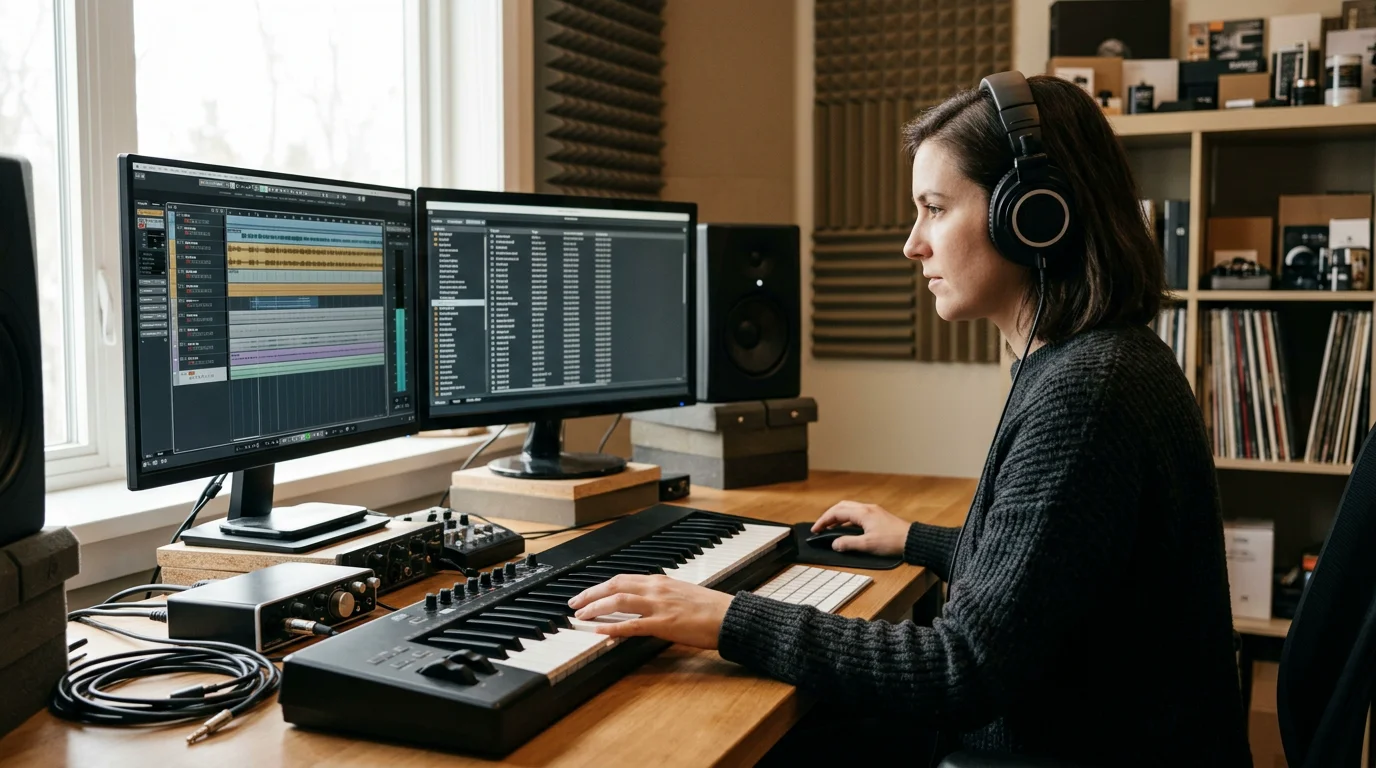
Where producers find free sounds today
Several well-known resources anchor the free ecosystem. Freesound hosts a large community archive with hundreds of thousands of files. The YouTube Audio Library provides cleared tracks and effects in MP3 format. BigSoundBank offers royalty-free effects in WAV, MP3, and OGG. These platforms focus on sound effects and general audio rather than production-ready melodic presets.
For synth patches specifically, community sites collect free banks for instruments such as Serum, Sylenth1, and Massive. The catalogue is huge, yet quality and organization vary widely. The table below compares typical free destinations with our own preset bank, Pendora, so you can weigh content against fit.
| Option | Main content | Genre focus | Commercial use |
|---|---|---|---|
| Pendora (our bank) | 275+ hand-crafted presets, plus MIDI in higher editions | Trap, drill, dark trap, phonk, boom bap, pluggnb, R&B, lofi | Royalty-free, commercial use allowed |
| Community effect archives | Recorded sound effects and ambiences | General, non-musical | Varies by file |
| Free synth patch sites | Shared user presets for third-party synths | Mixed | Depends on author |
| Cleared audio libraries | Tracks and effects in MP3 | General background | Attribution sometimes required |
For lightweight files ready to drop into any session, our MP3 sound effects downloads keep things simple across Mac and Windows.
Licensing is the detail that trips producers up
Free does not automatically mean unrestricted. As Production Expert notes, licensing across free libraries varies significantly: some material is royalty-free for commercial release, some requires attribution, and some is limited to personal use only. Reading the terms before you export a beat is not optional.
This is where a clearly licensed bank removes friction. Every preset in Pendora is royalty-free with commercial use permitted, so you never wonder whether a placement or a monetized video is at risk. When your revenue depends on clean rights, that certainty is worth more than another folder of undocumented files.
The real problem: sounding like everyone else
Here is the differentiator that free volume cannot solve. Every year, thousands of new samples, effects, and instrument libraries are released, as noted by one industry resource. The most popular free packs get downloaded by hundreds of thousands of producers. The result is predictable: the same three presets appear in countless uploads, and your track blends into the crowd.
That sameness also feeds beatblock. When your palette is identical to everyone else’s, inspiration stalls. Pendora was built as a response to that fatigue. The presets are hand-crafted rather than licensed, generated, or recycled, and they lean into melodic trap, drill, dark trap, phonk, boom bap, pluggnb, R&B, and lofi. The aim is a distinct signature with no waste presets. Producers who work outside those lanes may also look at Pegasus by Cosmos Instruments, our sister brand, which covers a different territory with the same craft.
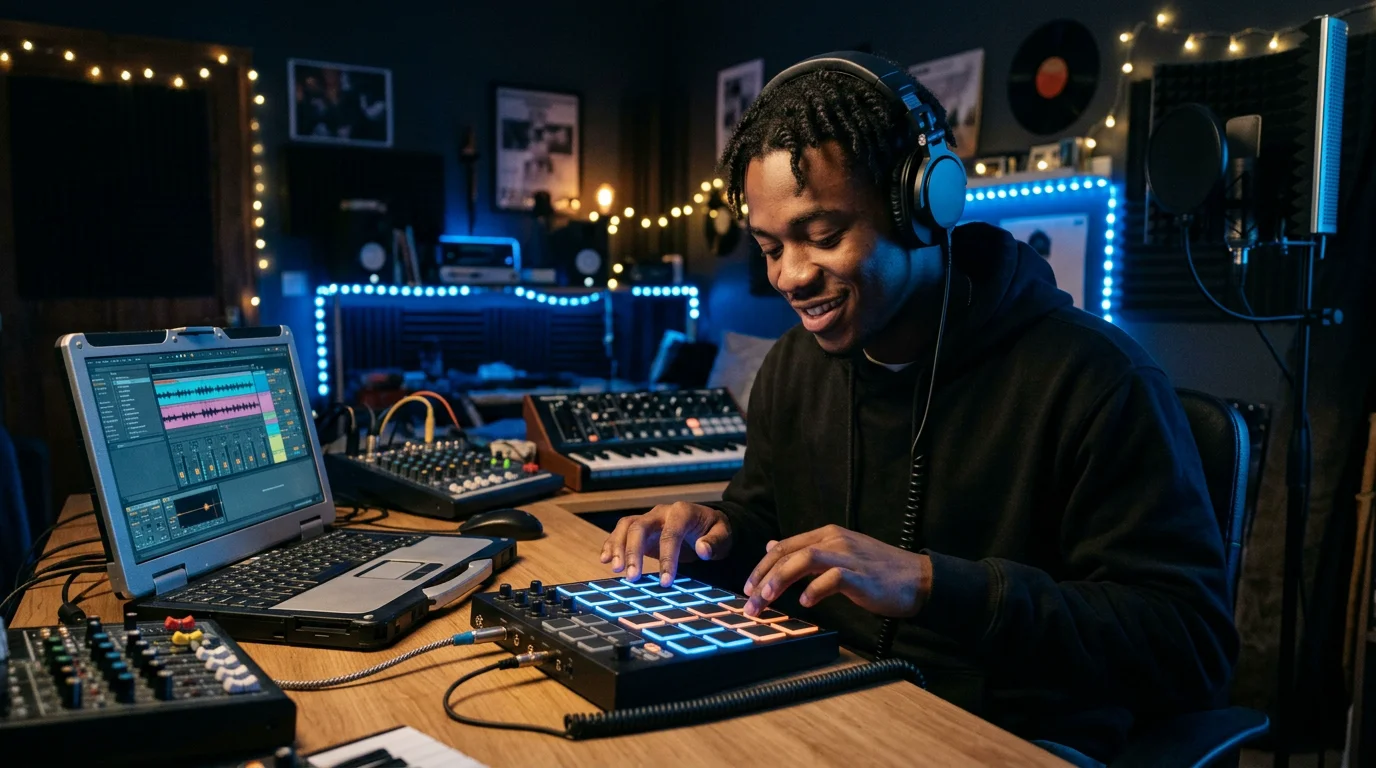
Building a workflow around free and premium sounds
A practical approach mixes both families. Use free archives for incidental sound effects, transitions, and texture. Reserve a curated preset bank for the melodic core of your beat. Inside FL Studio, Ableton, or Logic Pro, this keeps your session lean while still giving you a recognizable voice.
Format and performance matter too. WAV preserves lossless quality for detailed sound design, while MP3 stays convenient for fast projects. On the synth side, look for banks that stay light on CPU, since a heavy patch can stall a full arrangement. Pendora is designed with that constraint in mind, and it loads through VST3 and AU on both Mac and Windows.
Turning free downloads into original beats
A smart sound banks free download strategy is not about hoarding files. It is about matching each resource to a job: broad archives for effects, curated presets for melody, and clear licenses everywhere. Free libraries are a genuine asset for experimentation and utility sounds. When you want a signature that does not appear in every other upload, invest your attention in hand-crafted presets that are built for your genre. That balance keeps production fast, legally safe, and unmistakably yours.
Take action with Tiger-Sounds
You have seen why raw volume rarely produces a distinct sound. The next step is a palette built for the genres you actually make, with rights you never have to second-guess.
Pendora offers 275+ hand-crafted, studio-ready presets across trap, drill, dark trap, phonk, boom bap, and pluggnb, all royalty-free with commercial use and a pay-once model with lifetime updates on eligible editions. Trusted by 500+ producers worldwide and featured by 15+ YouTubers, it is the boutique alternative for creators who refuse to blend in. Explore our Pendora sound banks and start building your own signature today.
Frequently Asked Questions
Are free sound banks legal to use in commercial tracks?
Often yes, but not always. Licensing varies by platform, so some files are royalty-free for commercial release while others require attribution or restrict you to personal use. Always read the terms before you export.
What is the difference between a sample pack and a preset bank?
A sample pack delivers finished audio such as loops and one-shots. A preset bank delivers patches that load inside a synthesizer, giving you control over the sound. Presets are more flexible for original melodic work.
Will free presets make my beats sound generic?
They can, because the most popular free packs are downloaded by very large numbers of producers. To keep a distinct signature, we recommend pairing free effects with hand-crafted presets such as our Pendora sound banks, which are built to avoid that sameness.
Which format should I download, WAV or MP3?
Choose WAV when you need lossless quality for detailed sound design or mixing. Choose MP3 when file size and speed matter more than absolute fidelity. Many workflows use both depending on the task.
Do free preset banks work in FL Studio, Ableton, and Logic Pro?
Most do, provided the host synth supports your plugin format. Presets built in VST3 or AU load across the major digital audio workstations on Mac and Windows. Always confirm compatibility with your specific synthesizer before downloading.