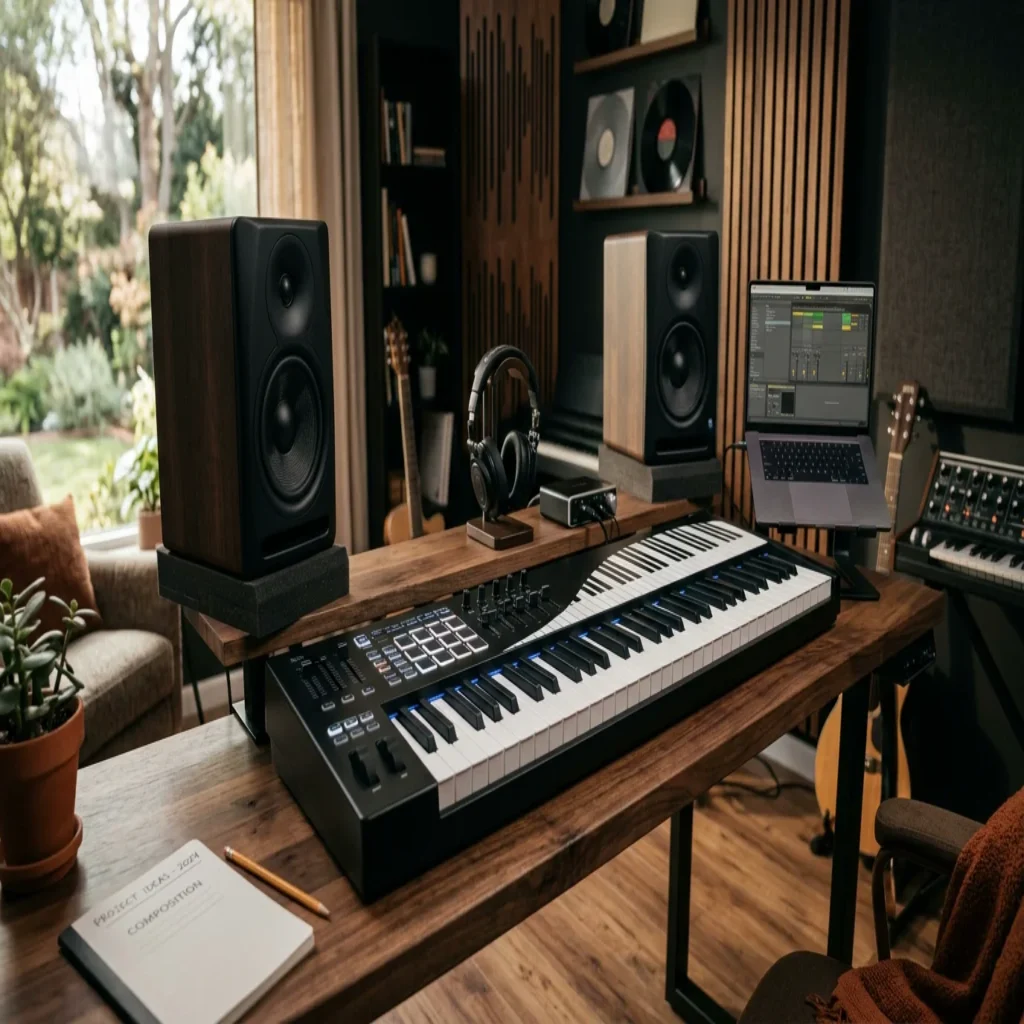
Summary: Free piano VST instruments give producers realistic acoustic, felt, and electric keys at no cost, and the strongest options now rival paid libraries. Tools such as Spitfire LABS Soft Piano, Piano One, and Decent Sampler libraries cover most needs, though character presets matter more than raw sample size for standing out.
A physical modeling piano that installs in roughly 80MB now competes with sample libraries priced above 400 dollars. That single fact reshapes how you should evaluate keys in your projects, especially when the entry point costs nothing. Before you spend on premium libraries, our guide to free Rhodes VSTs shows how far no-cost keys have come, and the same holds for acoustic pianos.
The appeal of free piano VST instruments is straightforward: professional tone without a purchase, running natively in FL Studio, Ableton, or Logic Pro. According to PluginDrop, the most persistent misconception in 2026 is that sample size correlates with realism, a belief that leads producers to overspend. Understanding where free tools excel, and where they hold you back, is the difference between a generic beat and a track that carries your signature.
What free piano VST instruments actually deliver
When you search for a free vst instruments piano solution, you are usually after one of three things: a convincing acoustic grand, an intimate felt piano, or a vintage electric tone. The good news is that all three now exist in free form, packaged as VST3 and AU plugins for Mac and Windows.
Quality has climbed sharply over the past decade. Bedroom Producers Blog notes that the best free pianos in 2026 get close to commercial libraries that cost hundreds of dollars. That said, results vary widely between developers. Some libraries are sampled in an afternoon, while others rival paid releases in depth and playability.
For producers building beats rather than scoring films, the priority is a studio-ready sound that sits in a mix without hours of tweaking. A clean acoustic grand works for boom bap and lo-fi, while a felt piano suits melodic trap and R&B intros. Our overview of VST instruments explains how these categories fit into a modern workflow.
The best free piano VST plugins to try in 2026
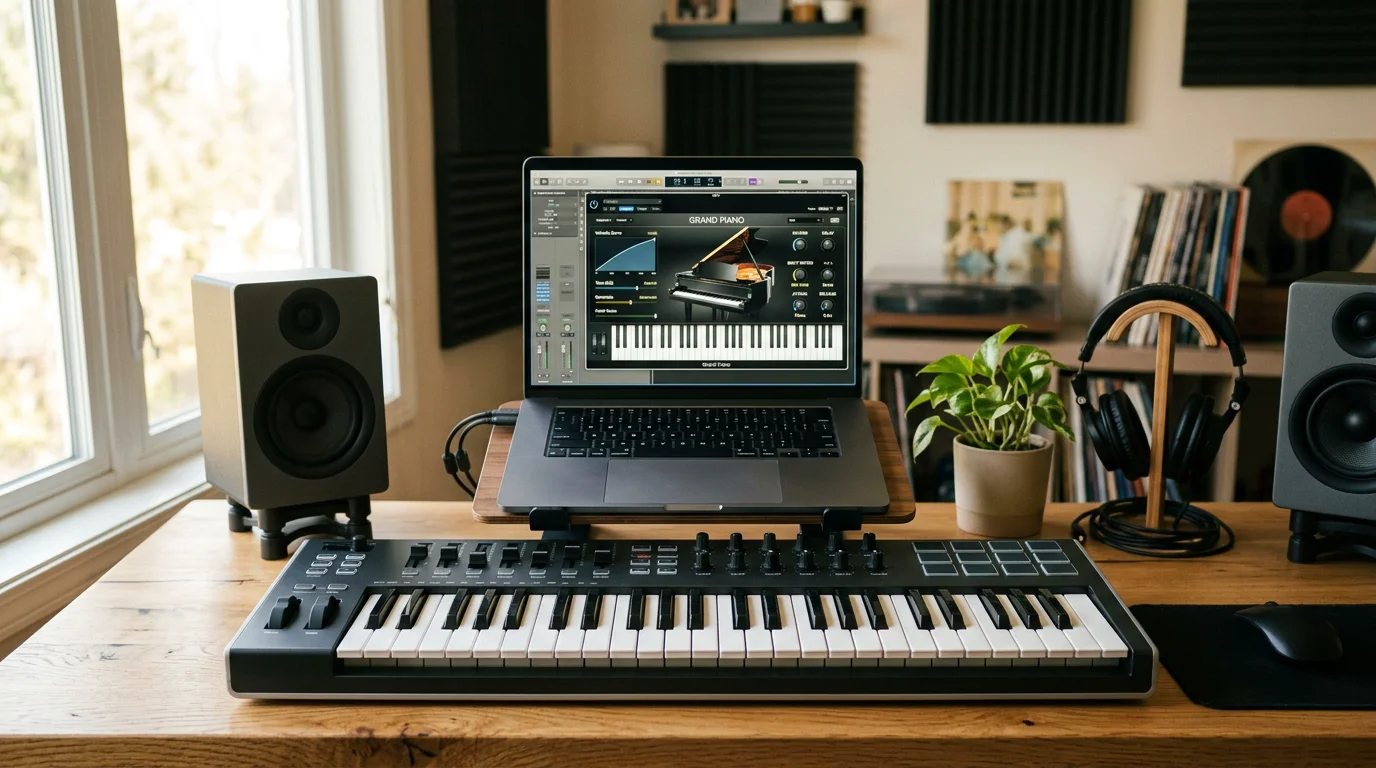
Several free instruments consistently earn a place in professional sessions. Spitfire LABS Soft Piano is widely used for textured, atmospheric work, and its felt-muted character appears on countless productions. Sound Magic’s Piano One offers a neutral acoustic grand for producers who want an uncolored starting point.
Sampler ecosystems expand the pool further. Bedroom Producers Blog reports that you can download over 100 free Pianobook libraries formatted for Decent Sampler, with more released every month. Decent Sampler itself runs on Windows, macOS, and Linux across VST, VST3, AU, and AAX formats, so compatibility is rarely an issue.
A few practical picks stand out for beatmaking:
- Felt and soft pianos for intimate melodic trap, R&B, and lo-fi passages.
- Neutral acoustic grands for boom bap chords and jazzy progressions.
- Physical modeling pianos for dynamic response with a tiny storage footprint.
- FM electric pianos such as Dexed for classic Rhodes and Wurlitzer textures.
Each covers different tonal territory, so building a small, curated set beats hoarding dozens of similar plugins.
Where free piano VSTs fall short for original beatmaking
Here is the uncomfortable truth: the most popular free plugins are used by everyone. When thousands of producers load the same soft piano preset, the sound stops being an asset and becomes a fingerprint that blends into every other beat. If you have ever felt your track sounds like a hundred others, this is often why.
Free libraries also tend to focus on faithful acoustic reproduction rather than production-ready character. That is useful for classical or singer-songwriter work, but genres such as dark trap, drill, phonk, and pluggnb demand keys with attitude, movement, and processing baked in. Recreating that from a raw sampled grand takes significant sound-design time.
This is where curated preset banks change the equation. Our team built Pendora precisely to solve beatblock and sameness, offering hand-crafted presets across melodic trap, drill, R&B, pluggnb, dark trap, lo-fi, and phonk. These are sounds most producers are not already using, which keeps your identity intact while remaining royalty-free and light on CPU.
Free pianos versus a curated producer sound bank
The choice is rarely free versus paid alone. It is generic versus distinctive, and open-ended tweaking versus ready-to-drop sounds. The table below compares typical free piano VSTs with our Pendora sound bank on the criteria that matter for beatmakers.
| Option | Cost | Genre focus | Originality | Format |
|---|---|---|---|---|
| Pendora (our sound bank) | Pay once, lifetime access | Trap, drill, dark trap, phonk, boom bap, pluggnb, R&B, lo-fi | Hand-crafted, not recycled | VST3, AU (Mac, Windows) |
| Free acoustic piano VSTs | Free | Classical, pop, singer-songwriter | Widely shared presets | VST3, AU |
| Free felt/soft pianos | Free | Ambient, lo-fi intros | Common across many tracks | VST3, AU |
| Free sampler libraries | Free | Varies by library | Inconsistent quality | Decent Sampler, SFZ |
Free pianos are a smart entry point and a reliable acoustic backbone. Our Pendora presets step in when you need a distinct, studio-ready palette that keeps your beats from sounding like everyone else’s. For producers still assembling a toolkit, our free VST plugins overview pairs well with a paid bank.
Getting studio-ready piano tones in your DAW
A free piano rarely sounds finished straight out of the box. Most sample libraries are recorded dry, so processing is where a usable tone becomes a professional one. A few targeted moves make a large difference.
LA Studio recommends adding reverb with a pre-delay around 20 to 30 milliseconds and a medium-to-large room size to place the piano in a convincing acoustic space. The same source suggests a gentle boost around 2 to 4 kHz for presence and a low-end roll-off below 200 Hz to remove mud. These steps help the instrument cut through on both speakers and headphones.
Layering also transforms a flat preset. Combine a neutral grand with a felt piano an octave up, then automate filter movement across a progression. In FL Studio, Ableton, or Logic Pro, this takes minutes and instantly adds depth that a single free sample cannot provide.
Building a sound that does not blend in
Free tools solve the access problem. They do not solve the identity problem. Once your acoustic foundation is set, the next step is layering in textures and melodic elements that competitors are not pulling from the same three free plugins.
That is the gap our team designs for. Pendora provides hand-crafted, genre-specific presets and thousands of exclusive MIDI melodies in its Ultimate edition, all royalty-free with commercial use. For producers who work adjacent to synth-heavy styles, our sister brand Pegasus by Cosmos Instruments covers related territory with the same studio-ready approach.
Final thoughts on free piano keys
The best free piano VST instruments are genuinely capable in 2026, and they belong in every producer’s toolkit as a foundation. Use them for realistic acoustic backbones, learn to process them properly, and lean on physical modeling when storage and dynamics matter. The moment your sound needs a distinct edge, move beyond stock presets toward curated, hand-crafted material so your beats carry your name and not the same textures heard everywhere else.
Take action with Tiger-Sounds
You now understand where free pianos help and where they leave your sound generic. If you are ready to build a palette that does not blend into every other beat, our team designed Pendora for exactly that moment.
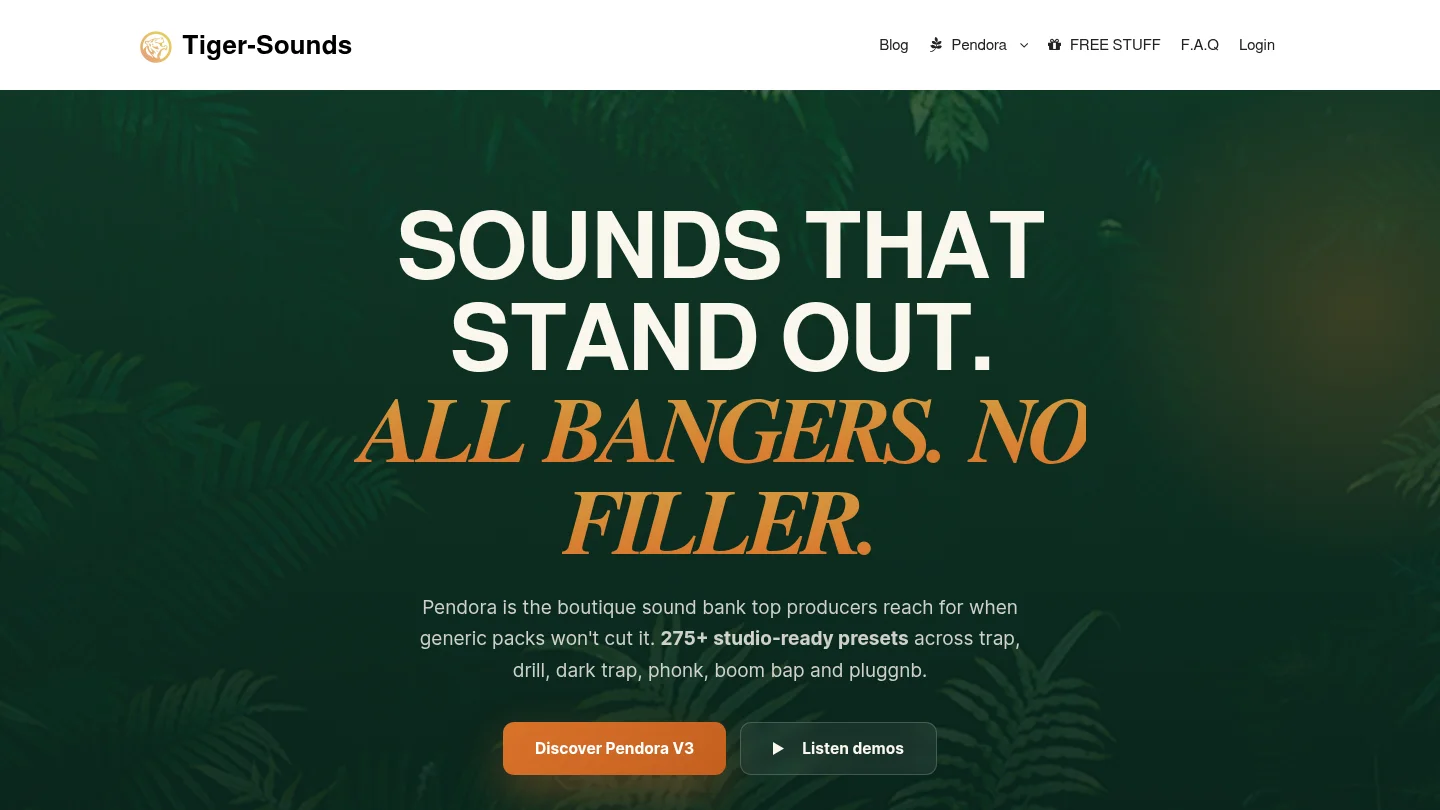
Explore our best free VST instruments and the full Pendora sound bank, with 275+ hand-crafted, royalty-free presets across trap, drill, dark trap, phonk, boom bap, and pluggnb. Pay once for lifetime access, keep commercial rights, and run everything light on CPU in VST3 or AU on Mac and Windows. Trusted by 500+ producers worldwide over more than five years.
Frequently Asked Questions
Are free piano VST instruments good enough for professional tracks?
Yes, the strongest free pianos hold up well in finished mixes when processed correctly. They serve as a solid acoustic foundation, though genre-specific character often requires curated presets. For most acoustic needs, a free option is sufficient.
Which formats do free piano VSTs support?
Most modern free pianos ship as VST3 and AU plugins for Mac and Windows, and some sampler libraries also add AAX. This keeps them compatible with FL Studio, Ableton, and Logic Pro. Always confirm the format your DAW requires before downloading.
Does a larger sample size mean a more realistic piano?
Not necessarily. Physical modeling instruments with a footprint near 80MB can match libraries far larger in blind listening comparisons. Dynamic response and velocity behavior matter more than raw file size.
Why do my beats sound like everyone else’s when I use free pianos?
The most popular free presets are used by thousands of producers, so their tone becomes a shared fingerprint. To stand out, layer and process your keys, or move to hand-crafted banks such as our Pendora presets. Distinct sound design is what preserves your identity.
What is the fastest way to make a free piano sound studio-ready?
Add reverb with a short pre-delay, boost presence around 2 to 4 kHz, and roll off low mud below 200 Hz. Layering two complementary pianos adds depth quickly. These few steps turn a dry sample into a mix-ready tone.