Summary: The Pendora Ultimate custom edition is a one-time €500 or $500 package for producers who want personalized Pendora content, every Tiger-Sounds kit, future-kit access, and more than 5,000 exclusive MIDI melodies. It is designed for frequent beatmakers who already know the Pendora sound fits their work and can use the custom additions regularly.
A $500 sound-bank purchase needs to do more than add another folder of presets. The Pendora Ultimate custom edition is built around personalized content, a custom name on the first preset, an expanded MIDI resource, and longer-term access to the Tiger-Sounds kit catalog. You can review the current Pendora Ultimate price before comparing the package with the standard editions.
The decision also depends on how you produce. A January 2026 MIDiA creator survey analyzed responses from 2,109 music creators and examined how producers use DAWs, software, and production tools. For a beatmaker working in FL Studio, Ableton Live, or Logic Pro, the practical question is whether a focused sound bank reduces repeated browsing and gives you more usable starting points in real sessions.
What is the Pendora Ultimate custom edition in 2026?
In September 2026, Pendora Ultimate is listed at €500, with a $500 price also referenced for buyers using U.S. dollars. It is a one-time digital purchase rather than a monthly subscription, and currency is applied according to location. International buyers should confirm the final amount displayed at checkout because the euro and dollar figures are presented as separate prices, not necessarily as a live exchange-rate conversion.
The central product is the Pendora sound bank with custom content. Unlike the evaluation-oriented Pendora Lite edition or the standard Pendora V3 package, this version is intended for a small number of producers who want a personalized production resource rather than only a larger preset collection.
The personalization begins with a custom name on the first preset. That is a small detail in technical terms, but it changes how the instrument feels inside a personal template or studio workflow. The package is also aimed at producers who want a continuing relationship with the sound catalog, since it includes all Tiger-Sounds kits and lifetime access to upcoming kits.
Pendora Ultimate should not be confused with Cymatics PANDORA. They are unrelated products from different businesses, despite the similar names. Pendora by Tiger-Sounds is a boutique sound-bank VST focused on trap, drill, melodic trap, R&B, pluggnb, dark trap, lofi, phonk, boom bap, and adjacent styles.
What does the €500 or $500 package include?
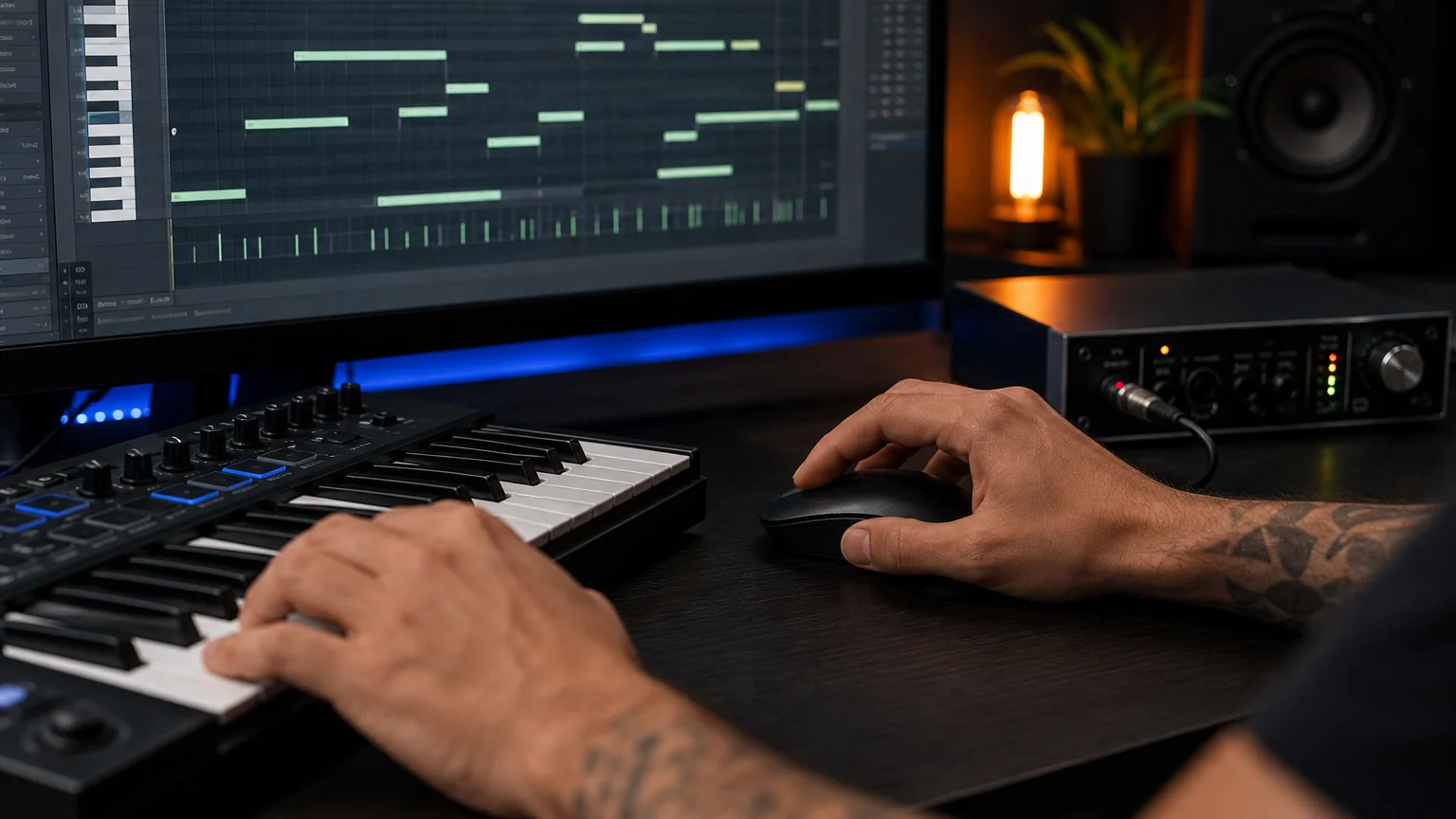
The most substantial addition is a collection of 5,000+ exclusive MIDI melodies. For a producer dealing with beatblock, this can provide starting points for chord progressions, bells, plucks, keys, pads, and melodic textures without requiring a completely empty piano roll every time a session begins.
MIDI is not a finished beat. Its value comes from how quickly you can edit, rearrange, transpose, resample, layer, and combine the material with your own sound selection. In practice, a producer might drag a melody into FL Studio, change the rhythm, replace the instrument with a Pendora bell or pad, and then build the drums around the revised phrase.
The package also includes:
- The Pendora sound bank with custom content.
- A custom name on the first preset.
- All Tiger-Sounds kits released within the included catalog.
- Lifetime access to upcoming kits.
- More than 5,000 exclusive MIDI melodies.
- Royalty-free commercial use under the stated license terms.
- Free lifetime updates under the product terms.
Future-kit access should be understood as ongoing catalog access, not as a guaranteed number of releases within a fixed period. The product information does not specify a release schedule, so buyers should value this feature as continued access to future additions rather than as a promise of a particular delivery frequency.
The same qualification applies to any claim about performance or workflow speed. Pendora is positioned as light on CPU and RAM, but the effect on a project depends on buffer settings, sample rate, project size, operating system, and the other instruments loaded alongside it. The included MIDI and kit access are useful only if they match the producer’s actual genres and working habits.
How does Pendora Ultimate compare with Lite and V3?
Imagine three producers opening the same DAW. The first is still testing whether the Pendora sound belongs in their sessions. The second wants a complete sound-bank package for regular beatmaking. The third already knows the sound fits and wants custom treatment, a larger melodic resource, and broader kit access. Each producer has a different reason to choose an edition.
- Pendora Lite: Priced at €29 or $29, with 30 hand-picked presets, bonus kits, and a MIDI pack. It is the lower-cost way to evaluate the sound before committing to a larger purchase.
- Pendora V3: The standard full edition, with 275+ presets or studio-ready sounds, three expansion packs, a Producer Kit, two drumkits, MIDI content, effects, and risers. The supplied pages show €149 on some listings and $147 on another, while one bundle page shows a stated $499 value before the listed $147 purchase price.
- Pendora Ultimate: Listed at €500 or $500, with custom content, a personalized first preset, all Tiger-Sounds kits, future-kit access, and 5,000+ exclusive MIDI melodies.
Lite makes sense when the main uncertainty is sound fit. It gives a producer a smaller entry point and avoids paying for a complete package before hearing how the presets behave with existing instruments such as Serum, Omnisphere, Kontakt, or Vital.
V3 is the more direct choice when the goal is access to the main Pendora sound bank and production assets. It offers a broad starting point for commercial beats, placements, licensing work, and regular sessions without the custom additions of the higher tier.
Ultimate becomes relevant when the producer will use the additional resources repeatedly. If the custom identity, future-kit access, and large MIDI collection are likely to remain unused, the standard edition is more proportionate. You can also listen before deciding through our Pendora demo.
Why can a focused sound bank help beatmaking in 2026?
A large software ecosystem does not automatically make production faster. One 2026 market estimate places global music production software revenue at about $4 billion for 2026 and projects growth to $20 billion by 2033, as detailed in one 2026 market estimate. Research firms use different definitions and market boundaries, so the figures are best treated as industry context rather than a direct forecast for any individual producer.
The practical issue for a beatmaker is choice overload. A general-purpose synthesizer can offer enormous synthesis depth, but that depth can also create more decisions before a melody takes shape. A genre-focused workflow narrows the search toward sounds that suit melodic trap, drill, dark trap, phonk, boom bap, pluggnb, and related styles.
Pendora is designed around hand-crafted presets and production assets rather than an attempt to cover every possible genre. Its sound direction includes pads, bells, orchestral textures, plucks, banjos, dark 808s, drums, MIDI, mix presets, effects, and risers. That concentration can help when the producer already knows the lane and wants fewer irrelevant choices.
This is where the “no waste presets” idea matters. The goal is not to collect the largest number of files. It is to open a plugin, find a usable sound quickly, and continue arranging the beat. A drill producer may start with a pluck and MIDI phrase, a phonk producer may begin with a darker melodic texture, while a pluggnb producer may use a bell or pad as the first layer.
Pendora does not replace a full synthesis environment or a sampler such as Kontakt. It can sit alongside those tools as a focused source of melodic sounds and beatmaking material. For producers who regularly work in one or more of its target genres, that narrower role may be more useful than another general-purpose library.
What should you check before buying?
Compatibility is the first technical checkpoint. Pendora supports VST3 on Windows and macOS, while AU support applies to macOS. The stated operating systems are macOS 11 Big Sur or later and Windows 10 or 11, with 64-bit support required.
Native Apple Silicon support is included. The explicitly tested DAWs are FL Studio, Ableton Live, Logic Pro, Cubase, Pro Tools, and Reason, although the host must support the relevant VST3 or AU format.
Storage also matters. The installed product occupies approximately 5 GB of hard-drive space, while the Windows installer is described as approximately 2 GB. Leave additional room for downloaded files, project folders, and future updates before installing the instrument.
Pendora is designed for low-resource use, but the available performance information should be treated as an example rather than a guarantee. An i5-8400 example describes multiple instances using approximately 500 MB of RAM and 10% CPU, but your results may differ according to the project, operating system, sample rate, buffer size, and other plugins.
Installation is delivered digitally through a download link and license key. A buyer may install Pendora on up to three personal computers. Studio installations beyond that allowance require contacting Tiger-Sounds, and account sharing or redistribution are excluded from lifetime access and update terms.
For a detailed installation workflow, use our guide on how to install Pendora presets. On Windows, running the installer as Administrator may be necessary. On macOS, an unidentified-developer prompt can usually be handled through Finder’s Open option or the Privacy & Security settings.
Does the custom package make sense for commercial producers?
The financial case depends on production frequency and the role Pendora will play in your sessions. A producer making occasional beats may not use enough of the custom content, MIDI material, or future-kit access to justify the €500 or $500 price. A producer working weekly on beat catalogs, client projects, placements, or licensed tracks may have more opportunities to turn those additions into a repeatable workflow.
The stated license permits royalty-free commercial use for beats and tracks that you sell, place, or license, with no additional royalties owed under those terms. That does not permit sharing the account, redistributing the plugin, or reselling the included content as a separate library.
Licensing and rights are increasingly important for producers who create music for online video and commercial content. A 2026 Berklee report based on a survey of 1,003 creators, musicians, marketers, and music supervisors examined how music is created, discovered, licensed, and used in social video through Berklee’s 2026 report. For a producer, this reinforces the need to distinguish royalty-free usage rights from ownership of the underlying plugin or permission to redistribute its files.
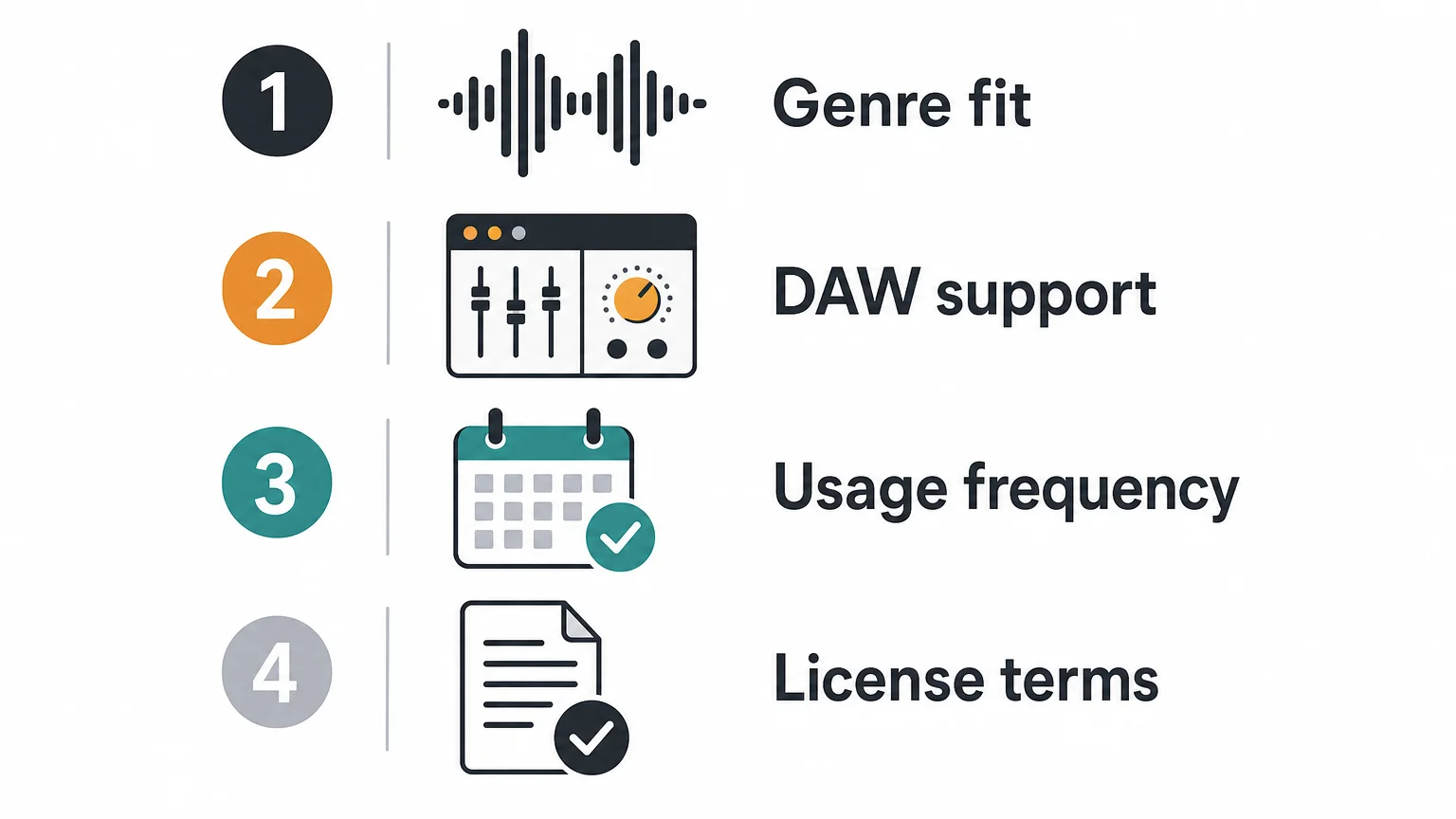
Before buying, ask four practical questions:
- Will the exclusive MIDI become part of your weekly workflow?
- Do you want custom content and a personalized first preset?
- Will access to all current and future kits replace purchases you would otherwise make?
- Does Pendora already fit the sound of your releases, placements, or beat licenses?
If the answer is yes across the list, the custom edition has a clearer production case. If your main need is simply a distinctive core sound bank, Lite or V3 may be the more efficient starting point.
Final thoughts on the Pendora Ultimate custom edition
The Pendora Ultimate custom edition is best understood as a personalized production package rather than a normal preset upgrade. Its €500 or $500 price is tied to custom content, a personalized first preset, all Tiger-Sounds kits, future-kit access, and a large exclusive MIDI resource. The purchase is most defensible for producers who work consistently in Pendora’s target genres and expect to use those additions across many sessions. Before checkout, confirm the currency, DAW format, operating-system support, storage needs, installation allowance, and commercial licensing terms.
Choose the Pendora edition that fits your workflow
If you already know that a focused sound bank suits your beatmaking, the next step is to match the edition to how often you produce and how much customization you need.
Our Pendora range includes an evaluation-oriented Lite edition, a full V3 sound bank, and the custom package described here. The Pendora Ultimate custom edition brings together personalized content, kit access, future releases, and an extensive MIDI resource for producers building a long-term workflow.
Frequently Asked Questions
Is Pendora Ultimate a subscription?
No. It is sold as a one-time digital purchase rather than a monthly subscription, with lifetime access and updates subject to the stated product terms.
What makes the custom edition different from Pendora V3?
The custom edition adds personalized content, a custom name on the first preset, access to all Tiger-Sounds kits, future-kit access, and a much larger MIDI resource. Pendora V3 remains the standard full sound-bank option for producers who do not need those additions.
Who should choose Pendora Lite instead?
Lite is suited to producers who want to test the sound before making a larger purchase. Its smaller preset selection and lower price make it a practical entry point for evaluating genre fit and workflow.
Does Pendora work with FL Studio, Ableton Live, and Logic Pro?
Yes, Pendora supports compatible VST3 hosts on Windows and macOS, plus AU hosts on macOS. It is explicitly tested with FL Studio, Ableton Live, and Logic Pro, along with several other DAWs.
Can I use Pendora Ultimate in commercial beats?
Yes, the stated terms allow royalty-free commercial use for beats and tracks that you sell, place, or license. Account sharing and redistribution are excluded, so the plugin and its content must remain within the authorized use terms.